A genuine Made in USA claim is a legal statement with a definition behind it: all or virtually all of the product must be made and sourced in the United States. Most home-gym gear sold online does not clear that bar, and almost none of it on Amazon does. That is not a reason to give up on the search — it is a reason to know exactly what you are reading.
Buy-it-for-life buyers gravitate to American manufacture for sound reasons. A factory you can drive to is a factory that can still make you a J-hook in nine years. A domestic maker is easier to hold to a warranty. And the shipping cost of heavy steel means a company that fabricates here is usually competing on something other than being the cheapest listing on the page. None of that is guaranteed by a flag on a box, though, which is why this guide starts with the definition rather than the marketing.
What "Made in USA" legally means
The Federal Trade Commission enforces a single standard for unqualified U.S.-origin claims: all or virtually all. In the FTC's words, that means the final assembly or processing happens in the United States, all significant processing happens in the United States, and all or virtually all ingredients or components are made and sourced in the United States. The finished product should contain no — or negligible — foreign content.
This is not merely guidance. In 2021 the FTC finalized the Made in USA Labeling Rule, which codified that standard for product labels and made an unqualified claim on a product that does not meet it subject to civil penalties, including in catalogs and online listings. When a seller says it flatly and cannot back it, that is now an enforcement matter rather than a matter of taste.
The useful part for a buyer is the vocabulary. There are several very different phrases in circulation and only one of them is the strong claim.
| What the listing says | What it actually asserts | How strong is it? |
|---|
| "Made in USA" (no qualifier) | All or virtually all of it — parts, processing and final assembly — is domestic | The strong claim, and legally enforceable |
| "Made in USA with U.S. and imported parts" | A qualified claim: real domestic work, disclosed foreign content | Honest and common; read the qualifier, it is the whole message |
| "Assembled in USA" | Principal assembly happened here, that assembly was substantial, and the product was last substantially transformed here — the parts may be from anywhere | Meaningful but much weaker than it sounds |
| "Designed / engineered in USA" | Someone here drew it. Nothing about where it was manufactured | Says nothing about origin |
| A U.S. company name and address on the box | Where the importer or brand office is. Nothing about the factory | Says nothing about origin |
The last two rows account for most of the confusion in this category. A great many home-gym brands are genuine American companies — offices, staff, warranty desks and customer service all in the United States — whose steel is fabricated overseas. That is not deception. It only becomes deception when the listing lets you infer the factory from the letterhead.
Who actually manufactures strength equipment in the United States
There is a real domestic strength-equipment industry, and it is smaller and more specialized than the marketing suggests. The names below publish their own manufacturing claims; we are repeating what they publish and citing it, not certifying anyone's supply chain.
- Rogue Fitness (Columbus, Ohio). The best-known example. Rogue publishes a dedicated Made in the U.S.A. section and states that a large share of its rack, rig, bar and plate line is engineered and fabricated at its own Columbus facility, with the rest of the catalog labeled accordingly. It is the reason "made in usa power rack" is a search anyone runs at all.
- Texas Power Bars (Irving, Texas). Buddy Capps has been building the Texas Power Bar in Texas since 1980, and the company's own site carries the claim in its plainest possible form: made in America since 1980. A single-product shop that has outlived four decades of fitness trends is about as close to the buy-it-for-life thesis as a business model gets.
- Sorinex, elitefts and other specialist shops. Several strength-equipment makers manufacture part of their line domestically and mark it per product rather than claiming it across the catalog. That per-product marking is the honest way to do it, and it means the answer for these brands is always "check the specific item," never "the brand is American."
The pattern is worth noticing. Every one of these sells primarily direct — from its own site, on its own freight terms. Domestic fabrication of heavy steel and a race-to-the-bottom marketplace listing are close to mutually exclusive business models, which is why the honest answer to "what is the best made in USA power rack on Amazon" is that you are asking in the wrong aisle.
Why the marketplace aisle is almost entirely imported
Look at what actually competes on a marketplace listing: price per pound of steel, shipping cost, and how fast the seller can restock. Domestic fabrication loses on the first, and often wins on the third only after the first has already decided the sale. The result is a category where the affordable, well-specified, high-capacity racks and bars — the ones we rank, the ones most home gyms actually get built around — are made overseas, sold by companies headquartered here.
We would rather say that than dance around it. Every product this site links is bought through Amazon, and we have not found a rack, bar or plate set in that catalog whose maker publishes an unqualified Made in USA claim we could verify. If that changes, this page changes.
How to check an origin claim in five minutes
You do not need to take anyone's word for this, including ours. Four checks, in order of how much they tell you.
- Look for the country-of-origin marking. Federal law (19 U.S.C. § 1304) requires imported articles or their containers to be marked conspicuously, legibly and permanently with the English name of the country of origin. On steel gear that usually means it is stamped, etched or printed on the item, the sleeve, or the carton. If the box says China and the listing implies otherwise, the box is the fact.
- Read the listing's own detail table. Marketplace listings frequently publish a country-of-origin field in the product-details block, well below the marketing copy. It is the cheapest thirty seconds you will ever spend on this question.
- Check the maker's site for a manufacturing page, not a slogan. A company that fabricates domestically will normally show you the building: address, plant photographs, which product families are made there and which are not. A company that only has a flag graphic in the footer is telling you about its logo.
- Read the exact words for a qualifier."Assembled in," "designed in," "finished in," "with U.S. and imported components" — every one of those is a deliberate narrowing of the strong claim, and each is legally distinct from it.
Does origin actually predict how long it lasts?
Partly, and indirectly. Origin is a proxy for three things you can measure without it — which is the argument of this whole site. A domestic maker is more likely to hold real tolerances, more likely to stock spares, and easier to make honor a warranty. But likely is doing the work in that sentence, and every one of those attributes can be checked head-on:
- Steel and construction. Wall thickness and upright size decide how a frame behaves under load, and they are published numbers. See the steel gauge guide.
- Parts availability. The single most important question for a ten-year purchase, and completely independent of where the thing was welded. See replacement parts for home gym equipment.
- Warranty. The number the maker is willing to stand behind, wherever the factory is. The method for reading one is in how to build a buy-it-for-life home gym.
Run those three checks and origin stops being a shortcut you need. Skip them and a Made in USA sticker will not save you, because there are domestically produced products of every quality level, just as there are imported ones.
What we link to, and why all of it is imported
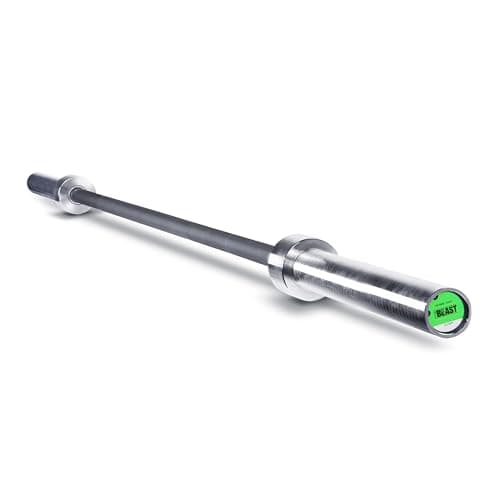
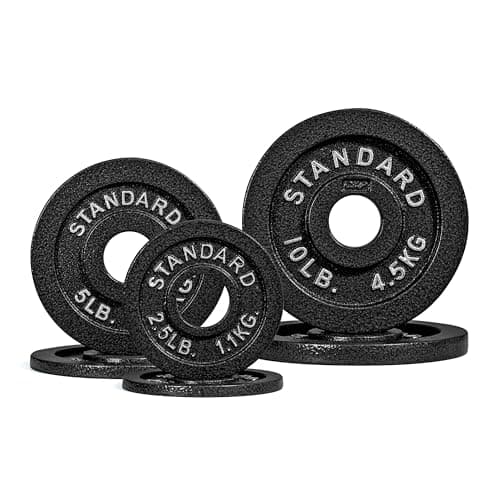
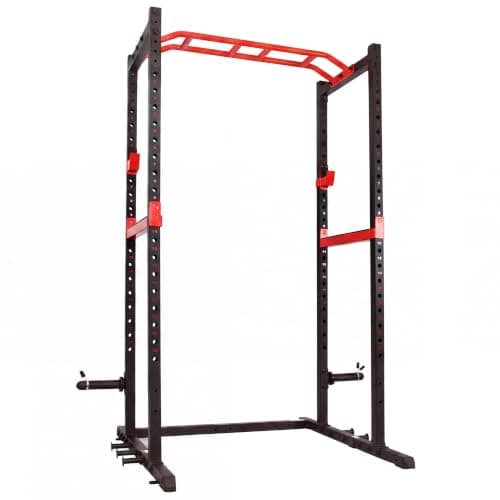
The three picks below are imported, and we are saying that in the same breath as recommending them, because the alternative — implying otherwise to keep a page on-theme — is exactly the behavior this guide exists to explain. The domestic makers named above sell direct and are not in the catalog we can link, so the honest thing we can offer instead is the gear that scores highest on the criteria that domestic manufacture is meant to stand in for: published capacity and steel, a maker who still answers about parts, and a spec sheet that says the same thing this year as last.
If your budget stretches to a Rogue rack or a Texas bar, buy it. They are excellent, they are made where they say, and we do not earn anything telling you so. If it does not, the list below is what we would put in a garage, and the reasoning is in how we choose.
How to buy well when domestic is not on the table
The buy-it-for-life instinct behind a made-in-USA search is correct even when the search comes up empty. Redirect it into the four checks that survive without it.
Buy the published number, not the narrative
Capacity ratings, wall thickness, tensile strength and pad density are all published, all comparable, and all indifferent to the flag on the carton. A listing that states none of them is the real warning sign — far more so than one that states them and was made abroad.
Ask the parts question before you pay, not after
Message the seller and ask what a replacement J-hook, pad or selector costs and how you order one. The answer, and the speed of it, tells you more about the next decade than any origin claim. Brands that keep a parts channel say so immediately; brands that do not go quiet.
Prefer common patterns over clever ones
Standard upright dimensions and standard hole spacing mean the aftermarket can serve you even if the brand disappears. A proprietary profile ties your rack's lifespan to one company's survival — which is the specific risk a domestic factory is supposed to reduce, solved a different way.
Weigh the freight, honestly
Domestic gear often costs more up front and much less to ship, and heavy steel makes shipping a real line item rather than a rounding error. Compare landed cost, then divide by the years you will keep it — the method is in home gym cost per year. Over a decade the gap is usually smaller than the sticker suggests.