The mistake beginners make is not buying cheap gear — it is buying beginner gear. A rack, a bar and a set of iron plates do not have a beginner version and an advanced version. They just have good ones and bad ones.
This page is a complete first gym: a cage, a bar, plates, a bench, a kettlebell and somewhere to put it all. Every pick is chosen on the same rule we apply everywhere — it should still be in your gym in ten years, whatever happens to your training.
What a beginner actually needs
Almost every serious strength program for a new lifter is built from squats, presses, deadlifts, rows and pull-ups. All five of those need exactly three things: a bar, some plates, and a frame with safeties so you can do it alone. That is the gym. Everything else on this page makes it more pleasant or protects what you own.
What a beginner does not need is a machine for each muscle, a cable stack, or anything with a screen. Those are additions to a working gym, not a substitute for one.
Why not just buy the cheapest of everything?
Because two of the six things here have a "cheap" version that is genuinely bad, and four do not.
The bar and the rack are where quality shows. An unrated bar can take a permanent bend; an unrated rack with no safeties is not a rack. Those two deserve real money. Plates, kettlebells and storage are iron and steel — the budget version is chemically identical to the expensive one and will outlive you either way. Spend accordingly: that is the whole argument of how we choose. If the budget is the constraint rather than the experience level, the same rules are applied to a fixed spend — where to cut, where never to — in how to build a home gym on a budget.
What we picked, and why
The rack
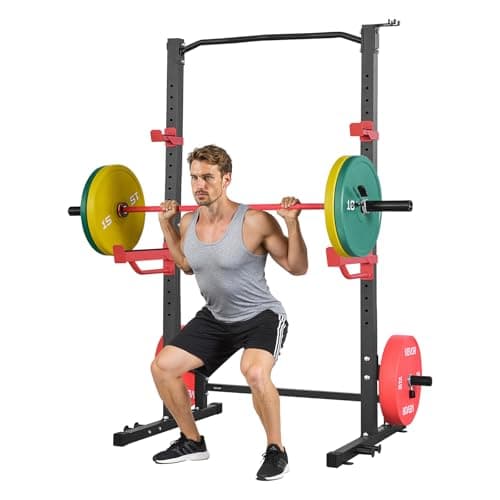
A budget cage with a published capacity, safeties and a pull-up bar in the box. A full enclosure is the right call for a beginner specifically because you will be training alone and learning to judge your limits — the cage catches the rep you misjudged. If your room cannot take one, a half rack or a folding rack is the honest substitute.
The bar
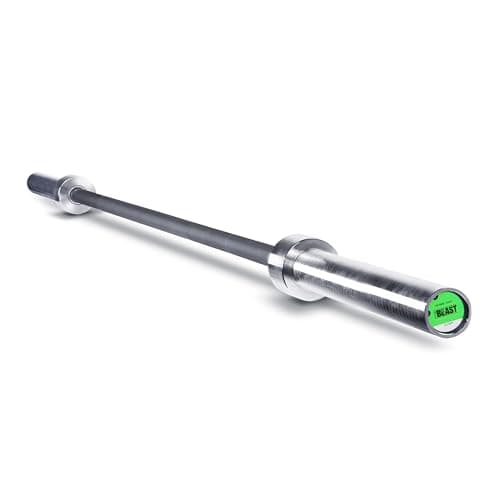
A full-size 7 ft Olympic bar with a published capacity. Not a 5 ft bar, not a standard 1 inch bar. This is the piece you will still own after three racks and two houses — buy it once, properly, from the barbell roundup.
The plates
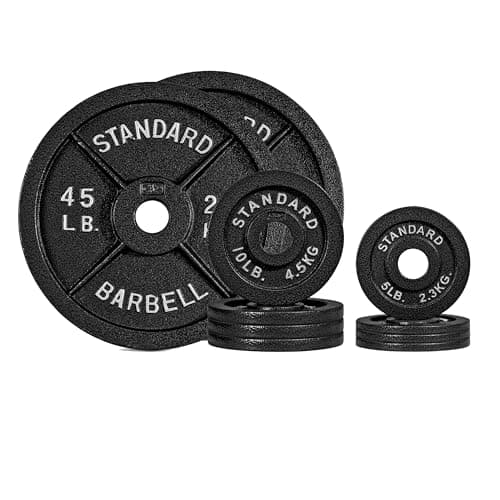
A cast iron starter set, because it includes the small plates that make 5 lb progressions possible. Iron is the cheapest weight per pound and effectively permanent. If you plan to drop the bar, bumpers instead — but most beginners lift under control and iron is the better value.
The bench
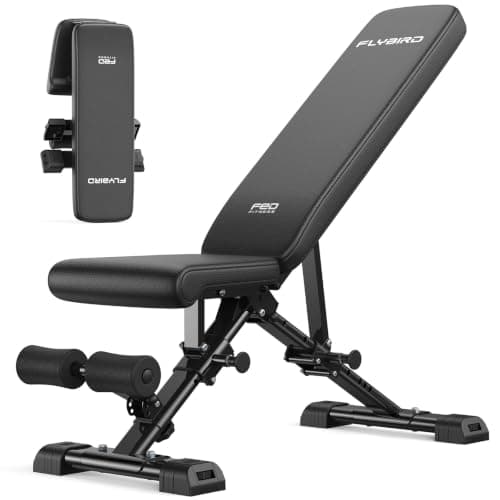
An adjustable bench with a certified capacity. Flat covers bench press; incline covers the pressing variations you will add within a year. Check it fits inside the rack before ordering.
The kettlebell
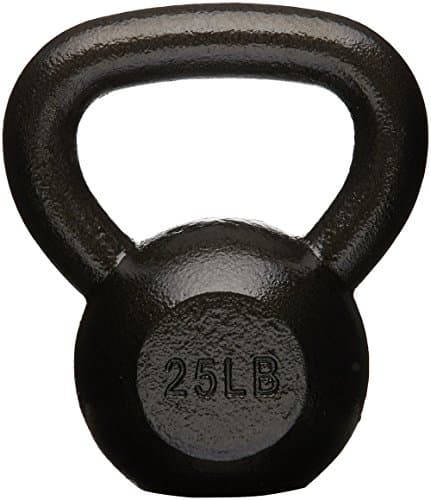
One bell for swings, carries and goblet squats — the conditioning and hip work a barbell program leaves out. A single-piece casting with nothing to break. Size it for swings; see the kettlebell roundup. If a barbell is not on the cards yet and the first purchase is a few light dumbbells instead, the same no-mechanism logic applies and the picks are in the best dumbbells for seniors and the best dumbbells for beginners, which ranks a first pair on what can break rather than on what it costs.
The storage
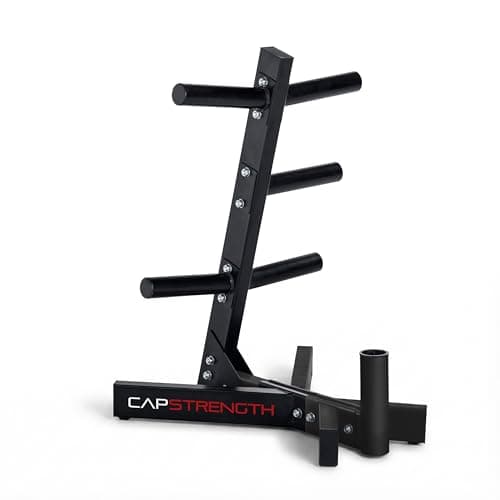
A plate tree. It costs about what one 45 lb plate costs and it protects everything else on this list from the floor. Buy it at the same time as the plates, not two years later after they have all chipped.
What to add next, and in what order
Flooring if the floor is bare concrete. Then collars, which cost almost nothing. Then a lat tower or dip bars once you know what your training actually looks like. The full sequence is in our build order guide.
The honest budget conversation
This is not a cheap list, and we are not going to pretend otherwise. What it is, is a list you buy once. Spread across the decade these items will realistically last, the annual cost is lower than most gym memberships — and that comparison is worth running properly rather than assuming, which is what home gym vs gym membership does.
If the whole list is out of reach today, buy it in the order above rather than buying cheaper versions of all of it. A bar and plates alone is a real gym. Six compromised purchases is six things to replace.
Five beginner mistakes worth avoiding
1. Buying standard 1 inch equipment
It looks like a saving and it is a dead end — the accessory ecosystem is all built around 2 inch Olympic. Read Olympic vs standard before you order anything.
2. Buying a rack without safeties
Safeties are the entire reason a rack exists for a solo lifter. If a rack lists them as an optional extra, add them to the order in the same session.
3. Not measuring the ceiling
A full cage wants roughly 7'6" for the pull-up bar. Measure before you compare products, not after the box arrives.
4. Buying the bench without checking it fits the rack
Bench widest point versus rack internal width. Thirty seconds of measuring prevents the most common return in home gym equipment.
5. Leaving storage until last
Plates on a concrete floor chip, rust and get dropped on feet. The tree costs less than the damage.