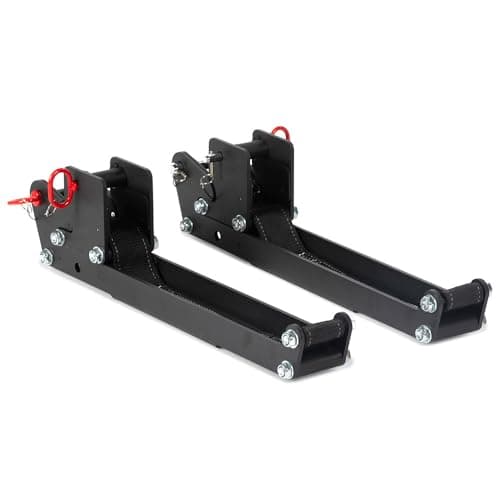
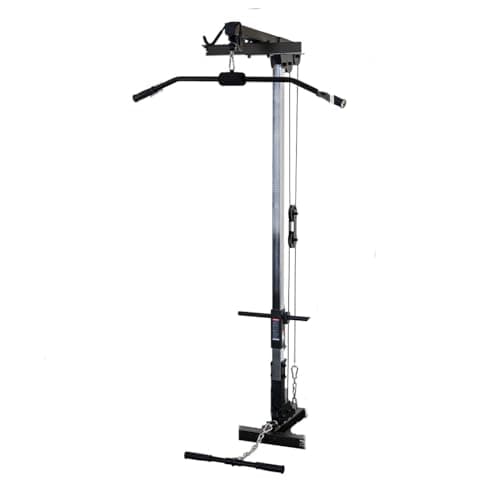
If you buy one attachment, buy the lat tower — it adds a whole training category. If you buy two, add safety straps, because they protect both you and the bar. Everything else on this page is a smaller upgrade — though not always a cheap one, and we say per pick where an attachment costs more than a budget rack does.
Read this before you order anything
Rack attachments fail for one reason far more than any other: they do not fit. Three numbers decide it, and none of them are optional.
- Upright profile. 2×2, 2×3 or 3×3 inches. An attachment sized for one will not mount on another. This is the number people forget.
- Hole diameter. Usually 5/8 inch or 1 inch. Pins and pass-through bolts are sized to it, and a 1 inch pin does not go into a 5/8 inch hole.
- Hole spacing.Attachments that use two holes at once — dip bars especially — need your rack's spacing to match theirs.
Measure your rack with a tape and a caliper (or the bolt you already have) before ordering. Brand-matched attachments from your rack's own line remove the guesswork entirely, which is why an ecosystem rack is worth more over a decade than a slightly cheaper orphan.
What each attachment actually buys you
Lat tower — the biggest capability jump
A bolt-on lat pulldown turns a squat-and-press rack into something that also trains vertical pulling under controlled load. It is the only attachment here that changes what you can program. If you would otherwise be shopping for a rack with cables built in, price the bolt-on route first — sometimes it is cheaper, sometimes it is not.
Safety straps — the one with a safety argument
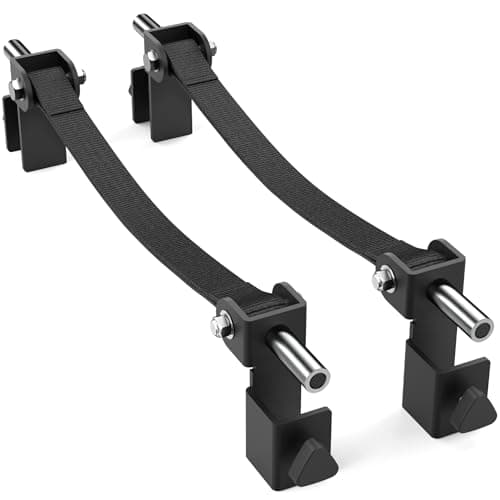
Steel safeties catch a dropped bar and transmit the impact straight into the knurl and the rack welds. Nylon straps catch it and absorb it. If you train alone, straps are the attachment that protects both your body and the bar you spent real money on. Look for a published rating — the Synergee straps publish 750 lb and the Titan Series set publishes 1,200 lb, either of which covers any home bail.
Dip bars — the most function per dollar
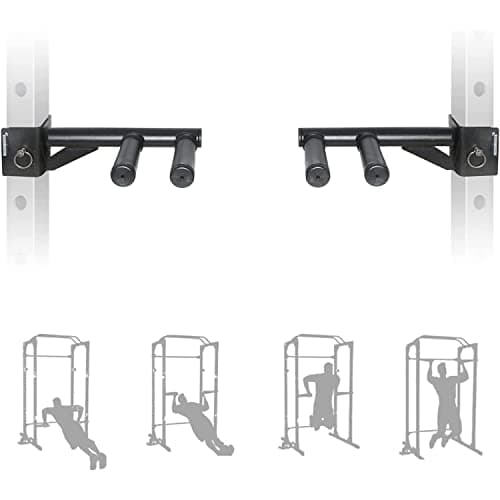
Dips are one of the best upper-body movements available at home and the attachment costs less than a pair of 25 lb plates. There is nothing to service — it is steel and two handles. Buy the version that fits your upright size, and prefer double handles if you want both narrow and wide grips.
Landmine — the joint-friendly category
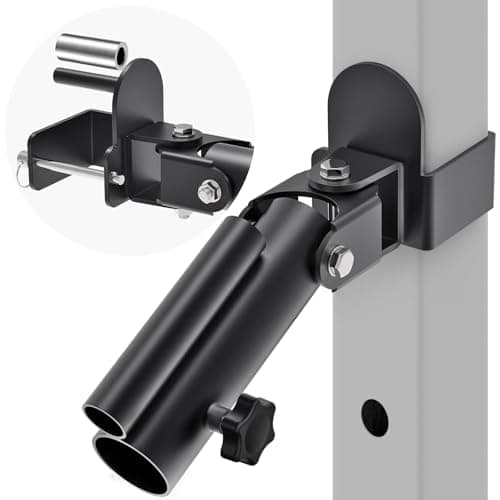
A rack-mounted landmine sleeve opens up presses, rows and rotational work at angles a straight bar cannot reach, and it stores itself on the rack rather than rolling around the floor. It needs a 2 inch Olympic bar, which you likely already own from our barbell roundup.
What we do not recommend buying
Attachments that duplicate something a $20 accessory does — a rack-mounted band peg when you could loop bands over the uprights, or a plate-storage horn when a plate tree costs the same and holds four times as much. Also: any attachment whose listing does not state the upright size it fits. That is not a bargain, it is a coin flip.
One thing that is not a rack attachment at all: a separate pull-up bar. Your cage already has one across the top. The exception is a short rack whose bar sits too low to hang from with straight legs, and that is solved by a wall- or ceiling-mounted pull-up bar rather than by another bolt-on.
The short answer
Quick picks
#ad · Live prices from the Amazon Product API, as of October 23, 2026. Where we have no verified live price, we show none — we would rather leave a gap than print a number that has rotted.
In detail
The picks, in full
Best rack upgrade overall
Body-Solid BFLA100 Power Rack Lat Attachment
High + low pulleyPulldowns, rows, curls, shrugsFits Body-Solid BFPR100RModel BFLA100
The one attachment that changes what a rack can train, from the maker whose published warranty terms came out strongest when we compared them.
- Durability
- 8
- Fitment
- 6
- Function added
- 9
- Ease of install
- 7
- Value
- 6
Pros
- +Turns a squat-and-bench cage into a pulling station, which is the biggest single gap in a barbell-only gym
- +The listing states both a high and a low pulley, so it covers pulldowns and seated rows rather than vertical pulling alone
- +Body-Solid is the brand whose published in-home warranty terms came out strongest of the makers in our warranty comparison — worth more on a bolt-on with a cable in it than on a bare frame
Cons
- −The listing names the Body-Solid BFPR100R power rack as its host frame, so confirm your upright size and hole spacing before ordering — attachment ecosystems are not interchangeable
- −Nothing published about how it loads, so if plate-loaded versus a weight stack matters to you, ask before ordering rather than assuming
- −Costs roughly double the cheapest universal lat towers, and the cable is still the wear part on any of them
Don't buy this if…
…your rack is from another brand and you have not confirmed fitment. A lat tower applies real leverage to the uprights, so this is the attachment where a near-miss is an expensive shelf ornament.
Best dip bars for mixed racks
SYL Fitness Dip Bar Attachments (Narrow & Wide)
Fits 2×2 or 3×3 racksNarrow + wide handlesDouble-handle designPair
Double handles give you two grip widths from one attachment — a small design win that pays off daily.
- Durability
- 8
- Fitment
- 8
- Function added
- 7
- Ease of install
- 9
- Value
- 9
Pros
- +Sold in versions for both 2×2 and 3×3 uprights, so it fits far more racks than a brand-specific attachment
- +Narrow and wide handles on the same bar let you shift the emphasis between triceps and chest
- +No moving parts, no cable, no pad — the failure modes are basically limited to the finish
Cons
- −You must order the version matching your upright size; the wrong one simply doesn't mount
- −Pin and hole diameter still has to match your rack — check 5/8 in vs 1 in before buying
Don't buy this if…
…your rack maker sells its own dip bars and you value guaranteed fitment over grip options. Matching the ecosystem is the safer path.
Best safety upgrade
Synergee Safety Straps (750 lb)
750 lb ratedFits 2×2 racks23 in depth optionNylon strap pair
The upgrade that protects the bar as well as the lifter — straps catch a failed rep without denting the knurl.
- Durability
- 7
- Fitment
- 8
- Function added
- 8
- Ease of install
- 9
- Value
- 7
Pros
- +A published 750 lb rating, which covers any load a home lifter will bail
- +Straps absorb the drop instead of transmitting it, so a dumped bar doesn't get flat-spotted on steel safeties
- +Sized by rack profile and depth, so you can buy the version that actually fits rather than a universal compromise
Cons
- −Nylon webbing is a consumable — it ages under UV and repeated heavy bails in a way steel does not
- −You must know your upright profile and rack depth to order correctly
Don't buy this if…
…your rack came with steel safeties you are happy with and you rarely miss reps. Straps are a comfort and bar-protection upgrade, not a safety requirement on top of working pins.
Best cheap function add
SELEWARE Landmine Attachment for 3×3 Racks
Fits 3×3 racks5/8 in or 1 in holesRack-mounted pivotSteel sleeve
A rack-mounted landmine is a whole training category for the price of a pizza night.
- Durability
- 8
- Fitment
- 7
- Function added
- 8
- Ease of install
- 9
- Value
- 9
Pros
- +Opens up landmine presses, rows and rotations — the joint-friendly work a barbell alone doesn't cover
- +Mounts to the rack rather than sitting loose in a corner, so it stays put and stores itself
- +Two hole-size options, so it fits both common 3×3 hole standards
Cons
- −3×3 racks only — a 2×2 cage needs the matching 2×2 version or a floor-standing landmine
- −The sleeve is sized for 2 in Olympic bars, so a standard 1 in bar won't work
Don't buy this if…
…you own a 2×2 rack. Buy the version made for your upright size; forcing a mismatched attachment onto a rack is how holes get elongated.
Best dip attachment
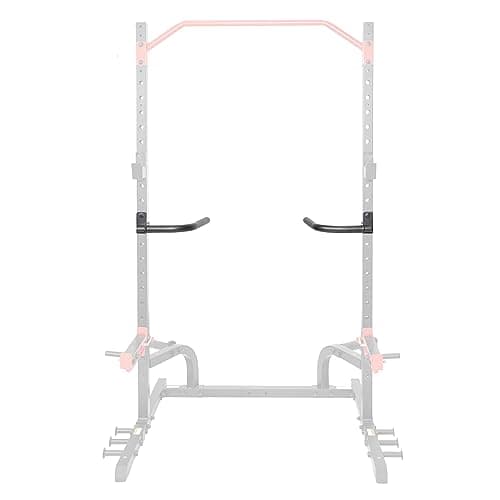
Sunny Health & Fitness Dip Bar Attachment (SF-XFA002)
Dip bar pairPower rack mountSunny Power Zone ecosystemSteel construction
Dips are the cheapest strength you can bolt onto a rack, and this is the branded, supported way to do it.
- Durability
- 9
- Fitment
- 7
- Function added
- 7
- Ease of install
- 9
- Value
- 8
Pros
- +Adds a full dip station for the price of a couple of plates, using rack space you already paid for
- +Part of Sunny's Power Zone attachment line, so it is designed against a rack you can still buy parts for
- +Steel with no moving parts — an attachment with essentially nothing to wear out
Cons
- −Model-specific fitment; measure your uprights and hole size before ordering
- −Fixed grip width, so you can't switch between narrow and wide dips
Don't buy this if…
…your rack is not a compatible Sunny frame. Generic dip bars fit a wider range of uprights and are the better bet on an off-brand cage.
Highest published strap capacity
Titan Fitness Titan Series Safety Strap Spotter Arms (1,200 lb)
1,200 lb capacityOutside-the-rack liftingSet of 2Titan Series
The highest published strap capacity we can find on a live listing, and the only one rated for lifting outside the rack rather than inside it.
- Durability
- 8
- Fitment
- 6
- Function added
- 9
- Ease of install
- 8
- Value
- 5
Pros
- +A published 1,200 lb capacity — the highest stated figure on any strap we found listed, and well beyond anything a home lifter will bail
- +The listing states it is for outside-the-rack lifting, which is the arrangement most strap sets do not cover and the one that lets you bench in front of the uprights
- +Titan publishes warranty terms you can read before ordering, which on webbing — a consumable — is worth more than on steel
Cons
- −By a wide margin the most expensive safety upgrade on this site, and several times the price of a strap set that would also catch your misses
- −The listing does not publish a strap length or the rack profiles it fits, so measure your uprights and depth and confirm with the seller first
- −Nylon webbing is still a consumable whatever it is rated for — it ages under UV and repeated heavy bails in a way steel does not
Don't buy this if…
…your rack already has working steel safeties and you only wanted straps to protect the knurl. The Synergee set does that job for a fraction of this, and its 750 lb rating is already more than you will bail.
Which attachment for which goal
Attachments get bought in the wrong order more often than they get bought in the wrong size. If you know what you are trying to add, this is the shortest route to it.
| What you want to add | Buy this | What it costs you |
|---|
| Vertical pulling under adjustable load | Lat tower | The most money, the most fitment risk, an evening to fit |
| A catch for a failed rep, on a rack without one | Safety straps | Little — and it is the one attachment with a safety argument |
| Dips and a second pressing angle | Dip bars | Least money per new movement of anything here |
| Rotational and single-arm pressing | Landmine | Cheap, but needs floor space in front of the rack |
| Crossovers and unilateral cable work | Nothing on this page — you need two independent pulleys | A rack with cables built in, or a standalone trainer |
That last row is the honest limit of the category. A bolt-on tower gives you a high pulley and usually a low one; it cannot give you two pulleys that move independently, which is what crossovers and most unilateral cable work require. If that is what you are after, the decision is between a rack with the cables designed in and a machine of its own — we compare those directly.
And if you have not bought the rack yet, buying the attachment separately may be the wrong plan entirely: a rack that ships with a tower generally costs less than a bare rack plus the tower bought later. Which tier that lands in is set out in the best power racks by budget.
Availability moves around in this category
Rack attachments go in and out of stock more than anything else we track, and a tower that was the obvious buy last quarter can be delisted this one. We re-check every listing on this page against the live catalog and swap a pick out when its listing dies rather than leaving a dead buy button behind — the HulkFit Pro Series tower that used to lead this page went unavailable and has been replaced.
The advice is unchanged: a lat tower is still the attachment worth buying first. If the pick below does not fit your rack, more towers are ranked in the lat pulldown attachment roundup, which covers Titan, Mikolo and universal options alongside the fitment measurements to take first. Availability moves; the fitment rules below do not.
The fitment checklist
1. Measure the upright, don't trust the listing photo
Put a tape across the tube. 2 inches, 2×3, or 3 inches square. Write it down. Almost every return in this category traces back to skipping this step.
2. Measure a hole
5/8 inch and 1 inch are the two common standards. If you have a spare J-hook pin, measure that. Attachments state which they fit — the SELEWARE landmine, for example, is sold in both.
3. Check whether it needs one hole or two
Single-pin attachments are forgiving. Anything that spans two holes — dip bars, some safety arms — needs your rack's hole spacing to match. If the listing does not state spacing and you cannot ask, buy from your rack's own line.
4. Prefer plate-loaded over stack-loaded
For a home rack, plate-loaded attachments are cheaper, simpler, and use the plates you own. A selectorized stack is a lot of mechanism to add to a frame that had none.
5. Budget the wear parts
Steel attachments — dip bars, landmines — last as long as the rack. Anything with webbing or cable is a wear item: inspect straps annually for fraying and UV damage, and expect to replace a cable once over a long ownership. That is normal, and it is exactly the kind of thing our durability guide tells you to plan for rather than be surprised by.
How we picked
We do not run a testing lab
We compiled manufacturer specifications, read the published warranties, checked the relevant standards and aggregated owner reviews, then scored each product against a published rubric. The scores are judgments from documented research — they are not measurements we took, because we do not run a lab and we are not going to pretend we do. Where a number came from a manufacturer or a standard, we name it and link it in Sources.
Questions
Frequently asked
Do power rack attachments fit any rack?+
No, and this is the main reason attachments get returned. Fitment is decided by upright profile (2×2, 2×3, 3×3), hole diameter (usually 5/8 in or 1 in) and, for multi-hole attachments, hole spacing. Measure all three before ordering, or buy the attachment made by your rack's own brand.
What is the best first attachment for a power rack?+
A lat pulldown tower, because it adds a training category rather than a variation — vertical pulling with adjustable load. If your rack already has one, buy safety straps next; they are the upgrade with an actual safety argument behind it.
Are safety straps better than steel safety bars?+
They are better at protecting the bar and quieter on a bail, because the webbing absorbs the drop instead of transmitting it. Steel pins are stiffer and never need inspecting. Many people run both: pins for squats, straps for bench. Straps are a wear item — check them annually for fraying.
Can I add a lat pulldown to any power rack?+
Only if there is one made for your rack's upright size and hole pattern. Major lines (Body-Solid, Sunny, Titan, Rep) sell their own. Universal towers exist but check the mounting detail carefully — a lat tower applies a lot of leverage to the uprights, so fitment here matters more than on a dip bar.
Receipts
Sources
We do not run a testing lab, and we do not pretend to. Every spec, warranty term and standard above is the manufacturer's or a published source, cited and linked. Where we could not verify something, we say so on the page rather than quietly leaving it out. Read our full method.