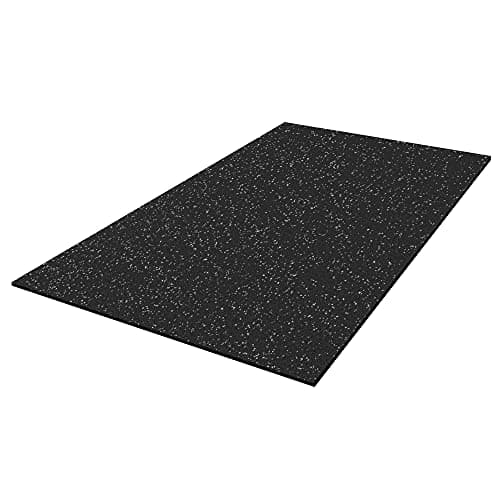
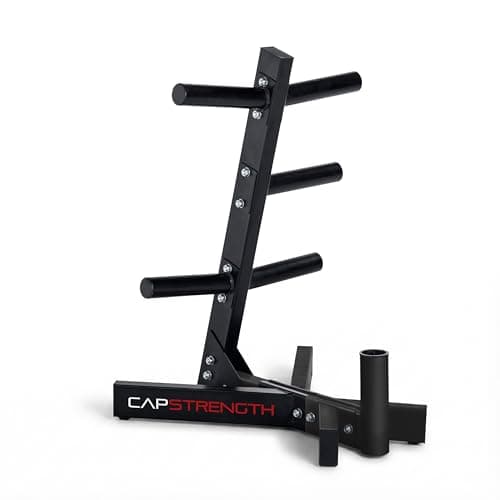
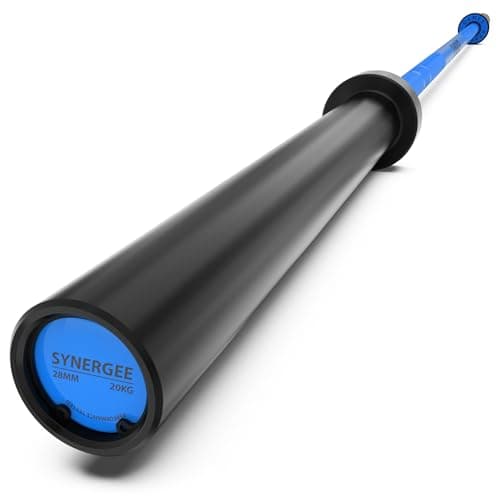
Garage rust is almost never rain. It is condensation: warm humid air meeting steel that is colder than the dew point, which happens most on the first warm day after a cold night. The four changes that stop it are a coated bar rather than bare steel, a moisture break between the slab and anything made of iron, air movement, and a thirty-second wipe-down after every session. If you are buying rather than maintaining, the single most effective purchase is a coated barbell — the Synergee Games bar publishes a ceramic coating, which is exactly the kind of spec to look for — plus a solid rubber mat so plates and rack feet never sit on damp concrete.
Why a garage rusts things a spare room does not
Three reasons, and all of them are about temperature rather than water:
- Steel lags the air. A 45 lb plate holds last night's cold for hours after the air warms up. Warm humid air hitting cold steel condenses on it, exactly as it does on a cold drink. That film is what starts the rust.
- Concrete is a moisture reservoir. A slab wicks ground moisture and releases it upward continuously. Anything iron sitting directly on it — plates stacked on the floor, a bar left on the ground, rack feet — gets a constant supply.
- Garages have no air movement. Still, humid air sits against the steel. Even a box fan on a timer changes this materially.
Chalk makes it worse by holding moisture against the knurl, and so does sweat, which is salty. Sweat on a bar is a far faster corrosion mechanism than humidity alone.
What rusts first, in order
| Part | Why it goes first | What prevents it |
|---|
| Barbell knurling | Bare steel, holds sweat and chalk in the grooves | A coating, plus a brush and oil after use |
| Barbell sleeves and shaft | Machined surfaces, often thinly finished | Coating choice; wipe down after every session |
| Cast iron plates | Painted, not coated — chips expose iron | Get them off the slab; touch up chips |
| Rack and bench hardware | Bolts and pins are usually plated, not powder-coated | A wipe of oil on threads and pins annually |
| Cable ends and clips | Small machined parts with no coating | Keep dry; replace when pitted |
| Powder-coated frames | They mostly do not — unless the coat is chipped | Touch up chips with paint |
Note what is not on the list: rubber bumper plates, rubber-coated dumbbells and urethane anything. If your garage is genuinely damp, biasing the gym towards coated and rubber-clad equipment is a purchasing decision that pays off for decades.
The four changes, in order of effect
1. Buy the coating, once. A bare steel bar in a damp garage is a maintenance commitment for life. Ceramic, Cerakote, stainless and zinc all resist corrosion far better than bare or lightly oiled steel, and they cost a one-off premium rather than a weekly chore. Which coating to pick, and what each gives up in grip feel, is the whole of barbell coatings compared.
2. Break the contact with the slab. Nothing iron should sit directly on concrete. Plates belong on a tree or a rack; bars belong in a holder; rack feet and bench feet belong on rubber. Solid vulcanized rubber is the right material here because it does not absorb water the way foam does — see home gym flooring and plate storage.
3. Move the air. A cheap box fan on a timer for an hour a day does more for a garage than most owners expect, because the failure mode is still air against cold steel. A dehumidifier is better still if the garage is sealed enough for one to work; in a leaky garage it will run forever and achieve little.
4. Thirty seconds after every session. Wipe the bar down with a dry cloth to take the sweat off, and once a month brush the knurl with a nylon or brass brush and wipe a thin film of 3-in-1 oil along the shaft. That is the whole routine, and it is the difference between a bar that looks new in twenty years and one that is pitted in two. The detail is in how to stop barbell rust.
If it has already started
Surface rust on a knurl comes off with a brass or nylon brush and oil; it is cosmetic and it is not an emergency. Rust on plates comes off with a wire brush and is then worth sealing — the full method, including when not to bother, is on how to clean rusty weight plates. What you cannot fix is pitting: once the surface is pocked, the metal is gone and the knurl will never feel right again. That is why prevention is the whole of this page.
Never use coarse steel wool or an angle grinder on a knurl. You will remove the pattern along with the rust and turn a repairable bar into a smooth one.
What this means when you are buying
An unheated garage should change what you buy, not just how you maintain it. Favour coated bars over bare steel, rubber-encased or bumper plates over painted cast iron, powder-coated frames over painted ones, and storage that holds everything off the floor. None of that costs much more at purchase, and all of it removes a recurring chore from the next thirty years. The same logic drives our whole approach in home gym equipment that lasts.