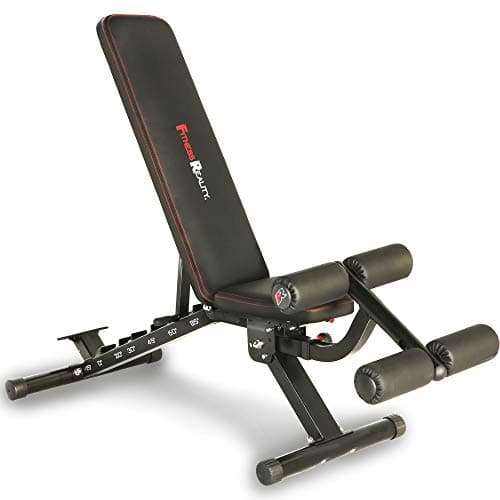
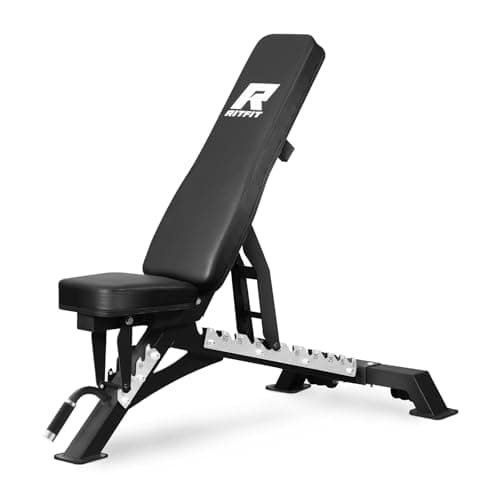
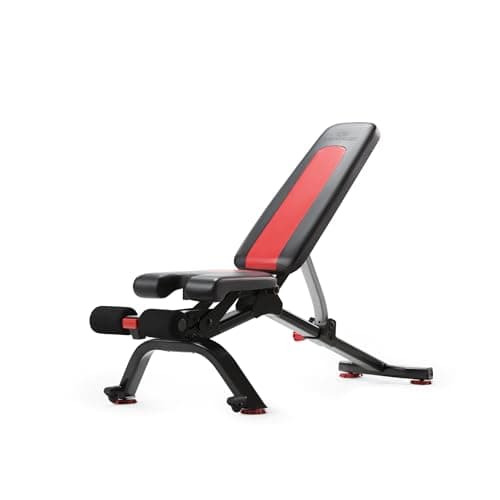
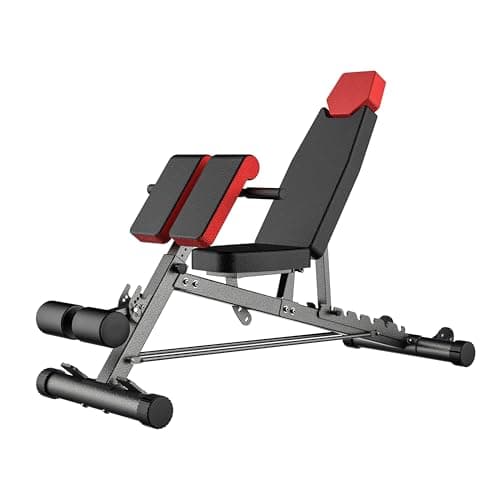
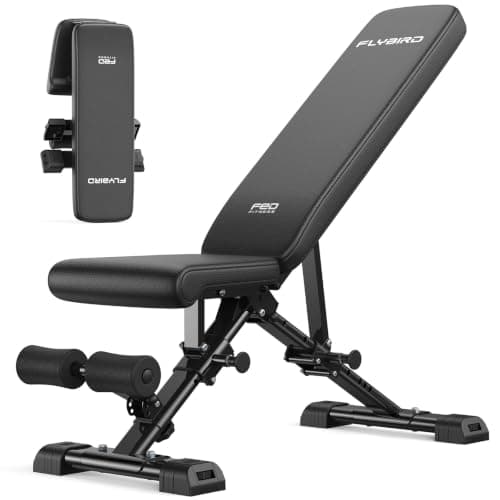
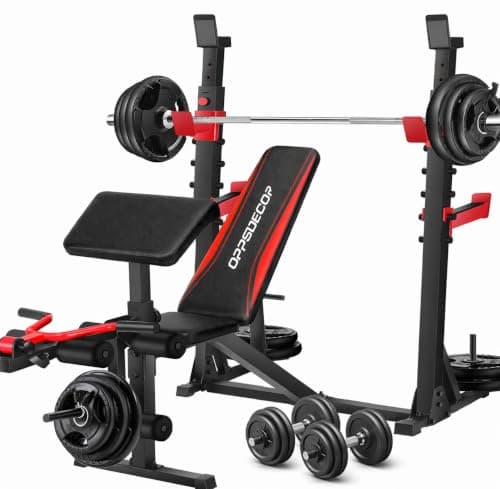
Buy the FLYBIRD WB5 if you want one bench that does almost everything — it is the value adjustable that keeps turning up in real garage gyms, ASTM-rated and folds flat when you're done. If you press heavier and want more margin, the Fitness Reality 2000 closes the seat-to-back gap and carries a higher rated capacity. Both are full incline-to-flat benches, which is the feature that lets one bench cover pressing, rows and dumbbell work instead of buying two. If the bench will live inside a power rack, fitment beats comfort as a criterion and the ranking changes — see the best benches for a power rack.
A bench has a harder life than it looks
A weight bench is the piece people underthink. It looks like a padded plank on legs, so it is easy to grab the cheapest one and move on. But a bench lives a rougher life than almost anything else in the room. It carries you plus a loaded bar, it takes that load off-center every time you unrack and rerack, and it gets sat and lain on while you are dripping sweat, session after session, for years. The failures are slow and unglamorous — nothing snaps on day one — which is exactly why the cheap bench feels fine in the store and disappoints two winters later.
Three things wear, and none of them is the steel plank you picture. The frame can flex and rock. The adjustment mechanism develops play. And the pad compresses flat. Rank a bench on those and you buy once; rank it on the sticker and you buy again.
What we rank on
- Frame gauge and stability. The tube thickness and the width of the feet decide whether the bench sits planted or rocks a little under a heavy press. A wide, welded base and thicker steel are what keep a loaded bench from walking on you when you lift off-center. A bench that rocks is not just annoying — it is where confidence and safety go.
- Adjustment play (the "slop"). An adjustable bench sets its angle with a ladder or pin. That joint is a moving part, and moving parts develop a little play over time — the faint knock you feel at the top of a press. A well-made ladder with tight tolerances stays quiet for years; a loose one gets sloppier the more you use it. This is the single biggest difference between a bench that ages well and one that annoys you.
- Pad density. Foam is the part that quietly fails. Cheap open-cell foam feels fine new, then compresses flat over a year or two of being sat on wet, until you are pressing on a board with a cover. Denser, higher-quality foam holds its shape and keeps your shoulder blades from sliding. It is the spec no listing brags about and the one owners notice most.
- Rated capacity. Manufacturers publish a number, and we cite theirs rather than guess. Almost any rated bench clears you plus the heaviest bar you will realistically load. The figure matters most as a proxy for how seriously the frame was built, and an ASTM-tested rating is worth more than a big unverified one. If you press heavy and the rating is the spec you are shopping on, the frames sorted by tube spec and mass rather than by the headline number are in the best heavy-duty weight benches.
A bench is also only half a pressing setup. If you plan to barbell bench alone, it belongs inside a power rack with safeties, not out in the open — the bench holds you, the rack catches the bar. Pair it with a load from our weight plates roundup and a set of dumbbells and one bench turns into a real gym. The durability-first thinking behind every pick is spelled out in how we choose.
Two questions sit either side of this list. If you have not settled whether you need a bench at all, start with do you need a weight bench, which is blunt about the cases where the answer is no. And if dumbbells rather than a barbell are what you train with, the criteria change enough that we rank the category separately on the best benches for dumbbells.
How to choose a weight bench
Adjustable FID or a plain flat bench?
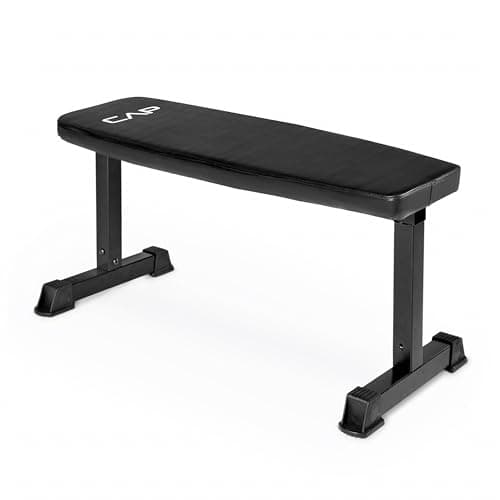
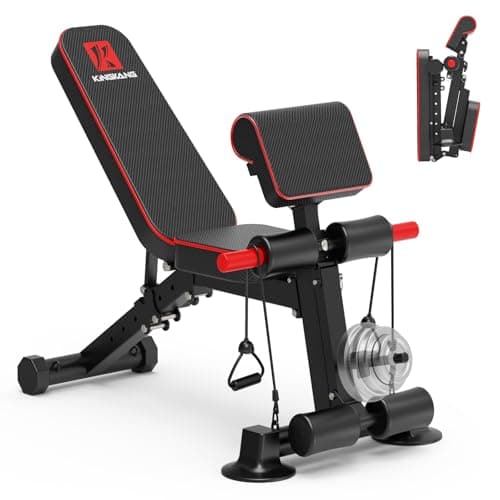
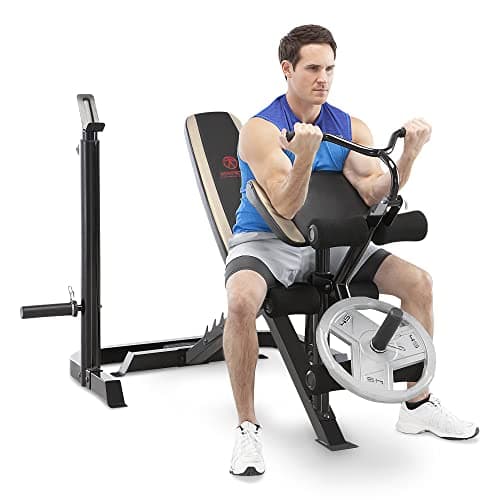
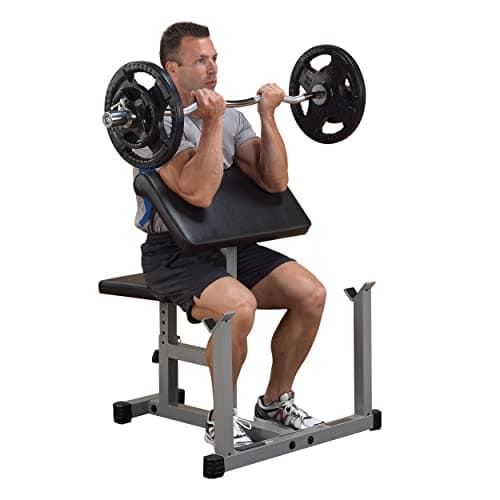
This is the first fork. An adjustable FID (flat / incline / decline) bench angles up for incline pressing and rows and lies flat for the barbell bench, so one bench covers your whole program. A flat bench does one thing and has no moving parts to fail. If your training uses incline at all, buy the adjustable. If you press flat and value permanence over range, the flat bench is the honest, cheaper answer — we make that case in full in our best flat benches roundup and weigh the two head to head in flat vs adjustable. If lifespan is the whole reason you are choosing, we rank the field on moving parts and certified capacity in the longest-lasting weight bench. The two benches we get asked about most have reviews of their own: the FLYBIRD WB5 and the BowFlex 5.1S. If what you are really after is a single-station curl frame rather than a training bench, that is the preacher curl bench roundup.
The seat-to-back gap problem
On a lot of budget adjustable benches, the seat and the backrest are separate pads with a gap between them at steep incline. Sit down and your rear settles into that gap, which is uncomfortable and puts you in a slightly worse pressing position. Better benches either close the gap with a no-gap design or overlap the pads. It is a small thing you feel every single incline set, so it is worth checking before you buy.
Pad thickness and density
Thickness sells the bench; density keeps it. A thick pad feels plush in a photo, but if the foam is soft it compresses flat within a year or two of sweaty use and you end up pressing on the plywood underneath. What you actually want is dense, firm foam — it supports your shoulder blades, keeps you from rolling, and holds its shape. Read owner comments for the phrase "pad went flat" and believe it.
Rated capacity versus real rigidity
A big capacity number looks reassuring, but it is not the same as a bench that feels solid. Capacity is a static rating; rigidity is how little the frame flexes and rocks when you press off-center. An ASTM-verified rating is worth more than a larger self-declared one, and a wide, well-braced base does more for how planted a bench feels than another few hundred pounds on the label. Buy for the base and the bracing, not the biggest headline. The frames where that gap between a certified figure and a stated one is widest are the bench-and-rack combos, ranked in the best bench press and squat rack combos.
Folding versus fixed
A folding bench tucks away between sessions, which small and shared rooms genuinely use. The trade is that the hinge is one more part than a welded bench has. In practice a good folding bench is plenty sturdy for home loads — the fold is a real feature, not a compromise, if you actually need to store it. If the bench can live out permanently, a fixed frame is a touch more solid for the money.