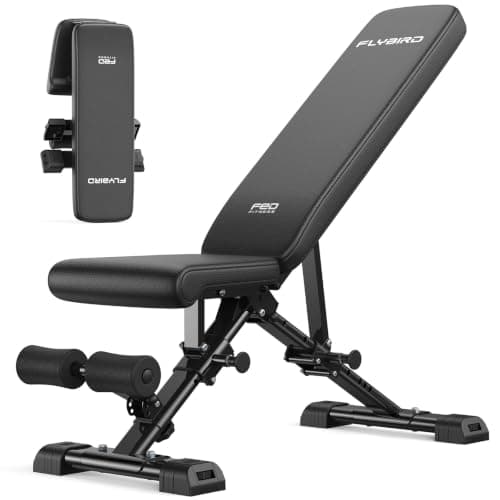
The FLYBIRD WB5 is the bench we recommend most often, and the reason is one word on the listing: certified. In a category where every brand claims a four-figure capacity, a tested figure is the only piece of independent evidence available — and this bench has one. The bench most often cross-shopped against it is the Finer Form FID, and the two are set side by side in FLYBIRD WB5 vs Finer Form.
What ASTM certification actually means
ASTM International publishes consensus standards, including ones covering strength-training equipment. A bench certified to a relevant ASTM standard has been tested against a defined procedure rather than simply assigned a number by its manufacturer.
That is not the same as a guarantee, and it does not mean the bench is stronger than an uncertified one that claims more. What it means is that the number has a method behind it. Given that this is the only third-party evidence available anywhere in the home bench market, we weight it heavily — exactly the reasoning laid out in how we choose.
The practical version: 800 lb is roughly four to five times what a home lifter plus a heavy bench press puts through the frame. You are not going to find its limit.
What the bench does
Adjustment range
Multiple back positions from flat through incline to upright, plus seat adjustment. That covers flat press, incline press, seated shoulder press and every dumbbell variation. Decline is the one position it does not prioritize — if that matters to you, a full FID bench is the buy.
Folding
It folds, which is why it also appears in our folding bench roundup. That is a genuine convenience in a shared room and a small rigidity cost in a dedicated gym. If the bench never moves, a fixed frame is stiffer for the money.
Footprint and fit
It is a compact bench, which is usually an advantage — it fits inside most power rackswithout fighting the uprights. Measure your rack's internal width anyway; that check takes thirty seconds and prevents the most common return in this category.
What will wear out first
In order, and none of these are defects — they are the normal life of a bench:
- The vinyl.Sweat and UV are what kill bench pads. Wipe it down, keep it out of a sunny window, and it lasts far longer than most people's does.
- The pad foam. Compresses gradually under repeated loading. You notice it as the bench feeling softer and your shoulder position changing slightly.
- The adjustment mechanism. Any ladder or pin system develops some play over years. Keeping grit out of the mechanism is most of the prevention.
- The frame. Effectively never, in home use. Steel tube under a load it is rated for five times over does not fatigue.
Who should buy something else
If you press genuinely heavy and want zero movement anywhere, buy a heavier fixed FID bench — a folding frame will always give up a little. If you never adjust the bench, a flat bench costs a third as much and has no mechanism at all to loosen. And if you want decline plus leg attachments, this is not that bench.
For everyone else — which is most people building a home gym around a rack, a bar and some plates — this is a bench you buy once. At a decade of ownership its cost per year is in the low teens, which is the kind of number that makes the whole buy-it-for-life argument concrete rather than abstract.
Getting the most out of it
Check it against your rack before ordering
Widest point of the bench against internal rack width; pad height against your J-hook positions. Both numbers, both before you buy.
Set it up on a flat surface
A bench on uneven flooring rocks regardless of how well it is built. If your floor is a rough garage slab, a rubber mat under the bench solves it and does several other useful things at the same time.
Adjust it before you load up
Get the back angle set and locked before the bar is in your hands. Adjusting a mechanism under load is how pins get bent and ladders get chewed.
Wipe the vinyl, every time
Sweat sitting in seams is what splits vinyl from the inside. Ten seconds with a cloth after each session more or less doubles a pad's useful life.