An apartment gym is rubber on the floor, a pair of adjustable dumbbells, a bench that folds, and a pull-up bar that mounts without a drill — and, if the lease and the floor allow it, a freestanding rack with nothing that will ever be dropped in it. That list is not a compromise. Each piece on it is one this site would recommend in a house, chosen here because it also passes the three tests below.
The three constraints, and what each rules out
1. You cannot drill
Most leases forbid anchoring into the floor or mounting into studs, and a deposit is a poor trade for a wall-mounted rack. That rules out the folding wall racks and the wall- and ceiling-mounted pull-up bars, however good they are. It does not rule out a freestanding cage on rubber feet, which needs no anchor if it has mass and is not used for dropped lifts — the anchoring question is worked through in how to anchor a squat rack.
2. Someone lives below you
This is the constraint that decides the equipment list, and it is two problems: noise and structure. Noise is dumbbells set down hard, a bar re-racked with a clang, plates stacked on a bare floor. Structure is the floor itself — an apartment floor is designed to the same residential live loads as a house, and the same rules apply: spread the load, drop nothing. The structural side is covered in full in home gym on the second floor. The rule for the neighbor is simpler: if a piece of equipment only works when something hits the floor, it does not belong in an apartment. Bumper plates and dropped deadlifts are out.
3. The room has to be a room again
A spare bedroom in a house can be a gym forever. An apartment living room cannot. Everything on the list either folds, stacks, or occupies the footprint of a piece of furniture, and the heaviest single item is one person can move.
What passes all three
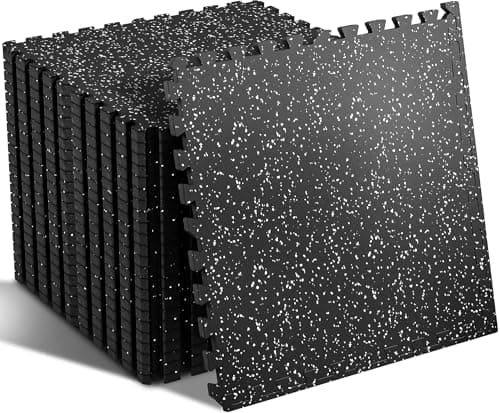
Rubber-top tiles. Before anything else. The SUPERJARE tiles are 0.56 inch rubber over EVA foam, 48 square feet a box, and their listing makes the specific claim that the foam layer reduces noise and vibration — which is precisely the apartment problem. Foam under rubber absorbs what rubber alone transmits. They interlock, so a 6 by 8 foot gym goes down in minutes and comes up when you move. The wider field is in the best home gym flooring.
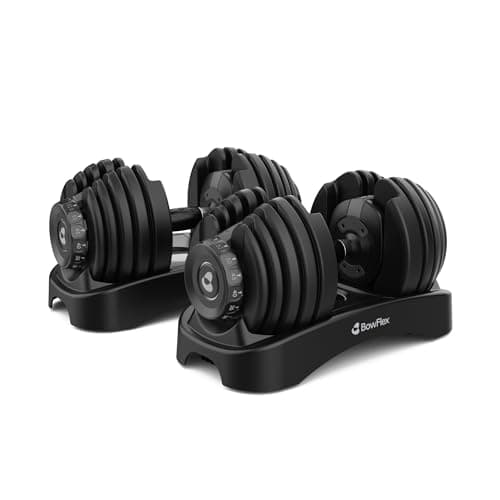
Adjustable dumbbells. One pair replaces a rack of iron that would be both the noisiest and the heaviest thing in the room. The BowFlex 552 covers 5 to 52.5 lb a hand, lists at 110.6 lb for the pair, and — since it must never be dropped anyway — costs you nothing in an apartment that it would not cost in a house. Its trays are its storage. If you would rather own no mechanism at all, a few pairs of rubber hex dumbbells set down on the tiles are the quiet alternative; the trade is floor space.
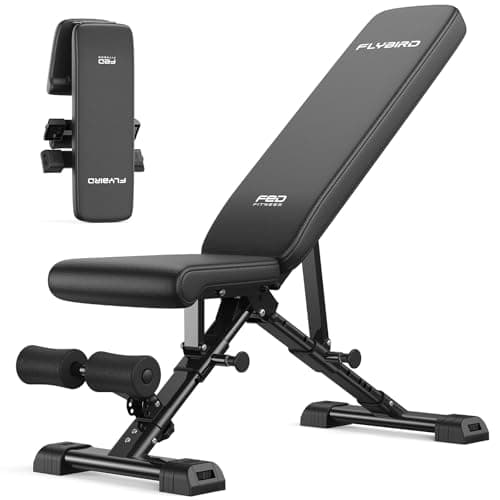
A bench that folds thin. The FLYBIRD WB5 folds to a published 9.06 inches wide, weighs 28.5 lb and carries an ASTM-certified 800 lb rating, which is more bench than an apartment dumbbell program will ever load. It goes behind a door. The alternatives are ranked in the best folding weight benches.
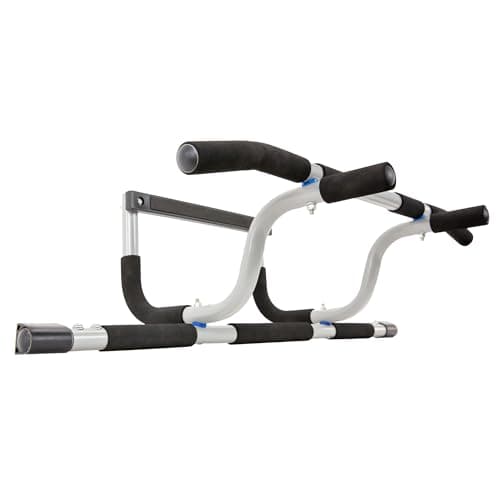
A doorway pull-up bar. The one piece of overhead equipment that needs no drill. The Ultimate Body Press XL is the doorway bar we rank highest; it is rated and sized for the doorway it fits, which the listing states and you should check against your frame before ordering. Every mounted alternative is in the best pull-up bars; only the doorway bars pass the lease test.
Can you put a rack in an apartment?
Often, with conditions. A freestanding cage — not a wall-mounted one — on rubber tiles, with iron plates rather than bumpers, used for squats and presses that are re-racked rather than dropped, is a quiet, well-distributed load that most apartment floors are designed for. The VEVOR cage in the best budget power racks weighs 59.75 lb and covers a listed 17.7 square feet, which is a bookcase and a half. The FLYBIRD SR1 in the best squat racks for small spaces is smaller still. The room dimensions to check first are in how much space a power rack needs.
What you cannot do in an apartment is deadlift with bumpers, drop a bar onto safeties as a habit, or store several hundred pounds of plates in the middle of a long span. If the training you want is built on those, the honest answer is a gym membership for those lifts and an apartment gym for the rest — the arithmetic is in home gym vs gym membership.
What does not pass, and why
- Wall-mounted folding racks. The best space-savers in the category, and they need lag bolts in studs. Buy one the day you own the wall.
- Bumper plates. They exist to be dropped. Iron plates, set down, are quieter and cheaper.
- A power tower. Freestanding and drill-free, so it passes the lease — but it is a tall frame that does not fold, and a doorway bar does its main job for a fraction of the floor. It passes only if dips and knee raises are the point; the best power towers ranks them.
- An all-in-one machine. Heavy, permanent, and the least durable thing in the category. See are all-in-one home gyms worth it.
- Cardio machines you run on. Impact through the floor, every stride. Off topic for this site and off limits for the neighbor.
Moving out
The last apartment test is the one nobody plans for. Everything on the list disassembles or folds, the heaviest item is the dumbbells at 110.6 lb for the pair, and a 2x2 cage comes apart into tubes one person carries. That is also the reason to buy durable now rather than cheap now: a gym that survives two moves has paid for itself, and the cost per year of equipment that moves with you is what a lease-to-lease lifter should be optimizing.