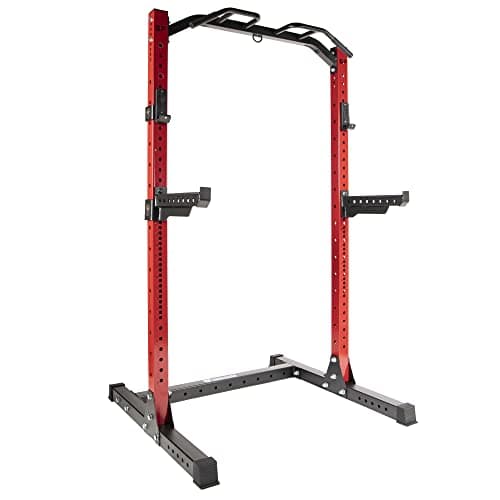
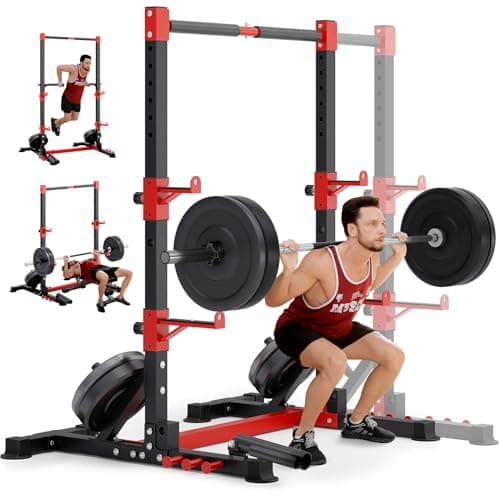
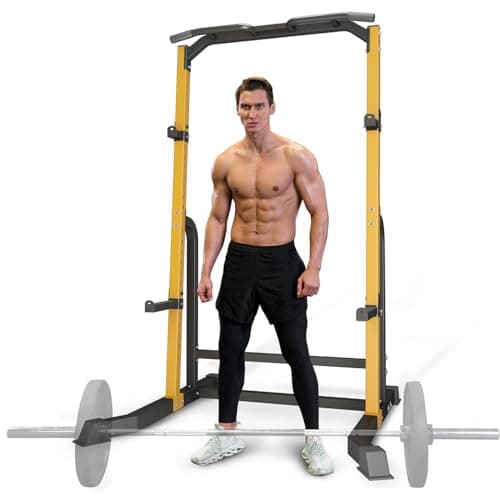
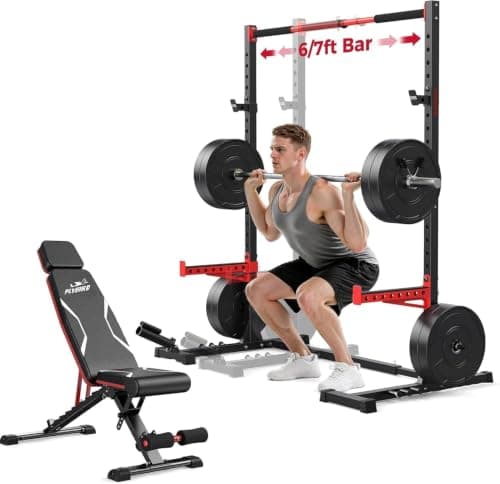
The FLYBIRD SR1 is the one most small rooms should buy, and the Signature SF-SS1 is the one to buy if you would rather have 3×3 steel than a smaller number on the tape measure. Both keep the thing that matters when a rack gets small: it still has to hold a loaded bar without walking.
What "small space" actually costs you
Shrinking a rack takes away three things, and it is worth knowing which you are trading. It takes away the enclosed catch — a squat stand does not surround you the way a cage does, so a failed rep is caught by spotter arms rather than by a frame. It takes away mass, which is what keeps a rack planted when you un-rack a heavy bar carelessly. And it usually takes away the attachment ecosystem, because there are fewer uprights to bolt things to.
What it does not have to take away is steel quality or a published capacity. That is the line between a small rack and a bad one, and it is where this list draws the boundary. If you can take a full cage, our power rack roundup is the better page — a cage is the safer object when the room allows it. Whether it does is a measuring job: how much space a power rack needs lists every rack's published height and footprint and the clearances to add. And if the small room is a rented one, the lease and the neighbor add constraints of their own, worked through in how to build a home gym in an apartment.
How we ranked them
Footprint first, but measured honestly: the number that matters is the space the rack needs with a seven-foot bar loaded and room to walk out, not the frame width on the box. Then adjustable width, because a rack that narrows to fit a wall and widens for a full bar is doing real work in a small room. Then published capacity and upright profile. Then whether the frame can grow — a small rack you can add to is a small rack you keep.
Where each one fits
FLYBIRD SR1 — the default small-room pick
Adjustable uprights, a pull-up bar and J-hooks in a stand-sized footprint, and it takes both six- and seven-foot bars. That last spec matters more than it sounds in a tight room: if your rack only spans a seven-foot bar, you cannot downsize the bar to fit the wall. We review the frame in detail in the FLYBIRD SR1 review.
Signature SF-SS1 — the one that does not feel small
3×3 inch uprights and a published 1,000 lb rating put this in commercial-profile territory while still being a stand rather than a cage. It is conversion-kit ready, which is the expandability argument: the stand you buy for a spare room can become the front half of a bigger rack later. If you expect to get strong and stay put, this is the one.
YOLEO — when the wall dictates the width
The 35 to 67 inch adjustable width is the standout spec here. Most racks are one width and you build the room around them; this one narrows to squeeze past an obstruction and widens for a full bar. The 83 inch frame height and the 71.5 to 80.5 inch pull-up bar range also make it one of the easier frames to fit under an awkward ceiling.
ZENOVA — the budget entry that still publishes a number
An 800 lb published capacity and a pull-up bar at the bottom of this list on price. It fits six- and seven-foot bars like the others. It is the least expandable of the four, so it is the right buy if this is the rack you need now rather than the frame you grow into.
The mistakes that ruin a small setup
Measuring the rack instead of the room
A seven-foot bar is seven feet wide whatever rack it sits in, and you have to load plates on both ends. The frame footprint is almost never the binding constraint — the bar and the loading clearance are. Measure the swept space, not the steel.
Forgetting the ceiling
Pull-up bars need headroom above the bar, not just to it. If the ceiling is low, check whether the model lets you drop the pull-up bar height, as the YOLEO does, before assuming the rack fits. Racks chosen on published height rather than footprint are ranked separately in the best power racks for low ceilings.
Letting a light rack stay light
Small racks weigh less, and less mass means more movement under a heavy un-rack. Both fixes are cheap: bolt it down, or load the base where the design allows. Our anchoring guide covers what to do when drilling the slab is not allowed.
What to buy alongside it
A small rack changes what else you should own. Bumper plates are wider than iron for the same weight, which eats sleeve length you may not have to spare — in a tight setup, cast iron packs more load into less space. A six-foot bar racks in a narrower span than a seven-foot one, which is covered in the barbell roundup. And a folding bench keeps the floor clear between sessions.
If even a stand is too much frame, the honest next step is a wall-mounted rack that folds flat — see the best folding power racks.