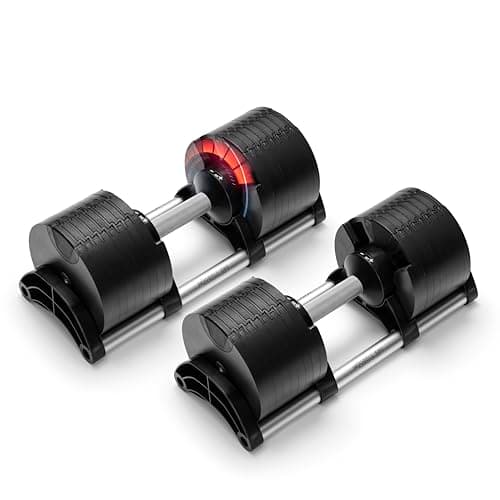
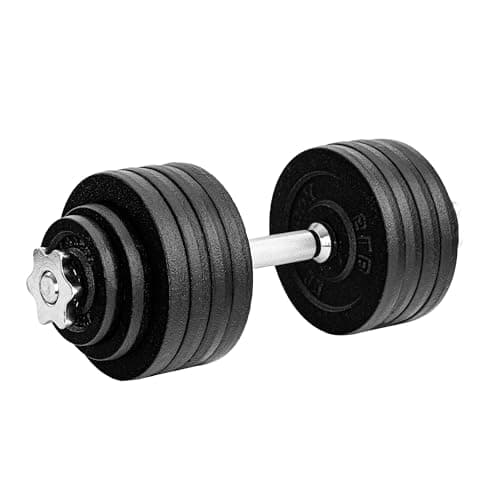
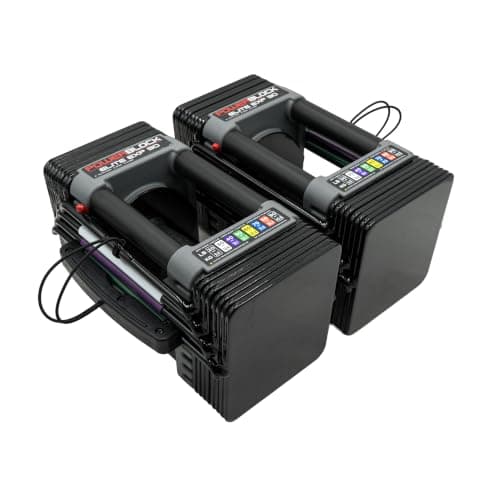
The weight in an adjustable dumbbell is effectively immortal. The selector mechanism that picks it up is the part with a lifespan — and how you set the dumbbells down matters more than which brand you bought.
What actually fails
Almost nobody wears out the plates. Steel and cast iron under a hand does not degrade. The failures that end an adjustable dumbbell are, in rough order of how often they happen:
- The selector stops engaging cleanly. A dial that will not land on a weight, or a pin that no longer seats. Usually caused by shock loading — setting the dumbbell down hard, repeatedly.
- The cradle or tray cracks. On designs where the handle lifts plates out of a plastic cradle, the cradle is often the weakest part in the system and it lives on the floor.
- Plate retention develops play. The plates start to rattle on the handle. Not immediately dangerous, but it is the first sign the tolerances have opened up.
- Handles and knobs wear. Least common and usually cosmetic, though a selector knob that has lost its markings is genuinely annoying.
Notice that three of the four are the mechanism. This is why we rank adjustables partly on drop tolerance in the roundup — it is the closest available proxy for how long the mechanism survives real use. If you want the mechanisms themselves taken apart one at a time, that is how adjustable dumbbells work, and what to do once one of them goes is can adjustable dumbbells be repaired.
How the mechanism types compare
| Design | How it selects | Longevity outlook |
|---|
| Spinlock | Threaded collar, plates slide on | Effectively permanent — no mechanism to fail |
| Selector pin, block format | Pin through nested shells | Strongest of the true adjustables; shells absorb impact |
| Twist handle | Rotate the handle to select | Good, but the mechanism sits where impact arrives |
| Dial and cradle | Dial each end, plates lift from a tray | Most convenient, most exposed — the cradle is a common failure |
Read that as a ranking of exposure, not of quality. A well-made dial dumbbell treated gently will outlast a badly treated block one. But if two people treat their dumbbells identically badly, the block format is the one still working.
The honest numbers question
You will find confident claims online about how many years a given brand lasts. We are not going to add to them, because there is no published testing standard for adjustable dumbbell mechanism life and we do not run a lab — the same position we take on how we choose.
What can be said honestly is structural. A dumbbell with no mechanism cannot suffer a mechanism failure. A mechanism shielded from impact by a steel shell sees less shock than one sitting directly under the plates. A plastic cradle carrying the full weight of two dumbbells is a part under load that steel components are not. Those are design facts, and they let you reason about longevity without anyone pretending to have run a ten-year study.
How to make them last
Set them down, do not drop them
This is the whole game. Almost every mechanism failure traces back to shock loading. If you train to failure with heavy dumbbells and cannot always place them gently, buy the design that tolerates it — that is the argument in the PowerBlock review — or accept you are consuming the mechanism faster.
Put something soft under them
Concrete is unforgiving. A rubber mat under the dumbbell station absorbs the impact that would otherwise travel into the selector, and it protects the floor. Our flooring guide covers what works.
Return them to the cradle at the selected weight
Most designs expect the dumbbell to be sitting in its tray, at a valid weight setting, when you turn the dial or move the pin. Forcing a selector while the dumbbell is in the air or half-seated is how tolerances open up.
Keep them out of damp
Selector mechanisms have small moving parts and springs. Surface rust on a plate is cosmetic; rust inside a mechanism is not. A garage that swings between cold and humid is the worst case — the same environment problem covered in stopping barbell rust.
What to do when the mechanism goes
Check parts availability before you conclude the pair is finished. Established brands sell replacement selectors, cradles and knobs; anonymous listings generally do not, which is the practical argument for buying a brand that will still exist. Where those parts actually come from — official channels, specialist suppliers and the aftermarket — is mapped in replacement parts for home gym equipment. It is the same reasoning we apply to racks and benches in the brands guide.
If parts are unavailable, the plates still have value and the metal is still metal. It is a poor consolation, but it is why the durability question is worth asking before you buy rather than after.
The buy-it-for-life answer
If you want dumbbells that genuinely last decades with no mechanism risk, buy spinlock cast iron and accept slower weight changes. If you want convenience and durability together, buy the most impact-tolerant selector design you can and put a mat under it. If you want maximum convenience, buy a dial design from a brand that sells parts, and be gentle with it.
All three are defensible. What is not defensible is buying the most convenient design, treating it roughly on concrete, and being surprised. The comparison is laid out in full in adjustable vs fixed dumbbells.
Adjustables are the shortest-lived dumbbells because they are the only ones with a part that can stop working. For the rest of the category — bare cast iron, rubber-coated hex, chrome handles and vinyl-filled weights, ranked by what ends each one — see how long dumbbells last.