Skip to content
Plate&Rack

The method · Buy It For Life Guides

Strength Machines vs Free Weights

Most comparisons argue about muscle activation. The more useful home-gym question is simpler: one of these has moving parts and one does not.

By Stephen V.Updated How we choose
#ad

We earn a commission when you buy through our Amazon links, at no extra cost to you. It never affects our rankings, and we say so when the cheaper product is the better buy. How this works.

For a home gym, free weights win — not because of anything to do with muscle activation, but because a barbell and a rack have essentially nothing in them that can wear out, cover every lift, fit in less space and hold their resale value. A machine earns its place in a home gym only when it does something free weights genuinely cannot.

The training argument between machines and free weights has been running for fifty years and we are not going to settle it here. What we can do is the equipment argument, which is the one this site is for and which almost nobody writes down.

The comparison in one table

Free weightsStrength machines
Wear partsAlmost none — a J-cup liner, sleeve greaseCables, pulleys, bearings, guide rods, upholstery, selector pins
Expected lifeDecades; plates are permanentLong, with periodic parts replacement
Exercises per square footVery high — one bar covers everythingLow; most machines do one or two movements
Space neededA rack footprint plus a lifting areaA dedicated footprint per machine
Load incrementsUnlimited, down to fractional platesFixed by the stack, unless plate-loaded
Learning curveHigher — technique mattersLower — the path is guided
Training alone safelyNeeds a rack with safetiesGenerally inherently safe
Resale valueStrong — plates and bars barely depreciateWeak — bulky, dated, hard to move
Moves houseAwkward but routineOften a professional job or a giveaway

The durability argument, in full

Take a rack, a barbell and a set of plates. The plates are solid iron: no parts, no joints, no polymer. The bar is a shaft and two rotating sleeves, and its only consumable is grease. The rack is welded or bolted tube whose only wear items are the plastic liners in the J-cups. That is the entire maintenance list for a complete strength gym.

Now take a selectorized machine. Cable running over pulleys under load, thousands of cycles a year, bending sharply at each sheave. A stack riding on guide rods through plastic bushings. A selector pin entering a hole in soft steel. Upholstery under a sweating body. Every one of those is an interface where two things move against each other, and moving interfaces are the definition of a wear part.

This is not an argument that machines are badly made. Commercial gyms run them for decades — with a maintenance contract. It is an argument about what happens in a garage where nobody has a maintenance contract, which is the situation our lifespan table is written for.

Exercises per square foot

The second argument is about space, and it is decisive in a home.

A barbell and a rack do squats, front squats, bench press, overhead press, rows, deadlifts, rack pulls, shrugs, curls and lunges. Add a bench and you add every incline and decline variant. Add a pair of adjustable dumbbells and you have essentially covered resistance training. The footprint is one rack plus the floor you stand on.

A leg press does leg presses. A pec deck does pec flyes. Each occupies a dedicated footprint permanently. In a commercial gym that is fine because the floor is shared across hundreds of members. In a garage it is the whole floor for one movement, and it is why the order of purchase on this site is a barbell and a rack first, every time.

Where machines genuinely win

Three cases, and they are real.

Movements free weights cannot load. Gravity pulls down, so a barbell cannot load a lat pulldown or a cable fly. That is not a preference, it is a physics constraint, and it is the honest reason to own a lat attachment or a cable station. Notice that both of those are additions to a rack rather than replacements for one.

Training alone with no spotter and no rack. A machine cannot drop on you. If you will not buy a rack with safeties, machines are the safer choice — though the honest answer is usually to buy the safeties.

Rehabilitation and constrained ranges. A guided path is genuinely useful when the goal is loading a joint through a specific range without stabilizing demands.

The resale point nobody mentions

Free weights hold value extraordinarily well. Plates and bars are commodities that do not go out of date, do not wear and cannot be superseded by a new model — a used 45 lb plate is exactly as good as a new one. That is why the used market for them is thin and prices are stubborn, and it is why the real cost of owning free weights is lower than the purchase price suggests.

Machines are the reverse. They are bulky, they date, they need disassembly to move, and the buyer has to want that specific machine. Factor resale into the arithmetic on home gym cost per year and the gap widens further.

The hybrid most home gyms actually want

Nobody has to pick a side, and the sensible setup is not a compromise — it is a sequence.

  1. A rack, a bar and plates. The foundation, and the part that lasts forever.
  2. A bench. The one addition that multiplies what the bar can do.
  3. Cables, if and only if you will use them. A lat tower bolted to the rack you already own, rather than a second frame. It adds the one thing gravity will not let a barbell do, in no extra floor space.
  4. Dumbbells or kettlebells for unilateral and accessory work.

That order buys the permanent things first and the wear items last, which is the same principle behind every recommendation on this site. It is set out at length in home gym equipment that lasts.

The verdict

Free weights are the buy-it-for-life answer for a home gym: fewer parts, longer life, more exercises per square foot, better resale. Machines are worth buying when they do something a barbell physically cannot — and when they are, the cheapest and most durable version is almost always an attachment on the rack you already own rather than a machine of its own.
The short answer

Quick picks

#ProductBest forScorePrice
01
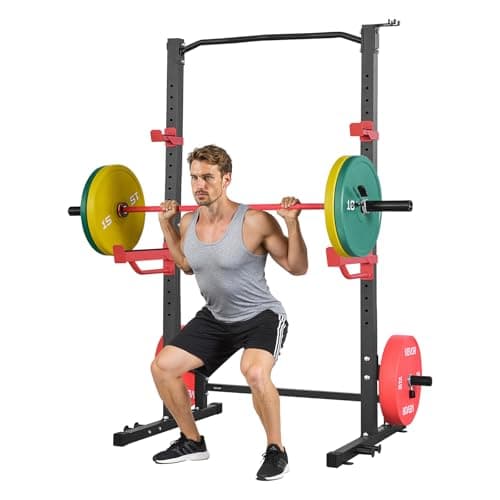
VEVOR VEVOR Power Cage Squat Rack (1,000 lb)
VEVOR Power Cage Squat Rack (1,000 lb)

The cheapest cage here that still arrives complete — J-hooks, safeties and a pull-up handle in the box.

Best budget power cage
7.2
$159.90Amazon
02
CAP Barbell CAP The Beast 7 ft Olympic Barbell (1,200 lb)
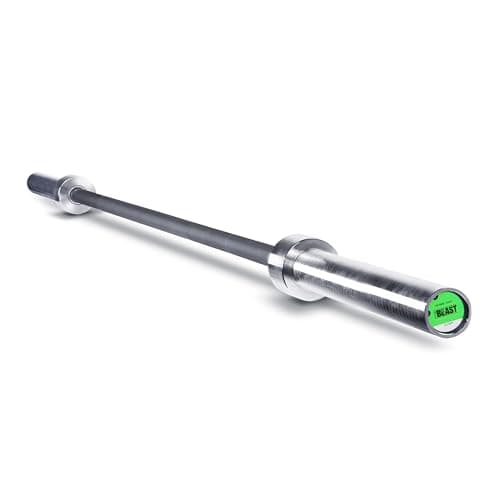
CAP The Beast 7 ft Olympic Barbell (1,200 lb)

The value bar that keeps showing up in real garage gyms — 1,200 lb rated for the price of a cheap one.

Best value all-round bar
8.0
$149.00Amazon
03
CAP Barbell CAP Barbell 110 lb Classic Olympic Cast Iron Plate Set
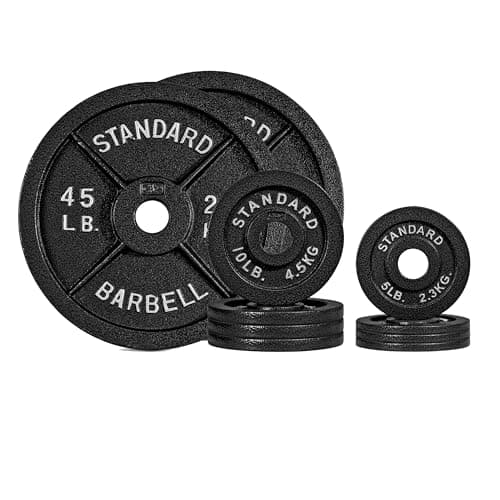
CAP Barbell 110 lb Classic Olympic Cast Iron Plate Set

The same 110 lb of iron as the Elite set for less money, in the plain black finish that has been on garage floors for decades.

Best value iron set
7.0
$149.99Amazon

#ad · Live prices from the Amazon Product API, as of Sep 8, 2026. Where we have no verified live price, we show none — we would rather leave a gap than print a number that has rotted.

In detail

The picks, in full

01
VEVOR VEVOR Power Cage Squat Rack (1,000 lb)

Best budget power cage

VEVOR Power Cage Squat Rack (1,000 lb)

1,000 lb rated2 × 2 in uprights11 J-hook positionsJ-hooks + safeties + pull-up
7.2/10

The cheapest cage here that still arrives complete — J-hooks, safeties and a pull-up handle in the box.

Build & steel
6
Capacity
8
Expandability
6
Footprint
7
Value
9

Pros

  • A published 1,000 lb total capacity that comfortably clears what any home lifter will ever load
  • Arrives complete — two J-hooks, two safety bars, a pull-up handle, four band pegs, plate posts and a bar hook, so there is no second order
  • Standard 2 × 2 in uprights, the commonest profile in home racks, so third-party J-hooks and spotter arms are easy to find later — measure hole diameter and spacing before ordering

Cons

  • The frame weighs about 60 lb, which is light for a cage — load the plate posts and keep it against a wall
  • The listing publishes no steel gauge and no warranty term, so the rated capacity is the only number you have

Don't buy this if…

you are chasing a 700+ lb total and want zero flex. At that level the heavier 3×3 racks are worth the money; for everyone else this is plenty of rack.

$159.90View on Amazon

Price as of Sep 8, 2026. Prices change — Amazon's is the one that counts.

#ad · we may earn a commission from this link to VEVOR Power Cage Squat Rack (1,000 lb)

02
CAP Barbell CAP The Beast 7 ft Olympic Barbell (1,200 lb)

Best value all-round bar

CAP The Beast 7 ft Olympic Barbell (1,200 lb)

7 ft / 45 lb1,200 lb capacityDual knurl marksAlloy steel
8.0/10

The value bar that keeps showing up in real garage gyms — 1,200 lb rated for the price of a cheap one.

Tensile / build
8
Coating
7
Knurl & spin
7
Capacity
9
Value
9

Pros

  • A 1,200 lb rated capacity is well beyond anything a home lifter will load, and beyond most bars at this price
  • Dual knurl marks suit both powerlifting and Olympic hand positions
  • CAP is a long-standing brand, so it is easy to buy and easy to replace

Cons

  • The finish is functional, not premium — keep it wiped down and it will not rust, but it is not stainless
  • Sleeve spin is on bushings, so it is smooth enough for lifting but not a competition-bearing feel

Don't buy this if…

you are an Olympic lifter who needs fast bearing spin and a lot of whip. This is a stiffer all-round bar; a dedicated Olympic bearing bar is the tool for cleans and snatches.

$149.00View on Amazon

Price as of Sep 8, 2026. Prices change — Amazon's is the one that counts.

#ad · we may earn a commission from this link to CAP The Beast 7 ft Olympic Barbell (1,200 lb)

03
CAP Barbell CAP Barbell 110 lb Classic Olympic Cast Iron Plate Set

Best value iron set

CAP Barbell 110 lb Classic Olympic Cast Iron Plate Set

110 lb set4×5, 4×10, 2×25 lb2 in OlympicBaked enamel cast iron
7.0/10

The same 110 lb of iron as the Elite set for less money, in the plain black finish that has been on garage floors for decades.

Durability
9
Tolerance
6
Hub & fit
7
Floor safety
4
Value
9

Pros

  • 110 lb — four 5s, four 10s and a pair of 25s — covers a new lifter's first year of squats and presses, small plates included
  • Costs less than the Elite set for the same 110 lb of iron — the Elite adds grip holes, this one is the plain plate
  • Cost per pound is among the lowest of any plate type, and iron does not degrade with age

Cons

  • Painted iron chips at the edges; expect cosmetic wear within a year of real use
  • Loud on a bare floor and unkind to the bar if you set down hard

Don't buy this if…

your gym is over a finished floor or a room below. Iron transmits every set-down; bumpers or a rubber floor are the fix, and both cost money you should budget now.

$149.99View on Amazon

Price as of Sep 8, 2026. Prices change — Amazon's is the one that counts.

#ad · we may earn a commission from this link to CAP Barbell 110 lb Classic Olympic Cast Iron Plate Set

How we picked

We do not run a testing lab

We compiled manufacturer specifications, read the published warranties, checked the relevant standards and aggregated owner reviews, then scored each product against a published rubric. The scores are judgments from documented research — they are not measurements we took, because we do not run a lab and we are not going to pretend we do. Where a number came from a manufacturer or a standard, we name it and link it in Sources.

Questions

Frequently asked

Are free weights or machines better for a home gym?

Free weights, for equipment reasons rather than training ones. A rack, bar and plates have almost no wear parts, cover every lift, need one footprint, allow unlimited increments and hold their resale value. Machines are worth the space only when they do something a barbell physically cannot.

Do strength machines wear out faster than free weights?

Yes, and by a wide margin — because they have parts. Cables, pulleys, bearings, guide rods, upholstery and selector pins are all moving interfaces. Free weights have essentially two consumables in a whole gym: J-cup liners and barbell sleeve grease.

What can machines do that free weights cannot?

Load movements that gravity will not let a barbell load — lat pulldowns, cable flyes, and anything pulling from above or across. Those are genuine gaps. The cheapest fix is usually a lat attachment on a rack you already own rather than a standalone machine.

Do free weights hold their value better than machines?

Considerably. Plates and bars are commodities that do not date, do not wear and cannot be superseded, so used prices stay firm. Machines are bulky, model-specific and hard to move, which makes them difficult to sell at any price.

Is a home gym possible with free weights only?

Easily. A rack with safeties, a barbell, plates and a bench cover the whole of resistance training for most people. The two things worth adding afterwards are a cable attachment for vertical pulling and dumbbells or kettlebells for unilateral work.

Keep reading

Receipts

Sources

We do not run a testing lab, and we do not pretend to. Every spec, warranty term and standard above is the manufacturer's or a published source, cited and linked. Where we could not verify something, we say so on the page rather than quietly leaving it out. Read our full method.