Divide what you paid by the years you will use it. That single operation reorders almost every buying decision in a home gym, and it is why this site keeps telling you to buy the better one once.
The method
Cost per year is purchase price, plus anything you spend keeping it working, divided by the number of years you keep using it. Then subtract whatever it is worth when you are finished with it, if you intend to sell.
The reason it matters in this category more than most is the enormous variation in the denominator. A steel rack, a cast iron plate and a barbell are not consumables — the realistic life is decades. A budget bench with splitting upholstery or an adjustable dumbbell with a cracked cradle might be three years. Same shelf, same shop, completely different arithmetic. Applied to a small, fixed spend, that arithmetic is the whole of how to build a home gym on a budget.
Where the running cost is genuinely zero
Three categories in a home gym have effectively no cost after purchase, and it is worth being explicit about which:
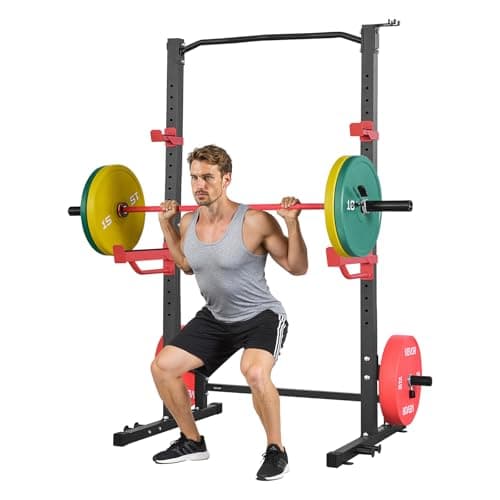
- Racks. Steel, bolts and pins. No motor, no upholstery, no electronics. The only realistic end is corrosion from neglect. See are power racks worth it.
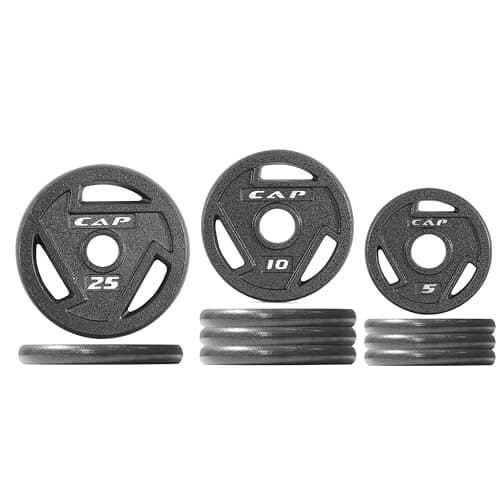
- Plates. Cast iron does not degrade. Bumpers age slowly at the rubber but the steel hub is the part that matters, and a good one does not pull out.
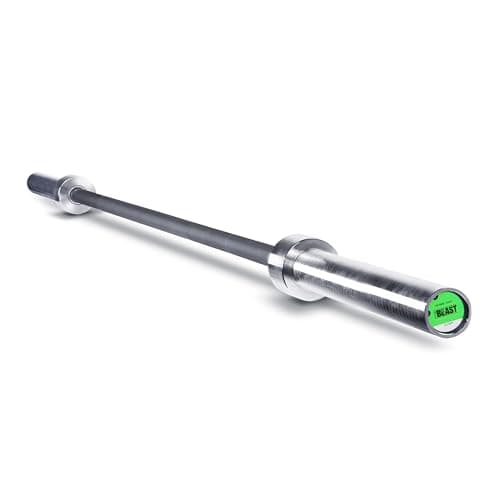
- Barbells and kettlebells. A bar wears only through corrosion, which is preventable — see how to stop barbell rust. A single-piece kettlebell has nothing to fail at all.
For these, cost per year falls continuously for as long as you keep training. Buying the better version once is almost always correct, because the price difference is divided by the same large number of years while the cheap version's failure is not.
Where the arithmetic gets interesting
The categories with moving parts are where a cheap purchase can genuinely be the right one.
| Category | What limits its life | Buy-once or buy-cheap? |
|---|
| Rack, plates, bar | Corrosion only | Buy once — the years do the work |
| Bench | Adjustment mechanism, upholstery | Buy once, but judge the mechanism not the rating |
| Adjustable dumbbells | Selector mechanism | Depends on how roughly you train |
| Cable and pulley systems | Cable stretch, pulley wear | Buy from a brand that sells parts |
| Flooring | Compression and tearing | Buy for the load it takes, not the room |
The rule that falls out: the fewer moving parts, the stronger the buy-once case. Where there are moving parts, the question becomes whether you can buy replacements — which is why brand persistence is a durability spec, not a vanity one, as argued in the brands guide.
The denominator you control
Here is the uncomfortable part. Every calculation above assumes you keep training. If you stop after eight months, the most durable rack in the world has a terrible cost per year, and the cheapest option would have been the right call.
This is the honest argument against front-loading a home gym. You do not know your own denominator yet if you are new. The sensible response is not to buy badly — it is to buy the durable core small and expand later:
- A rack with proper safeties, because it is the safety item and it never wears out.
- One bar that publishes a capacity rating.
- A plate set weighted toward the small plates, per what plates to buy first, priced the only way that survives a repricing — per pound, per how much weight plates cost.
- A bench you can verify a rating on.
Every one of those is a low-running-cost item that holds resale value. If you stop, you recover a lot of it. If you do not stop, the cost per year keeps falling for twenty years. That is a good bet in both directions, and it is the setup our beginner guide recommends.
Resale is part of the calculation
Strength equipment holds value unusually well because it does not really wear out and demand is steady. Iron, bars and racks in particular sell readily second-hand.
That has two consequences. It lowers the true cost of a good purchase, because the number you subtract at the end is meaningful. And it lowers the risk of buying quality early, because a quality item you sell recovers more than a cheap item you sell. Cheap equipment is worth little used — partly because it is cheap new, and partly because the parts most likely to have failed are the ones buyers check.
The one-line version
For anything without moving parts, buy the good one once and stop thinking about it. For anything with moving parts, buy from someone who will sell you a replacement part. And do not buy a decade of equipment in your first month — buy the durable core and let the denominator prove itself. That is the whole philosophy behind the buy-it-for-life approach.