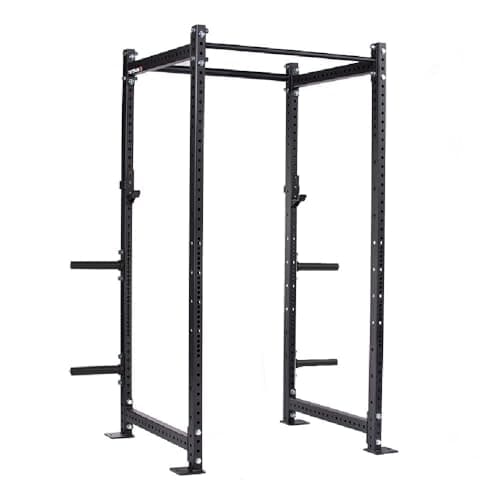
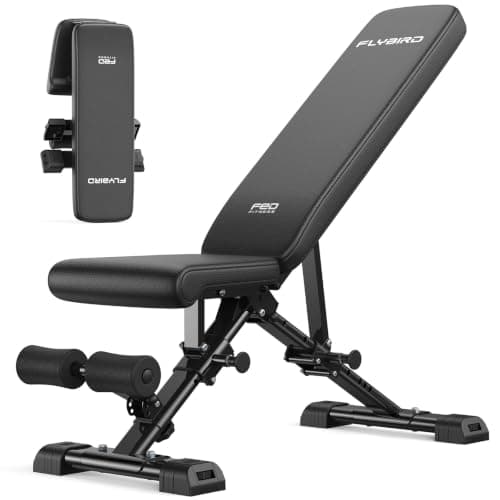
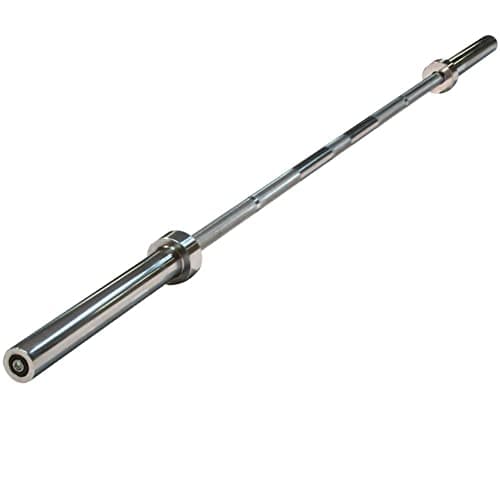
A lifetime warranty on home gym equipment almost always covers the frame and the welds — the parts that were never going to fail anyway. The pad, the cables, the bearings and the pins are covered for months or a couple of years, and those are the parts that actually wear. That is not a scandal. It is a reasonable way to write a warranty. But it means the headline is the least informative part of it.
Warranty length is one of the four criteria this site ranks on, alongside steel, repairability and cost per year. This page is how we read them.
What a warranty actually is
A warranty is a promise about defects in materials and workmanship. It is not an insurance policy against the product wearing out, and every warranty on this page says so explicitly. Titan excludes "general wear of a Product due to normal use" in as many words; Body-Solid excludes damage from inadequate maintenance.
That distinction is the whole thing. A rack upright that arrives with a bad weld is a defect. A J-cup liner worn out after eight years of a bar landing on it is not — it is the product working as designed and reaching the end of a consumable. The first is a warranty claim; the second is a parts order, which is why we treat parts availability as the more useful signal of the two.
In the United States, the Magnuson-Moss Warranty Act governs how consumer product warranties are written, and it is the reason you see the word "limited" so often: a warranty that does not meet the Act's federal minimum standards for a "full" warranty must be conspicuously labeled limited. Seeing "limited lifetime warranty" is therefore normal rather than weaselly — it is a defined legal term.
Four published schedules, side by side
These are the manufacturers' own published terms, read on 2026-08-19 and linked in the sources below. We have not paraphrased the durations.
| Component | Body-Solid (in-home) | REP Fitness | Rogue | Titan |
|---|
| Rack frame & welds | Lifetime | Lifetime | Lifetime | 1 year |
| Bench frame | Lifetime | 10 years | Lifetime warranty program | 1 year |
| Pulleys, bearings, cables | Lifetime | 1 year | Lifetime warranty program | 1 year |
| Upholstery / pads | Lifetime (normal wear) | 30 days | Lifetime warranty program | 1 year |
| Transferable to a second owner | No | No | — | No |
Two things jump out of that table.
The granularity is the signal.REP's schedule looks worse than Body-Solid's at a glance because it names the short periods out loud — thirty days on upholstery, one year on pop-pins, pulleys, bearings and cables. But a brand that has itemized which components wear is a brand that has thought about which components wear, and in our experience that correlates with actually being able to buy those components. A single word covering everything tells you less.
Body-Solid's in-home terms are genuinely unusual.Lifetime cover extending to cables, upholstery and grips under normal wear is not the industry norm; the same company's light-commercial schedule drops those to one year, which shows exactly how much of a warranty is a bet on usage intensity rather than on the product.
The five clauses that decide whether it pays
- Which components, for how long.Not "does it have a lifetime warranty" but "what does the schedule say about the pad." This is the whole exercise.
- Home use versus commercial use. Nearly every warranty distinguishes them, and using equipment in a public-access setting — including a shared building gym — voids the in-home terms. Body-Solid states this explicitly.
- Original purchaser only.All four brands here say the warranty is non-transferable. If you buy used, you are buying with no warranty regardless of the product's age. That is worth knowing before you shop the used market.
- Assembly and maintenance conditions. Warranties are commonly void if the product was not assembled to the instructions or was inadequately maintained. Keep the manual, follow the torque sequence, and re-check the bolts — the practical routine is in how to set up a power rack.
- Proof of purchase. Dated receipt, kept. This is the single most common reason a valid claim fails, and it costs nothing to prevent — photograph the receipt and the model sticker the day it arrives.
- The company has to outlive the product. A lifetime warranty is a promise, and a promise needs someone left to keep it. The documented case in this industry is BowFlex: the company formerly known as Nautilus filed for Chapter 11 in March 2024, and its brands were sold to Johnson Health Tech in a sale that closed that April under Section 363 of the Bankruptcy Code — which transfers assets free and clear of prior claims, so a warranty issued by the old entity is not automatically enforceable against the buyer. In this instance the outcome was better than it sounds: the BowFlex replacement-parts storefront is still trading under the new owner. But the lesson stands, and it is why we weight a purchasable wear part above a long warranty on any product we rank.
Why the marketplace tier mostly does not do this
Most of the racks, benches and plates we rank come from marketplace brands whose warranty terms are short, generic, or effectively the platform's own returns policy. That is a genuine difference from the direct-sales tier and we are not going to pretend otherwise.
What softens it is the returns window. A marketplace return period covers the failure mode a warranty is most likely to be used for in practice — something arriving damaged, missing hardware, or badly made — and it is far easier to invoke than a warranty claim. What it does not cover is a weld that cracks in year six.
So the honest framing is: at the marketplace tier you are buying on cost per year and on the physical specification, not on the warranty. At the direct tier you are paying partly for the warranty. Both can be rational. Deciding which you are doing is the useful part.
What a certification is worth compared with a warranty
On benches specifically there is a better signal than either: a published capacity tested to a standard. An ASTM-certified rating means the number was tested rather than asserted, which is a statement about the product rather than a promise about the company. We explain the distinction in weight bench capacity explained, and it is why a certified 800 lb bench scores better here than an uncertified 1,000 lb one.
In descending order of how much we trust them: a tested certification, an itemized warranty schedule, a published parts channel, a single-word warranty claim, and nothing at all.
What to do with all this before you buy
- Find the warranty page, not the product page.Product pages say "lifetime warranty"; warranty pages have the schedule.
- Look up the wear parts specifically. Pads on a bench, cables and pulleys on a trainer, J-cups on a rack. Those are what you will actually claim on or replace.
- Check whether the wear part is also sold separately. A thirty-day pad warranty alongside a purchasable replacement pad is a better outcome than a five-year pad warranty on a pad you cannot buy.
- Photograph the receipt and the model sticker. Both, on the day it arrives.
- Then weigh it as one input among four. Steel, warranty, repairability and cost per year — the method behind every ranking here is on how we choose.