Skip to content
Plate&Rack

The platform · Weight Benches

Weight Bench Capacity Explained

Bench capacity numbers range from 400 lb to over 1,300 lb, and they are not measuring the same thing. Here is how to read them before you lie down under a loaded bar.

By Stephen V.Updated How we choose
#ad

We earn a commission when you buy through our Amazon links, at no extra cost to you. It never affects our rankings, and we say so when the cheaper product is the better buy. How this works.

A bench capacity rating is normally the lifter plus the load combined, and it is only as good as whoever tested it. A certified 800 lb bench is a stronger claim than an uncertified 1,300 lb one. The number on the box is the least interesting part of the specification.

What the number includes

For almost all home benches, the published capacity is the combined total the frame is rated to hold: your bodyweight plus the weight of the bar and plates. That means the working arithmetic is simple. A 200 lb lifter pressing 250 lb is putting 450 lb through the frame, not 250 lb.

Some listings state the figure differently, and a few do not say at all. When it is unstated, assume it is the combined total — it is the more conservative reading, and if the manufacturer meant something more generous they had every reason to say so.

Certified versus claimed

This is the distinction that actually separates benches, and very few buyers look for it.

Type of numberWhat stands behind itHow much to trust it
ASTM-certified ratingTested against a published external standardThe strongest claim available in this category
Manufacturer ratingThe manufacturer's own testing, method unpublishedReasonable from an established brand, unknown otherwise
No published ratingNothingTreat as a missing spec, not a small one

The FLYBIRD WB5 publishes 800 lb with ASTM certification. The RitFit publishes 1,300 lb and the K KiNGKANG 1,050 lb as manufacturer ratings. All three are plausible benches; the difference is what backs the number. If you are choosing between a tested lower figure and an untested higher one, the tested figure is the better information — and both are far past what most home lifters will ever put through a bench.

How much do you actually need?

Add your bodyweight to the heaviest total you realistically expect to press, then add a margin for the fact that you sit down on a bench harder than you think and sometimes rest a loaded bar on it.

For most home lifters that lands comfortably under 600 lb, which means essentially every bench in our roundup has headroom. The practical consequence is liberating: once a bench clears your real number with margin, stop optimizing for capacity and start optimizing for the things you will notice every session — pad firmness, backrest length, adjustment play and whether the gap between seat and back pinches.

What capacity ratings do not tell you

Where a bench actually fails

Benches rarely fail by snapping under load. They fail at the adjustment mechanism — the ladder or pin that sets the backrest angle — which develops play, then rattle, then slop. A rating says nothing about that, because the test is a static load rather than ten thousand adjustments.

Pad quality and durability

The second common failure is upholstery: vinyl splitting at the seams, foam compressing to the point where you can feel the board. Neither is covered by a capacity number, and both are what actually end a bench in a home gym.

Stability under an uneven load

A static rating is a vertical load. Real benching applies uneven and lateral forces, especially with dumbbells or on a decline. A bench can meet its rating and still feel unsteady because the footprint is narrow.

The practical checklist

In order: a published capacity that clears your bodyweight plus your target press with margin; a certification if you can get one; a backrest long enough to support your head and hips at incline; an adjustment mechanism that feels tight rather than notchy; and a footprint wide enough that the bench does not rock when you set up.

If the bench lives under a barbell, also check the height against your rack — a bench too tall wrecks your press setup, and it is the one dimension people never measure. Our rack setup guide covers setting safeties for the bench you actually own.

The short answer

Quick picks

#ProductBest forScorePrice
01
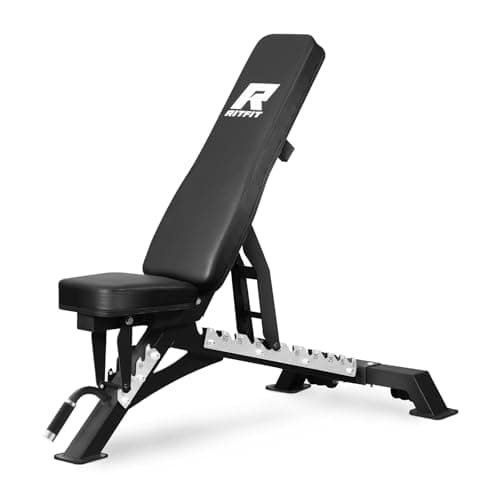
RitFit RitFit Adjustable Weight Bench (1,300 lb)
RitFit Adjustable Weight Bench (1,300 lb)

A high-rated FID bench for heavier pressers who want margin over the load.

Highest rated capacity
8.0
$269.99Amazon
02
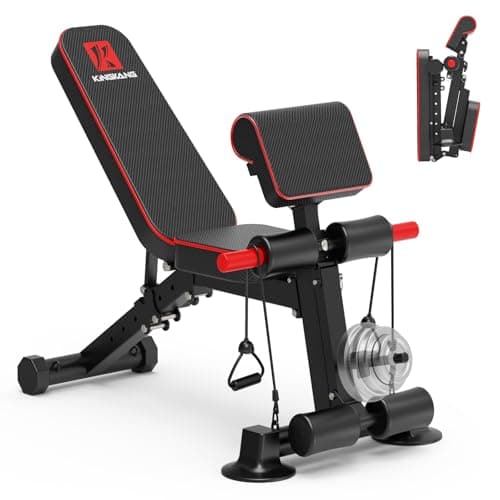
K KiNGKANG K KiNGKANG Foldable Adjustable Bench (1,050 lb)
K KiNGKANG Foldable Adjustable Bench (1,050 lb)

The highest rated capacity of any folding bench here — a folding frame that isn't apologizing for it.

Highest capacity folding bench
7.8
$149.96Amazon
03
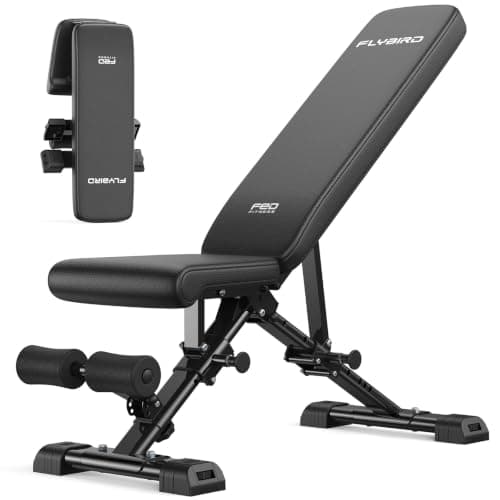
FLYBIRD FLYBIRD WB5 Adjustable Weight Bench (ASTM 800 lb)
FLYBIRD WB5 Adjustable Weight Bench (ASTM 800 lb)

The Amazon default adjustable bench, and for once the crowd is right — ASTM-rated and folds flat.

Best value adjustable bench
7.8
$149.98Amazon

#ad · Live prices from the Amazon Product API, as of Sep 8, 2026. Where we have no verified live price, we show none — we would rather leave a gap than print a number that has rotted.

In detail

The picks, in full

01
RitFit RitFit Adjustable Weight Bench (1,300 lb)

Highest rated capacity

RitFit Adjustable Weight Bench (1,300 lb)

1,300 lb capacityIncline/decline/flatHeavy-duty frameLeg lock
8.0/10

A high-rated FID bench for heavier pressers who want margin over the load.

Frame & stability
8
Pad
7
Adjustability
8
Capacity
9
Value
8

Pros

  • The highest published capacity on this list — reassurance if you press heavy
  • Full FID adjustment for incline, decline and flat work
  • A leg lock for secured decline movements

Cons

  • The capacity is a static rating; a folding bench still has a little ladder play under load
  • Heavier to move than the lighter benches

Don't buy this if…

you press moderate weights and want the cheapest capable bench. You are paying for headroom you may never use — the FLYBIRD covers most home lifters for less.

$269.99View on Amazon

Price as of Sep 8, 2026. Prices change — Amazon's is the one that counts.

#ad · we may earn a commission from this link to RitFit Adjustable Weight Bench (1,300 lb)

02
K KiNGKANG K KiNGKANG Foldable Adjustable Bench (1,050 lb)

Highest capacity folding bench

K KiNGKANG Foldable Adjustable Bench (1,050 lb)

1,050 lb capacityFoldable frameAdjustable back padHome gym bench
7.8/10

The highest rated capacity of any folding bench here — a folding frame that isn't apologizing for it.

Frame & stability
8
Capacity
9
Pad quality
7
Adjustment
7
Value
8

Pros

  • A published 1,050 lb rating puts it in fixed-bench territory despite folding
  • Heavier steel than most folding benches, which shows up as less flex at the head end
  • Still folds, so the capacity doesn't cost you the storage benefit

Cons

  • Heavier to fold and move than the light budget benches — a real consideration if it moves daily
  • The rating is a manufacturer claim without a cited standard, unlike the ASTM-certified options

Don't buy this if…

you want a certified number rather than a claimed one. An ASTM-tested 827 lb figure is worth more than an untested 1,050 lb one.

$149.96View on Amazon

Price as of Sep 8, 2026. Prices change — Amazon's is the one that counts.

#ad · we may earn a commission from this link to K KiNGKANG Foldable Adjustable Bench (1,050 lb)

03
FLYBIRD FLYBIRD WB5 Adjustable Weight Bench (ASTM 800 lb)

Best value adjustable bench

FLYBIRD WB5 Adjustable Weight Bench (ASTM 800 lb)

800 lb rated (ASTM)Adjustable FIDFolds flat30 in backrest
7.8/10

The Amazon default adjustable bench, and for once the crowd is right — ASTM-rated and folds flat.

Frame & stability
7
Pad
7
Adjustability
8
Capacity
8
Value
9

Pros

  • An ASTM safety certification and an 800 lb rating are unusual reassurances at this price
  • Full incline-to-decline adjustment and a long backrest for real pressing
  • Folds flat to store, which is the feature small home gyms actually use

Cons

  • The gap between seat and backrest at steep incline is narrower than a premium bench — a minor comfort note
  • A ladder-adjust bench will always have a touch more play than a fixed one; fine for home loads

Don't buy this if…

you bench very heavy and want a rock-solid commercial pad with zero flex. A 3-in-1 folding bench is a home tool; a fixed heavy-duty bench is the answer for a serious presser.

$149.98View on Amazon

Price as of Sep 8, 2026. Prices change — Amazon's is the one that counts.

#ad · we may earn a commission from this link to FLYBIRD WB5 Adjustable Weight Bench (ASTM 800 lb)

How we picked

We do not run a testing lab

We compiled manufacturer specifications, read the published warranties, checked the relevant standards and aggregated owner reviews, then scored each product against a published rubric. The scores are judgments from documented research — they are not measurements we took, because we do not run a lab and we are not going to pretend we do. Where a number came from a manufacturer or a standard, we name it and link it in Sources.

Questions

Frequently asked

Does weight bench capacity include my bodyweight?

For nearly all home benches, yes — the published figure is the combined total of lifter plus load. A 200 lb lifter pressing 250 lb puts 450 lb through the frame. Where a listing does not say, assume combined, because that is the conservative reading.

Is a 1,000 lb bench better than an 800 lb bench?

Not necessarily. An 800 lb rating tested against the ASTM standard is a stronger claim than an uncertified 1,000 lb one. Once a bench clears your real requirement with margin, extra headline capacity buys nothing — judge on pad, adjustment and stability instead.

What capacity bench do I need?

Your bodyweight plus your heaviest realistic press, plus margin. For most home lifters that is under 600 lb, which nearly every quality bench clears. Buy for the mechanism and the pad once the number is covered.

How do weight benches usually fail?

At the adjustment mechanism and the upholstery, not the frame. Ladder or pin adjusters develop play with use, and vinyl splits at the seams. Capacity ratings measure none of that, which is why they are a poor proxy for how long a bench lasts.

Keep reading

Receipts

Sources

We do not run a testing lab, and we do not pretend to. Every spec, warranty term and standard above is the manufacturer's or a published source, cited and linked. Where we could not verify something, we say so on the page rather than quietly leaving it out. Read our full method.