Skip to content
Plate&Rack

The frame · Power Racks & Cages

Power Tower Weight Limits, Explained

The rating is a static figure on a frame you swing from. Here is what it covers, what it quietly assumes about your floor and your hardware, and the two specs that tell you more than it does.

By Stephen V.Updated How we choose
#ad

We earn a commission when you buy through our Amazon links, at no extra cost to you. It never affects our rankings, and we say so when the cheaper product is the better buy. How this works.

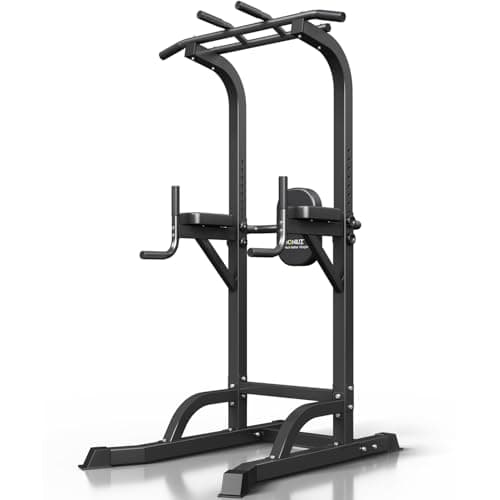
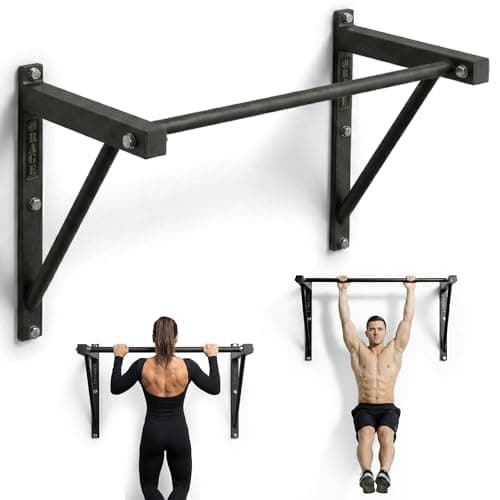
A power tower's weight limit is a static user capacity, and on a frame you swing from it should be read as a ceiling rather than a target. The DONIUZ DZ-580A publishes the highest figure of any frame on this site — 660 lb — and it is still not the tower we rank first, because a rating describes the steel and not the sway. Among mounted bars, the Rage Fitness R2 publishes 500 lb with 11 gauge steel and the Ultimate Body Press ceiling bar publishes 300 lb — the lowest number here, on the strongest install. Working out why those three figures do not rank in the order they appear is the whole subject of this page.

What the number is actually measuring

A published user capacity on a bodyweight frame is the manufacturer's statement of the maximum static load the assembly is intended to carry — your bodyweight, plus anything hanging off you, applied downward, with the frame assembled as instructed and standing on a suitable floor.

Read that sentence again, because four conditions are hiding in it, and all four are the buyer's problem rather than the manufacturer's:

  • Static. A rating is not a statement about impact, swing or deceleration. Drop into the bottom of a dip and the instantaneous load is a multiple of your bodyweight.
  • Downward. A rating says nothing about the horizontal load a kip applies, which is the axis a tall freestanding frame is weakest on.
  • Assembled as instructed. Every bolt torqued, every pin in place. A frame with a season of loose hardware behind it is not the frame that was rated.
  • On a suitable floor. The DONIUZ listing is explicit about this: its suction-cup feet are specified for flat concrete, not carpet or foam. Floor is part of the structure on a freestanding frame.

So the number is real and useful, and it is not a safety factor you get to spend. Treat the published figure as the top of the envelope and stay well inside it.

Why a hang is not a static load

If you weigh 200 lb and hang motionless, the frame carries roughly 200 lb. If you drop into the bottom of a dip and arrest the descent in a fraction of a second, the frame carries considerably more than 200 lb for that fraction of a second, because stopping a falling mass requires force above its weight. The same is true of the bottom of a kipping pull-up, and of the moment you let go and your weight leaves the frame unevenly.

Nobody publishes a dynamic rating for home equipment, and we are not going to invent a multiplier and present it as a measurement — we do not run a lab, which is the same position we take on how we choose. What we can say with confidence is the practical conclusion: the gap between your bodyweight and the published rating is not spare capacity you should plan to use up with added weight. It is the margin that absorbs the dynamic part of every rep.

The three published figures on this page

As publishedDONIUZ DZ-580ARage R2 wall barUBP ceiling bar
Rated capacity660 lb500 lb300 lb
Frame typeFreestanding towerWall or ceiling mountCeiling mount
Steel gauge published2 mm tubing11 gaugeNot published
Load path ends inFour feet on your floorFraming or concreteCeiling joists
Install decides the real limitFloor flatness and the wall behind itYour studs and fastenersYour joists and fasteners
Height or spacing stated74.8–87 in adjustable36 in wall clearanceFits 16 or 24 in joists

Every cell is quoted from the manufacturer listing linked in Sources. The pattern worth noticing: the highest published number belongs to the frame whose load path ends in your floor, and the lowest belongs to the frame bolted into structural timber. A rating is a statement about the product, not about the install — and on a mounted bar the install is usually the stronger half.

Why the highest rating is not the best frame

All three towers we rank publish a capacity — 450 lb on the SPORTSROYALS, 660 lb on the DONIUZ, 400 lb on the RELIFE, all of them on the power towers roundup — and all three are comfortably above most people's bodyweight plus anything they will strap on. Once that is true, the rating stops discriminating between them, and the specs below start to:

  1. Frame weight and base footprint. A 62 lb frame on a 39.7 inch front-to-back base resists tipping in a way a lighter frame on a 26.4 inch base does not, whatever either rating says. Only one of the three publishes both numbers, and that is why it is our top pick rather than the one with the 660 lb figure.
  2. The tube wall, where it is published. Two of the three state 2 mm; the third says “thickened steel pipe” and gives no figure, which we count as a spec not published rather than as a thin wall. We explain what wall thickness and gauge mean on the steel gauge guide, where the short version is that a lower gauge number is thicker steel.
  3. What the feet are, and what floor they want. Eight anti-slip feet and four suction cups are not the same product. One of these listings specifies flat concrete for its feet, which in a carpeted or rubber-tiled room matters more than any rating does — see the flooring guide.
  4. Whether mounting is an option at all. Both bolted bars here publish ratings and their load paths end in structural timber rather than in your floor, which is why the 300 lb ceiling bar is a more secure hang than any of the towers. If you can drill, most of this question goes away — see power tower vs pull-up bar.

How this compares with the rest of the site

Capacity ratings are published inconsistently across home gym categories, and we have written the same caution three times now because it keeps being the deciding spec. Benches state a rating almost universally and some are certified to a standard, which we unpack on weight bench capacity explained. Barbells state a tested or rated load, covered on barbell weight capacity. Racks state a rating that usually assumes the rack is anchored — the subject of do you need to bolt down a power rack. Towers publish a capacity about as reliably as any of them — and they are the only one of the four where the entire load is your own moving body, and the only one where the rating tells you almost nothing about the behaviour you will actually notice.

That is the reason this page exists rather than being a paragraph somewhere else. On a bench or a barbell, the rating is the durability spec. On a tower it is a floor, not a ranking — the ranking is decided by a base width and a frame weight most listings never mention.

The short answer

Quick picks

#ProductBest forScorePrice
01
DONIUZ DONIUZ Power Tower DZ-580A (660 lb rated)
DONIUZ Power Tower DZ-580A (660 lb rated)

The highest published rating of any tower here, on a frame that adjusts through a foot of height.

Best rated power tower
7.8
$179.99Amazon
02
Rage Fitness Rage Fitness R2 Wall Mounted Pull-Up Bar (500 lb)
Rage Fitness R2 Wall Mounted Pull-Up Bar (500 lb)

The only bar here that publishes both a steel gauge and a 500 lb rating — and it goes on a wall or a ceiling, so the room decides the install, not the bar.

Best pull-up bar overall
8.6
$89.99Amazon
03
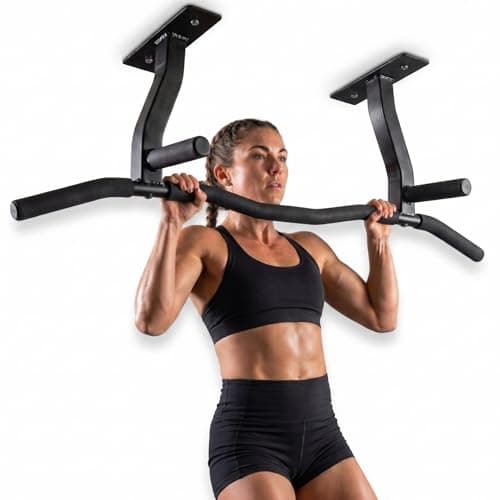
Ultimate Body Press Ultimate Body Press Ceiling Mount Pull-Up Bar
Ultimate Body Press Ceiling Mount Pull-Up Bar

Reversible risers that flip to fit 16 or 24 inch joist spacing — the bar that turns a garage ceiling into the strongest anchor in the building.

Best for garages and basements
8.2
$89.95Amazon

#ad · Live prices from the Amazon Product API, as of October 23, 2026. Where we have no verified live price, we show none — we would rather leave a gap than print a number that has rotted.

In detail

The picks, in full

01
DONIUZ DONIUZ Power Tower DZ-580A (660 lb rated)

Best rated power tower

DONIUZ Power Tower DZ-580A (660 lb rated)

660 lb rated capacity4 workout stations2 mm steel tubing74.8–87 in adjustable
7.8/10

The highest published rating of any tower here, on a frame that adjusts through a foot of height.

Build & steel
8
Stability
7
Stations
9
Footprint
8
Value
7

Pros

  • A published 660 lb capacity — on a frame you hang your entire bodyweight from, an unstated rating is a real gap, and this is the highest figure of the towers here
  • Four stations from one frame, including the push-up handles that most towers leave off
  • The pull-up bar adjusts from 74.8 to 87 in, so one unit suits a low garage ceiling and a tall lifter

Cons

  • The feet are suction cups — the listing tells you to stand it on flat concrete rather than carpet or foam tiles
  • Still a tower — no barbell goes on it, and that limit does not change with price

Don't buy this if…

…a rack will fit the room. A cage with a pull-up bar and a bolt-on dip attachment covers everything a tower does and then holds a loaded barbell as well.

$179.99View on Amazon

Price as of October 23, 2026. Prices change — Amazon's is the one that counts.

#ad · we may earn a commission from this link to DONIUZ Power Tower DZ-580A (660 lb rated)

02
Rage Fitness Rage Fitness R2 Wall Mounted Pull-Up Bar (500 lb)

Best pull-up bar overall

Rage Fitness R2 Wall Mounted Pull-Up Bar (500 lb)

500 lb rated11 gauge steel36 in wall clearanceWall or ceiling mount
8.6/10

The only bar here that publishes both a steel gauge and a 500 lb rating — and it goes on a wall or a ceiling, so the room decides the install, not the bar.

Mount security
9
Rated capacity
9
Build & steel
9
Clearance
9
Value
7

Pros

  • A published 500 lb capacity and 11 gauge steel — the heavier of the two gauges we compare on the power rack steel gauge guide, and rare on a listing this size
  • 36 inches of stated wall clearance, which is what lets you hang, swing and do leg raises without your heels finding the drywall
  • The listing states wall or ceiling mounting on wood or concrete, so one purchase covers whichever surface your room actually offers

Cons

  • 22 × 36 × 52 inches overall is a large piece of steel on your wall, and it is not coming down when guests arrive
  • The listing publishes no warranty term, so the capacity and the gauge are the only durability numbers you get

Don't buy this if…

…you rent, or the only surface you have is a partition wall you are not allowed to drill. Leverage-mounted doorway bars exist for exactly that situation, and no wall bar is worth a security deposit.

$89.99View on Amazon

Price as of October 23, 2026. Prices change — Amazon's is the one that counts.

#ad · we may earn a commission from this link to Rage Fitness R2 Wall Mounted Pull-Up Bar (500 lb)

03
Ultimate Body Press Ultimate Body Press Ceiling Mount Pull-Up Bar

Best for garages and basements

Ultimate Body Press Ceiling Mount Pull-Up Bar

300 lb rated16 or 24 in joists4 grip positions42 in wide
8.2/10

Reversible risers that flip to fit 16 or 24 inch joist spacing — the bar that turns a garage ceiling into the strongest anchor in the building.

Mount security
9
Rated capacity
7
Build & steel
8
Clearance
9
Value
8

Pros

  • Dual-position risers flip to mount below 16 inch or 24 inch joists — the two standard framing intervals — so the ceiling you already have is very likely the ceiling it fits
  • Hanging from the ceiling puts open air behind you. That is the clearance a wall bar has to buy back with a long standoff arm
  • Ships with a mounting template on heavy stock plus the hardware, which is the difference between a 30-minute install and a ruined afternoon

Cons

  • 300 lb is a lower published rating than the wall bars above it — plenty for most people, tight if you are heavy and train weighted pull-ups
  • Which way your joists run decides which way you face, and you cannot rotate a ceiling bar to suit the room

Don't buy this if…

…you are in a finished basement with unknown framing behind the drywall, or an upstairs room where every rep is audible below. A wall mount into studs is the quieter, more inspectable install.

$89.95View on Amazon

Price as of October 23, 2026. Prices change — Amazon's is the one that counts.

#ad · we may earn a commission from this link to Ultimate Body Press Ceiling Mount Pull-Up Bar

How to use a rated capacity when you buy

Add your bodyweight and your added weight first

Bodyweight, plus a weighted vest or a dip belt load, plus anything you hold. That total is the number to compare against the rating — not your bodyweight on its own.

Then leave the dynamic margin alone

Do not plan to work up to the published figure. The headroom between your loaded bodyweight and the rating is what absorbs the impact at the bottom of every dip and the swing at the bottom of every pull-up. If your total is close to the published number, buy a frame with a higher one.

Check what the rating assumes about your floor or your wall

On a freestanding tower, the floor is part of the structure, and at least one listing here specifies flat concrete for its feet. On a mounted bar, your studs and fasteners are the real limit, and the published rating assumes a competent install into framing — not drywall anchors, ever.

Re-torque, and keep the rating true

A rated frame is a frame assembled to spec. Bolts work loose on anything that gets loaded and unloaded a few hundred times. Twice a year with a wrench is the entire maintenance schedule for this category, and it is what keeps the published number meaningful.

Do not treat silence as generosity

An unpublished capacity is not a high one. If you are heavy, if you train weighted, or if anyone else in the house will use the frame, make a published figure a hard requirement and shortlist accordingly — the ranked options are on the best power towers for calisthenics.
How we picked

We do not run a testing lab

We compiled manufacturer specifications, read the published warranties, checked the relevant standards and aggregated owner reviews, then scored each product against a published rubric. The scores are judgments from documented research — they are not measurements we took, because we do not run a lab and we are not going to pretend we do. Where a number came from a manufacturer or a standard, we name it and link it in Sources.

Questions

Frequently asked

What is the weight limit on a power tower?

It depends on the frame, and the towers we rank all state one: 450 lb on the SPORTSROYALS, 660 lb on the DONIUZ and 400 lb on the RELIFE. Among mounted bars, the Rage Fitness R2 publishes 500 lb and the Ultimate Body Press ceiling bar publishes 300 lb. All of those are static user capacities, so treat them as a ceiling rather than a target.

Does the weight limit include added weight?

Yes — a user capacity covers everything the frame is carrying, so bodyweight plus a vest, a dip belt and anything you hold all count toward it. Add them up before you compare against the rating.

Is it safe to train right up to the rated capacity?

We would not. A rating is a static figure, and hanging, swinging and arresting a descent all apply more force than your standing weight for a moment. Keep real headroom between your loaded bodyweight and the published number.

Why do power tower listings not publish a frame weight?

Because nothing obliges them to, and a heavier frame is harder to ship and sounds worse in a listing than it performs in a room. Of the three towers we rank, only one states its frame weight — and it is the one we rank first, because on a freestanding frame mass is what keeps it planted.

Does a higher rating mean a longer-lasting tower?

Not directly. A rating is about load, not service life, and a steel frame with no mechanism will generally outlast the room whatever its rating. What a published figure does tell you is that a frame rated for 660 lb has steel and welds sized well above what any person will apply to it — which is reassuring, and still not the spec that decides how the frame behaves under you.

Is a wall-mounted bar stronger than a power tower?

Usually, because its load path ends in framing rather than in four feet on a floor, even when its published number is lower. A 300 lb ceiling bar lagged into joists is a very secure hang. The full comparison is on power tower vs pull-up bar.

Keep reading

Receipts

Sources

We do not run a testing lab, and we do not pretend to. Every spec, warranty term and standard above is the manufacturer's or a published source, cited and linked. Where we could not verify something, we say so on the page rather than quietly leaving it out. Read our full method.