Skip to content
Plate&Rack

The frame · Power Racks & Cages

Do You Need to Bolt Down a Power Rack?

For squats and bench inside a full cage, usually not. For kipping pull-ups, band work or a two-post stand, usually yes. The movement decides it, not the rack.

By Stephen V.Updated How we choose
#ad

We earn a commission when you buy through our Amazon links, at no extra cost to you. It never affects our rankings, and we say so when the cheaper product is the better buy. How this works.

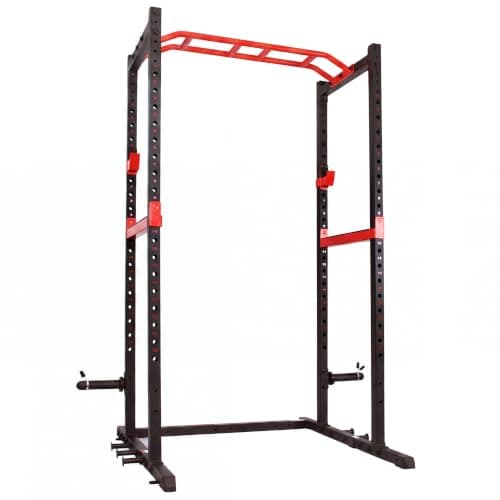
If you squat and bench inside a full four-post cage, you almost certainly do not need to bolt it down — your bodyweight plus the loaded bar is standing inside the footprint, pressing the rack into the floor. You need to anchor, or to add ballast, the moment something pulls the rack sideways or upwards: kipping pull-ups, banded lifts, heavy unilateral work, or a two-post squat stand instead of a cage. A heavy full cage like the Sunny Power Zone, a solid rubber mat under the feet and loaded plate storage on the frame will between them settle the question for most home gyms without a single hole in the slab.

The physics, in one paragraph

A rack tips or slides when a horizontal or upward force overcomes the friction and the mass holding it down. Squatting inside a cage adds you and the bar to the rack's footprint, so the net force is downwards and the rack gets more planted, not less. Swinging on a pull-up bar at the front of the frame applies a cyclical horizontal force at the top of a tall lever, which is exactly the case the frame mass is worst at resisting. That difference — load inside the footprint versus force at the top of the lever — is the whole decision.

When you need to anchor

  • Kipping or butterfly pull-ups, or any swinging on the bar. The classic case. A tall frame rocks front to back and will walk across a smooth floor.
  • Band-resisted lifts anchored to the base. Bands pull the uprights inwards and upwards at the lockout of every rep.
  • A two-post squat stand rather than a cage. Two uprights with no rear frame have a short front-to-back base and nothing behind them. Anchoring is the standard answer, and the method is in how to anchor a squat rack.
  • Racking a heavy bar hard, repeatedly, from one side. Returning a loaded bar to the J-hooks off-center nudges the frame sideways every rep.
  • Children or shared spaces. A rack that cannot be pulled over is worth the four bolts regardless of what the physics says about your training.

When mass and friction are enough

  • A four-post cage used for squats, bench and press. You and the bar are inside the frame.
  • Strict pull-ups with no swing. Vertical load, centered, on a frame that weighs far more than the movement's horizontal component.
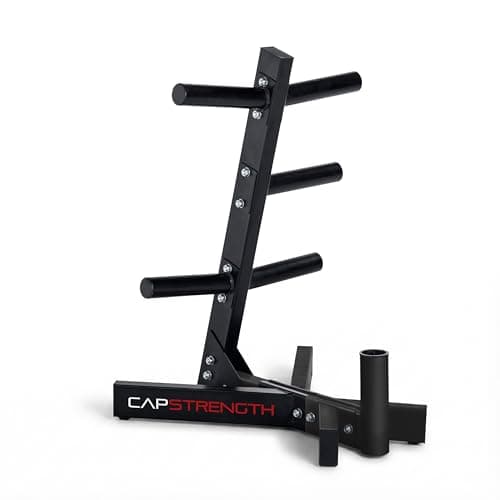
  • Racks with loaded plate storage on the uprights. Plate pegs are the simplest ballast there is, and a plate tree parked in the footprint does the same job for racks without pegs.
  • A rack standing on dense rubber rather than sealed concrete or tile. Friction does a surprising amount of this work, and a solid rubber mat multiplies it.

The three substitutes for bolts, in order

1. Mass on the frame. Every plate you hang on the uprights or store in the footprint is ballast. Two 45 lb plates on each rear peg is roughly 180 lb added exactly where it helps. If your rack has no pegs, a plate tree inside the footprint is the same idea with a separate frame.

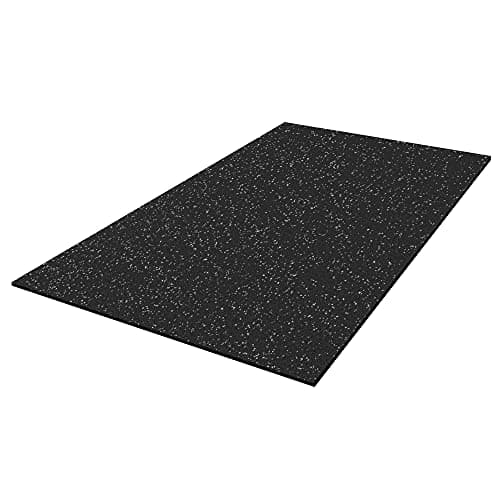
2. Friction under the feet. Solid vulcanized rubber grips far better than bare sealed concrete, and it protects the slab from a dropped bar at the same time. Avoid foam puzzle tiles under rack feet: they compress and let the frame rock. The flooring options are ranked on best home gym flooring.

3. A deck or platform. Building a lifting platform of plywood and rubber and standing the rack feet on it means your own bodyweight on the platform holds the rack down. This is the renter's answer, and it is also the best answer for anyone who wants to move the gym later.

If you do bolt it down

Use wedge or sleeve anchors rated for the load into sound concrete, not masonry screws into a thin slab. Drill with a hammer drill to the anchor's specified depth, blow the dust out of the hole — anchors fail in dusty holes more often than in shallow ones — and torque to the anchor manufacturer's figure, not to feel. The full step-by-step is on how to anchor a squat rack; the method is identical for a cage.

Two cautions specific to a home. First, know what is in the slab: radiant heating pipes and post-tension cables are both unforgiving, and a slab scanner rental costs less than a repair. Second, remember that anchoring permanently couples the rack to the building — on a wooden upper floor that transmits every dropped rep into the structure. If your gym is upstairs, read home gym on a second floor before you drill anything.

What this does not change

Anchoring does not raise a rack's rated capacity, and it does not make a thin frame safe. The rating describes what the steel and the hardware will catch; the bolts only stop the frame moving. If the question behind "should I bolt it down" is really "is this rack strong enough", the answer is in the gauge and the upright size, not the floor — see power rack steel gauge and 2 × 2 vs 3 × 3 uprights.
The short answer

Quick picks

#ProductBest forScorePrice
01
Sunny Health & Fitness Sunny Health & Fitness Power Zone Cage (SF-XF9925)
Sunny Health & Fitness Power Zone Cage (SF-XF9925)

The mid-priced cage that behaves like a system — it grows with lat and cable add-ons.

Best all-round home cage
7.8
$349.99Amazon
02
IncStores IncStores 4 × 6 ft Premium Rubber Gym Mat
IncStores 4 × 6 ft Premium Rubber Gym Mat

Solid vulcanized rubber, the flooring that outlasts the gym on top of it. Buy this where the bar lands.

Best flooring for dropped weight
7.6
$176.61Amazon
03
CAP Barbell CAP Barbell Olympic Plate Tree
CAP Barbell Olympic Plate Tree

Simple welded steel plate storage — the cheapest way to get your plates off the floor and organized.

Best plate storage
7.8
Check price →

#ad · Live prices from the Amazon Product API, as of October 23, 2026. Where we have no verified live price, we show none — we would rather leave a gap than print a number that has rotted.

In detail

The picks, in full

01
Sunny Health & Fitness Sunny Health & Fitness Power Zone Cage (SF-XF9925)

Best all-round home cage

Sunny Health & Fitness Power Zone Cage (SF-XF9925)

Steel power cageMulti-grip pull-up barAdd-on ecosystemSafety-bar ready
7.8/10

The mid-priced cage that behaves like a system — it grows with lat and cable add-ons.

Build & steel
8
Capacity
8
Expandability
9
Footprint
6
Value
8

Pros

  • Part of Sunny's Power Zone line, so lat towers, dip bars and cable add-ons bolt straight on later
  • Full enclosed cage with catch bars — the safest way to squat and bench alone
  • A known brand with parts you can actually still buy, which is the whole point of a keeper rack

Cons

  • The listing does not publish an exact steel gauge, so heavy powerlifters should confirm the rated capacity first
  • Bigger footprint than a squat stand — this stays put once it is built

Don't buy this if…

…your ceiling is under about 7'6" or your space is tight. A full cage needs headroom for the pull-up bar and a clear footprint; a squat stand is the honest answer for a small room.

$349.99View on Amazon

$399.0012% off

Price as of October 23, 2026. Prices change — Amazon's is the one that counts.

#ad · we may earn a commission from this link to Sunny Health & Fitness Power Zone Cage (SF-XF9925)

02
IncStores IncStores 4 × 6 ft Premium Rubber Gym Mat

Best flooring for dropped weight

IncStores 4 × 6 ft Premium Rubber Gym Mat

4 × 6 ft matSolid rubberCommercial-gradeSingle mat
7.6/10

Solid vulcanized rubber, the flooring that outlasts the gym on top of it. Buy this where the bar lands.

Durability
10
Impact protection
10
Install
6
Coverage
5
Value
7

Pros

  • Solid rubber, not foam with a rubber skin — the only construction that genuinely survives dropped loaded bars
  • Commercial-grade material with a service life measured in decades, not years
  • A 4 × 6 ft mat is the standard lifting-platform module; two side by side make a full platform

Cons

  • Extremely heavy — moving one is a two-person job, and shipping cost reflects that
  • New rubber has a strong smell that takes weeks to fade in an unventilated room

Don't buy this if…

…you need to cover a whole room on a budget. Solid rubber is the wrong tool for wall-to-wall coverage; use it under the rack and tiles elsewhere.

$176.61View on Amazon

$189.997% off

Price as of October 23, 2026. Prices change — Amazon's is the one that counts.

#ad · we may earn a commission from this link to IncStores 4 × 6 ft Premium Rubber Gym Mat

03
CAP Barbell CAP Barbell Olympic Plate Tree

Best plate storage

CAP Barbell Olympic Plate Tree

Olympic plate treeWelded steel baseMultiple postsBar holders
7.8/10

Simple welded steel plate storage — the cheapest way to get your plates off the floor and organized.

Durability
8
Capacity
7
Stability
8
Footprint
7
Value
9

Pros

  • Gets loaded plates off the floor and sorted by weight, which speeds up every session
  • Welded steel with a wide base — a simple structure with little to fail
  • Cheap, and it protects both your plates and your back

Cons

  • Holds Olympic (2-inch) plates only — not for standard 1-inch plates
  • A tree, not a full storage rack; it won't hold bars and accessories too

Don't buy this if…

…you have only a handful of plates that live on the bar. Storage is worth it once you own several pairs; a small setup doesn't need a tree yet.

Check price on Amazon →

No buyable offer at the last price check (October 23, 2026). We show nothing rather than a stale number.

#ad · we may earn a commission from this link to CAP Barbell Olympic Plate Tree

How we picked

We do not run a testing lab

We compiled manufacturer specifications, read the published warranties, checked the relevant standards and aggregated owner reviews, then scored each product against a published rubric. The scores are judgments from documented research — they are not measurements we took, because we do not run a lab and we are not going to pretend we do. Where a number came from a manufacturer or a standard, we name it and link it in Sources.

Questions

Frequently asked

Does a power rack need to be bolted down?

Not for squats, bench and press inside a full four-post cage — you and the bar stand inside the footprint and hold it down. Bolt it, or add ballast, if you do kipping pull-ups, band-resisted lifts, or if you own a two-post squat stand rather than a cage.

How do you stop a power rack from moving without drilling?

Three things, in order: load the plate storage pegs or park a loaded plate tree in the footprint, stand the rack on solid rubber rather than bare concrete or foam tiles, and if you can, build a plywood-and-rubber platform so your own bodyweight pins the feet.

Can you bolt a power rack to a wooden floor?

You can lag into joists, but think first about what that transmits into the structure — every dropped rep becomes a building-wide noise and load event. On an upper floor, mass and a platform are usually the better answer than fasteners.

What anchors should I use for a power rack on concrete?

Wedge or sleeve anchors rated for the load, set into sound concrete at the anchor's specified depth, with the dust blown out of the hole and torqued to the manufacturer's figure. Scan the slab first for heating pipes or post-tension cables.

Does bolting down a rack increase its weight capacity?

No. The rating comes from the steel and the hardware. Anchoring stops the frame moving; it does not make a thin upright hold more.

Keep reading

Receipts

Sources

We do not run a testing lab, and we do not pretend to. Every spec, warranty term and standard above is the manufacturer's or a published source, cited and linked. Where we could not verify something, we say so on the page rather than quietly leaving it out. Read our full method.