Skip to content
Plate&Rack

The method · Buy It For Life Guides

Home Gym Equipment Lifespan

A reference table for how long each piece of a home gym actually lasts, what ends it, and which of those endings you can prevent. Most of them, as it turns out.

By Stephen V.Updated How we choose
#ad

We earn a commission when you buy through our Amazon links, at no extra cost to you. It never affects our rankings, and we say so when the cheaper product is the better buy. How this works.

Almost nothing in a home gym dies of old age. Iron and steel are effectively permanent under home loads; what ends a piece of equipment is a small component wearing out, and whether that is a twenty-dollar afternoon or a landfill trip is decided when you buy.

This page is the reference table behind that claim. The figures below are planning estimates reasoned from how each object is built and how it is loaded — they are not measurements, because we do not run a lab and do not pretend to. The method is on how we choose. What is not an estimate is the failure column: those are the specific parts that end each piece, and they are the same ones every time.

The lifespan table

EquipmentRealistic service life (home use)What ends itCan you fix it?
Cast iron weight platesEffectively permanentNothing structural — surface rust only, and that is reversibleNot applicable
Cast iron kettlebellsEffectively permanentNothing — a single-piece casting with no partsNot applicable
Barbell (quality, kept dry)DecadesSleeve rotation gumming; rust under a worn coating; a bend from abuseYes — clean and re-grease the sleeves; remove rust
Power rack / squat rackDecades — the frame outlives the ownerJ-cup liners and safety pins wearing; bolts working looseYes, if the maker or the aftermarket sells the cup
Bumper platesMany years, governed by drop cyclesThe rubber separating from the steel hubNo — but drop height and flooring decide the number
Flat bench (welded)Frame indefinite; pad 5–10 yearsVinyl splitting and foam compressingYes — re-covering a pad is an afternoon
Adjustable benchFrame indefinite; pad 5–10 years; mechanism develops play soonerPad, then the ladder adjustment ovalling its holesPad yes; a worn ladder usually no
Adjustable dumbbellsHighly variable — the mechanism decides itSelector teeth, pins and plastic trays, usually after a dropYes on the popular models, no on most no-name sets
Cable machine / functional trainerLong, with periodic partsCable fraying at the pulley; pulley bearings; guide rods and selectorYes — cable and pulleys are ordinary industrial parts
Rubber gym flooringMany yearsCompression set under point loads; tearing at seamsReplace individual tiles or mats rather than the floor
Nylon safety strapsYears — inspect, do not assumeUltraviolet degradation, abrasion, repeated shock loadingNo — replace the set on condition

Read the table as three tiers

Group those rows and a shape appears that should change how you spend money.

Tier one: permanent

Plates and kettlebells. Solid iron with no parts, no joints and no polymer. The only thing that happens to them is surface rust, which is cosmetic and reversible — see how to clean rusty weight plates. Buy these on price per pound and stop thinking about them.

Tier two: outlives you, with small parts

Racks and barbells. The steel is permanent; a handful of small consumables are not. The buying question here is not the steel — it is whether the maker sells the J-cup, the safety pin, the end cap. That is why repairability is a ranking criterion on this site rather than an afterthought.

Tier three: has a mechanism

Benches, adjustable dumbbells, cable machines. These are the only pieces with a genuine service life rather than an indefinite one, and it is the mechanism — not the metal — that sets it. Spend your attention here.

The spending implication is the one we make in home gym equipment that lasts: buy plainly in tier one, buy for the parts channel in tier two, and buy carefully in tier three.

The four things that move every number in the table

1. Humidity

The single biggest variable, and the one most owners control least. Damp air rusts bars, plates and rack hardware simultaneously. In an unheated garage or basement, a dehumidifier costs less than one good bar and extends the life of everything in the room at once. It is the highest-leverage purchase on this page.

2. What is on the floor

Rubber under the drop zone is why bumper plates last years rather than months, and it protects the bar and the slab at the same time. Concrete is the enemy of everything you might drop on it. Our flooring guide covers thickness.

3. Sunlight

Ultraviolet light degrades every polymer in the room — bench vinyl, bumper plate rubber, nylon safety straps. A gym in front of a sunlit garage window ages its soft parts noticeably faster. Moving the bench is free.

4. Whether things get dropped

A dropped adjustable dumbbell is the most common single-event failure in a home gym. A bar dropped across steel safeties is the second. Neither is covered by any warranty, and neither is an equipment problem.

The annual maintenance rhythm

Once a year, in one afternoon, you can reset almost every number in the table.

  1. Re-torque the rack and the bench. Work around the frame in a consistent order. Snug rather than crank — overtightening deforms tube and makes the problem permanent.
  2. Clean and re-grease the barbell sleeves if the spin has slowed. Cap off, sleeve off, old grease out, new grease in.
  3. Brush the knurl and re-oil the bar. Ten minutes, and it is the difference between a bar that looks new at ten years and one that is pitted.
  4. Wax the cast iron. Plates and kettlebells, thin coat, buffed.
  5. Inspect the soft parts. Safety straps for fraying and glazing, bench vinyl for splits at the fold line, cables for a broken strand at the pulley, bumper plates for a gap opening at the hub.
  6. Check the plate storage and the bar rack are still solid. Bolts on a loaded plate tree settle like everything else.

Nothing on that list needs a specialist. All of it is a rag, a brush, a grease tube and a wrench.

What this means when you are shopping

Two rules fall straight out of the table.

Do not pay a durability premium in tier one. A more expensive cast iron plate is not going to last longer than a cheap one, because neither of them is going to fail. Buy on price per pound and on the hole fitting your bar.

Do pay for the parts channel in tiers two and three. The difference between a fifteen-year bench and a five-year bench is almost never the steel — it is whether you can buy a pad. Check before you pay, using the five-minute test in home gym replacement parts, and read the warranty schedule properly with lifetime warranty home gym equipment.
The short answer

Quick picks

#ProductBest forScorePrice
01
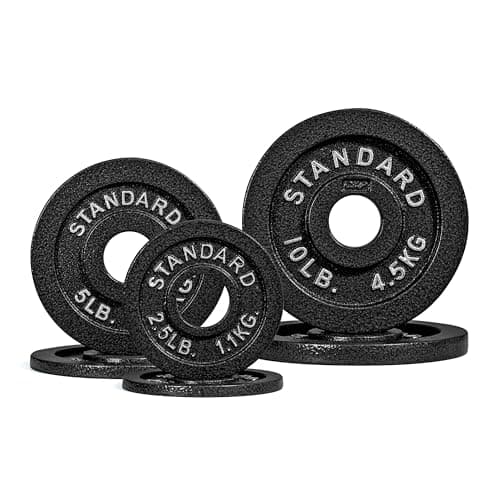
CAP Barbell CAP Barbell Olympic Cast Iron Plates
CAP Barbell Olympic Cast Iron Plates

Old-fashioned cast iron — close to indestructible, and the cheapest weight per pound if you don't drop it.

Best cast iron plates
7.6
$49.99Amazon
02
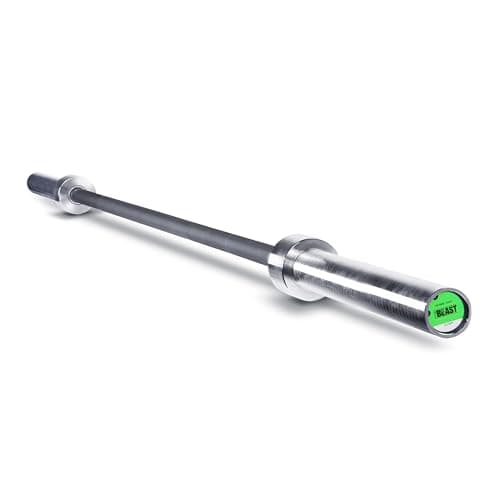
CAP Barbell CAP The Beast 7 ft Olympic Barbell (1,200 lb)
CAP The Beast 7 ft Olympic Barbell (1,200 lb)

The value bar that keeps showing up in real garage gyms — 1,200 lb rated for the price of a cheap one.

Best value all-round bar
8.0
$149.00Amazon
03
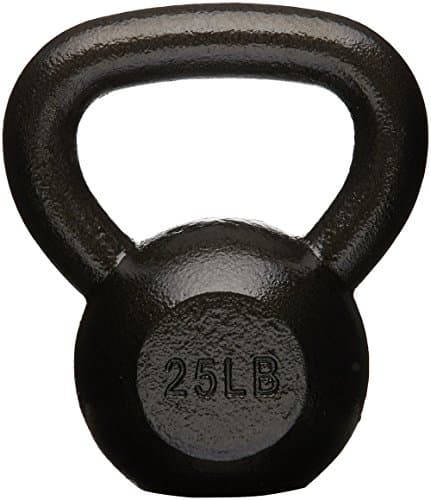
Amazon Basics Amazon Basics Cast Iron Kettlebell (Wide Handle)
Amazon Basics Cast Iron Kettlebell (Wide Handle)

One piece of cast iron with a wide handle — there is no mechanism here to outlive, which is the point.

Best value kettlebell
7.8
$35.99Amazon

#ad · Live prices from the Amazon Product API, as of Sep 8, 2026. Where we have no verified live price, we show none — we would rather leave a gap than print a number that has rotted.

In detail

The picks, in full

01
CAP Barbell CAP Barbell Olympic Cast Iron Plates

Best cast iron plates

CAP Barbell Olympic Cast Iron Plates

Cast ironBaked enamel2 in OlympicSold as sets/pairs
7.6/10

Old-fashioned cast iron — close to indestructible, and the cheapest weight per pound if you don't drop it.

Durability
8
Accuracy
7
Floor-friendly
4
Density
10
Value
9

Pros

  • Cast iron is about as durable as home-gym gear gets — no rubber to perish, no hub to fail
  • Denser than bumpers, so more weight fits on the sleeve for heavy slow lifts
  • Typically the lowest cost per pound of any plate type

Cons

  • Will chip a tile, crack concrete, or dent a bar if dropped — these are for controlled lifting, not Olympic drops
  • Bare iron can surface-rust in a damp garage if the enamel chips; a wipe of oil fixes it

Don't buy this if…

you do cleans, snatches or anything you bail from height. Dropping cast iron damages the plate, the bar and the floor — that job needs bumpers.

$49.99View on Amazon

Price as of Sep 8, 2026. Prices change — Amazon's is the one that counts.

#ad · we may earn a commission from this link to CAP Barbell Olympic Cast Iron Plates

02
CAP Barbell CAP The Beast 7 ft Olympic Barbell (1,200 lb)

Best value all-round bar

CAP The Beast 7 ft Olympic Barbell (1,200 lb)

7 ft / 45 lb1,200 lb capacityDual knurl marksAlloy steel
8.0/10

The value bar that keeps showing up in real garage gyms — 1,200 lb rated for the price of a cheap one.

Tensile / build
8
Coating
7
Knurl & spin
7
Capacity
9
Value
9

Pros

  • A 1,200 lb rated capacity is well beyond anything a home lifter will load, and beyond most bars at this price
  • Dual knurl marks suit both powerlifting and Olympic hand positions
  • CAP is a long-standing brand, so it is easy to buy and easy to replace

Cons

  • The finish is functional, not premium — keep it wiped down and it will not rust, but it is not stainless
  • Sleeve spin is on bushings, so it is smooth enough for lifting but not a competition-bearing feel

Don't buy this if…

you are an Olympic lifter who needs fast bearing spin and a lot of whip. This is a stiffer all-round bar; a dedicated Olympic bearing bar is the tool for cleans and snatches.

$149.00View on Amazon

Price as of Sep 8, 2026. Prices change — Amazon's is the one that counts.

#ad · we may earn a commission from this link to CAP The Beast 7 ft Olympic Barbell (1,200 lb)

03
Amazon Basics Amazon Basics Cast Iron Kettlebell (Wide Handle)

Best value kettlebell

Amazon Basics Cast Iron Kettlebell (Wide Handle)

Solid cast ironWide handleFlat baseSingle-piece casting
7.8/10

One piece of cast iron with a wide handle — there is no mechanism here to outlive, which is the point.

Durability
9
Handle
7
Finish
6
Base
8
Value
9

Pros

  • A single-piece iron casting is about as buy-it-for-life as home gym equipment gets — nothing wears out
  • Wide handle takes two hands comfortably for swings, which is what most people actually buy a kettlebell for
  • Among the lowest cost per pound in the category from a supplier with easy returns

Cons

  • Painted iron rather than powder coat, so the finish scuffs and chalk sticks to it less predictably
  • Fixed weight — a full ladder of sizes gets expensive and eats floor space

Don't buy this if…

you want the whole range from light to heavy. An adjustable kettlebell replaces five bells for less money and less floor, at the cost of a mechanism.

$35.99View on Amazon

Price as of Sep 8, 2026. Prices change — Amazon's is the one that counts.

#ad · we may earn a commission from this link to Amazon Basics Cast Iron Kettlebell (Wide Handle)

How we picked

We do not run a testing lab

We compiled manufacturer specifications, read the published warranties, checked the relevant standards and aggregated owner reviews, then scored each product against a published rubric. The scores are judgments from documented research — they are not measurements we took, because we do not run a lab and we are not going to pretend we do. Where a number came from a manufacturer or a standard, we name it and link it in Sources.

Questions

Frequently asked

How long does home gym equipment last?

It splits into three tiers. Cast iron plates and kettlebells are effectively permanent. Barbells and racks last decades, with small consumable parts — J-cup liners, safety pins, sleeve grease. Benches, adjustable dumbbells and cable machines have genuine service lives set by their mechanisms, with bench pads typically wanting replacement after five to ten years of regular use.

What is the first thing to wear out in a home gym?

Pads and mechanisms, long before any metal. In practice: bench vinyl and foam, adjustable dumbbell selectors and their plastic trays, J-hook liners, and bolts working loose. Plates, kettlebells and welded frames effectively do not wear under home loads.

Does expensive home gym equipment last longer?

In the permanent tier, no — a costly cast iron plate will not outlast a cheap one, because neither fails. Where price genuinely buys longevity is in the parts channel and in mechanism quality on benches, adjustable dumbbells and cable machines.

What single change extends the life of everything in a home gym?

Controlling humidity. Damp air rusts the bar, the plates and the rack hardware at once, so in an unheated garage or basement a dehumidifier does more for total equipment life than any single upgrade — and it costs less than one good barbell.

How often should I maintain home gym equipment?

A thirty-second wipe of the bar and the bench pad after each session, and one annual afternoon: re-torque the rack and bench, clean and re-grease the bar sleeves, brush and oil the knurl, wax the cast iron, and inspect straps, cables, vinyl and bumper hubs for wear.

Keep reading

Receipts

Sources

We do not run a testing lab, and we do not pretend to. Every spec, warranty term and standard above is the manufacturer's or a published source, cited and linked. Where we could not verify something, we say so on the page rather than quietly leaving it out. Read our full method.