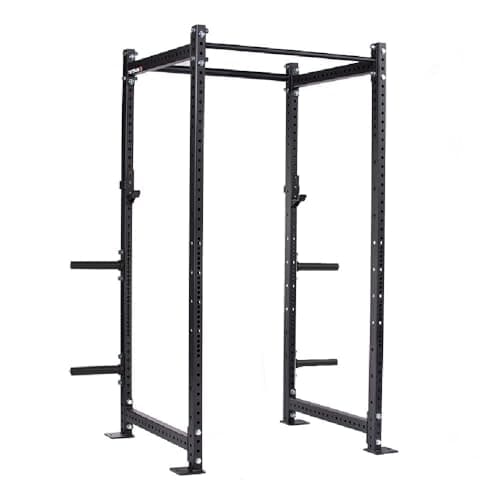
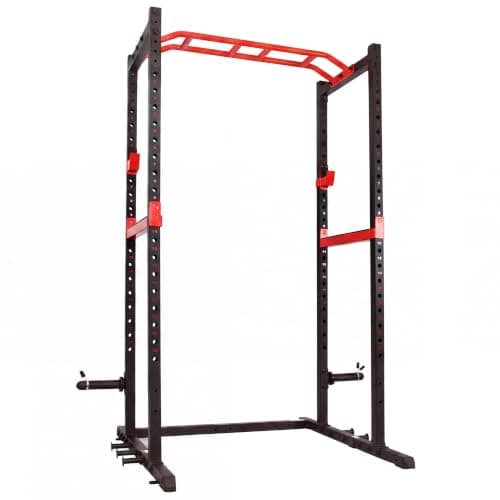
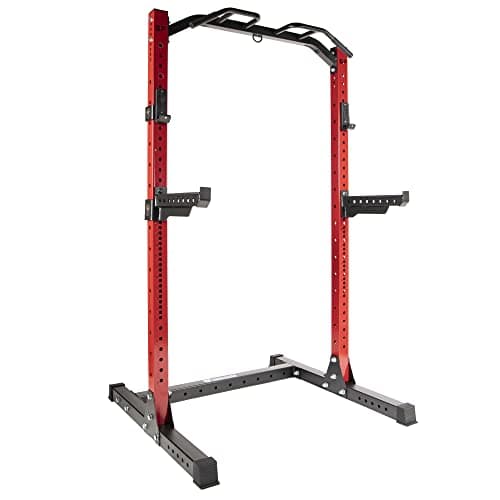
A power rack kept dry lasts decades. The frame is welded or bolted steel tube and nothing in normal use wears it; the parts that do wear — J-cup liners, the coating where the bar touches, the bolts, the pull-up bar knurl and any pads — are cheap, and on a well-chosen rack every one of them can be replaced. So the real question is not how long the rack lasts but whether you will still be able to buy a J-cup for it in year twelve, and whether you keep it somewhere it will not rust. This page is about those two things.
The frame: why it outlives you
A rack's uprights are square steel tube — on the racks we rank, 2x2 inch at the budget end and 3x3 inch 11-gauge at the top, with 2x3 in between. Steel of that section, loaded well within its rating a few times a week, does not fatigue in a human lifetime. The Signature SF-SS1 publishes 3x3 11-gauge and a 1,000 lb rating; the Titan T-3 publishes 2x3 11-gauge and 1,100 lb rackable. A 300 lb squat re-racked ten thousand times is not an event to steel like that.
Our home gym equipment lifespan reference puts racks in the same tier as barbells and plates — decades, with small consumable parts — and the durability pillar, home gym equipment that lasts, explains why the rack is the one purchase you should expect to make once. This page is the detail behind that claim.
What wears, in the order it wears
- J-cup liners. The plastic — usually UHMW — that sits between the bar and the steel cup. It takes every re-rack and it is meant to be the sacrificial part. Both Signature racks here publish UHMW-coated J-hooks. Liners scar, then groove, then eventually split. On a rack whose maker sells the cup, that is a small part and a few minutes; on one that does not, it is the beginning of the end, because a bar on bare steel chews its own knurl.
- Powder coat at the contact points. Where J-cups and safeties slide, where plates are stored on the uprights, where the bar touches the safeties. Chips are cosmetic until they are in a damp garage, where they are the start of rust. Touch-up paint is the fix, and the rust page below explains the routine.
- Hardware. Bolted racks loosen. Every listing we read tells you to re-tighten after assembly, and the ones that are honest tell you to keep doing it. Loose hardware is not wear but it produces wear — a rack that rattles is a rack whose holes are slowly ovalizing. Re-torque after the first month and twice a year.
- Pads, straps and pins. Safety-strap webbing ages and should be inspected for fraying; safety pins and pipes are steel and last, but their plastic sleeves do not. A dip attachment's pads compress. None of this touches the frame.
- The pull-up bar knurl. Knurled bars polish smooth over many years of hands and chalk. It is a feel issue, not a strength issue, and a bar can be re-knurled or replaced.
The three things that shorten a rack's life
Moisture. An unheated garage or a damp basement is where racks, bars and plates rust together. Rust does not weaken a tube quickly, but it eats the coating, seizes hardware and ruins the surfaces the bar rides on. A dehumidifier is cheaper than any rack on this page; the routine is in how to stop barbell rust, and it applies to the rack it lives in.
Dumping the bar on the safeties. Safeties are for catching a failed rep, and a rack rated for it will take that. What ages a rack is habitually dropping a loaded bar onto the safeties or the J-cups from height as a way of finishing a set. It flattens liners, dents powder coat and loosens bolts. Re-rack the bar. The difference between the two kinds of safeties, and what each takes, is in safety bars vs safety straps.
Moving it. A rack that is disassembled and reassembled every few years is a rack whose hardware is worked and whose holes are strained more than any set ever does. Buy for the room you have — see how much space a power rack needs — so it goes up once.
What the warranties say, and what they mean
Warranties on racks range from a year to lifetime on the frame, and the paper tells you less than it seems to. Titan Fitness publishes a one-year warranty with stated exclusions; the Mikolo folding rack listing offers one year of complimentary parts replacement; the ZENOVA stand states one year; Rogue's Monster Lite racks carry a lifetime frame warranty. The Signature listings we read state no warranty term on the page.
A short warranty on a 3x3 11-gauge rack does not mean the rack will fail in year two. It means the maker is not promising to fix it after that. What matters more for a twenty-year rack is whether the maker sells the consumable parts — the J-cups, the safeties, the liners — as separate items, because the warranty will never cover those and the frame will never need it. That distinction is the whole argument of what a lifetime warranty on home gym equipment actually covers.
Buying a rack that lasts as long as its frame
Three checks, in order of importance:
- Can you buy the J-cup? Search the maker's site for a replacement J-cup or liner before you buy the rack. If it exists as a part, the rack has a parts path. If the rack is built to a common pattern — 3x3 uprights with 5/8 inch holes — third-party cups fit it too, and the parts path outlives the maker. See home gym replacement parts.
- Is the tube specified? Upright size and gauge or wall thickness, both published. A rack that states neither is not necessarily thin, but the maker is not showing its work. 2x2 vs 3x3 explains what the sizes mean for stiffness and for parts.
- Is the coating a real powder coat? Every rack here publishes one. It is the difference between a rack that needs touch-up paint in year five and one that needs a wire brush.
Run the numbers the way our cost per year page does and a rack is the cheapest thing in the gym over its life, whatever it cost on the day: a frame kept twenty years costs a few dollars a month at any price on this page.