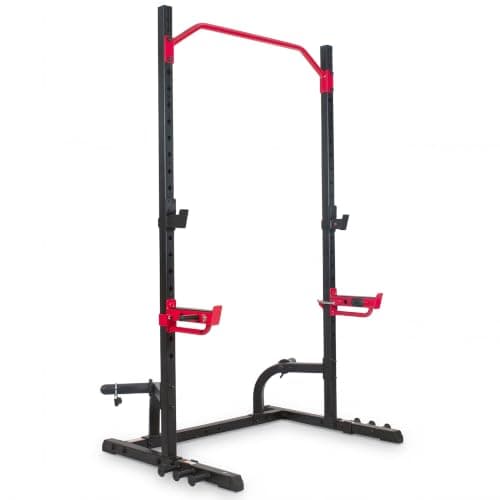
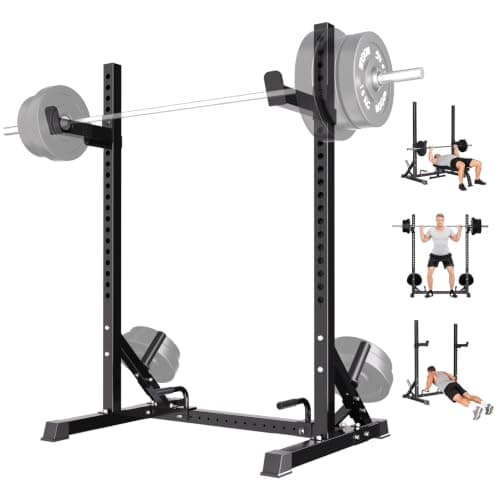
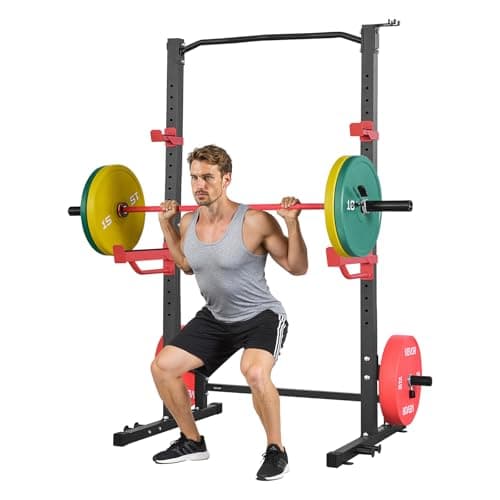
Buy the Signature Fitness SF-SS1 squat stand if you want a stand built like a cage — 3×3 inch uprights rated to 1,000 lb, which is the heavy tubing size in a two-post format. If the budget is tighter, the FLYBIRD SR1 covers the same squats, presses and rack pulls in a smaller, lighter frame. Either way you get most of what a full cage does — the barbell held at the right height, spotter arms to bail into — for a fraction of the footprint.
A stand is a smaller footprint, not a lesser commitment
People treat a squat stand as the compromise you buy before the "real" rack. It isn't. A stand is the same welded or bolted steel a cage is, in a two-post shape, and steel outlives everything else in a home gym. Plates last forever, a good bar lasts decades, and a well-built stand — like a well-built cage — outlives both. The only thing you give up is the enclosure, and for a lot of lifters that trade buys back half a garage bay.
The failure modes are the same ones that sink a cheap cage: thin uprights that flex under a heavy loaded bar, hardware that works loose, and J-hooks or spotter arms that wear and can't be replaced. A light stand with 2×2 tubing and no published capacity is the one to avoid — not because it's a stand, but because it's a thin one. So we rank on the things that actually decide whether it's still standing in a decade.
What we rank on
- Gauge steel and upright size.Wall thickness and post dimensions decide stiffness far more than the brand's adjectives. 3×3 inch uprights resist bending dramatically better than 2×2, and heavier gauge flexes less under a loaded bar. Our steel gauge guide translates the numbers.
- Stability under load. A two-post stand has no enclosure to brace it, so base width, foot design and whether it accepts anchoring matter more than on a cage. A stand that stays planted when you rack a heavy bar is worth more than one that inches across the floor.
- Footprint. The whole reason to choose a stand is the space it saves. We reward designs that squat, press and pull in the smallest honest footprint without dropping the safeties that make training alone sane.
- Expandability. A stand you can bolt spotter arms, a conversion kit or a lat tower onto grows with you instead of stranding you. A common hole ecosystem is what keeps a stand serviceable years after you bought it.
- Cost per year. Price divided by realistic service life. It is the only number that serves the buy-it-for-life buyer, and we show it on every pick.
If the enclosure is the feature you actually want — because you fail heavy singles alone — a cage is the honest answer, and our power rack roundup covers those. We lay the trade-off out directly in power rack vs squat rack.
The short answer
Quick picks
#ad · Live prices from the Amazon Product API, as of Jul 22, 2026. Where we have no verified live price, we show none — we would rather leave a gap than print a number that has rotted.
In detail
The picks, in full
Sturdiest squat stand
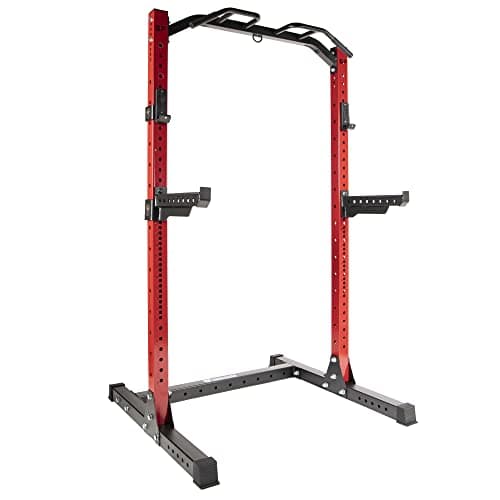
Signature Fitness SF-SS1 3×3 Squat Stand (1,000 lb)
3×3 in uprights1,000 lb ratedJ-hooks + spotter armsConversion-kit ready
3×3 uprights and a 1,000 lb rating in a squat stand — commercial steel without the cage.
- Build & steel
- 9
- Stability
- 8
- Footprint
- 8
- Expandability
- 8
- Value
- 7
Pros
- +3×3 inch uprights rated to 1,000 lb — this is the heavy tubing size in a stand format
- +Ships with J-hooks and safety spotter arms, so you can bail a failed squat
- +Optional conversion kits turn it into a full rack later, so it grows with you
Cons
- −Priced above the budget stands — you are paying for the heavier steel
- −A two-post stand still needs to be loaded evenly; it is more tip-sensitive than an anchored cage
Don't buy this if…
…you want the lightest, cheapest way to start. This is the buy-it-once stand; if the budget is tight today, a lighter stand gets you lifting for less.
Best squat rack for small spaces
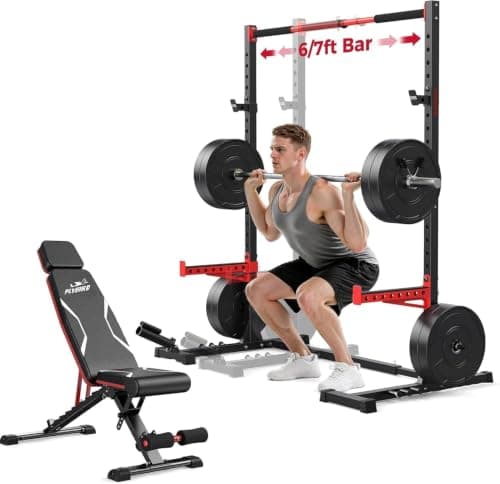
FLYBIRD SR1 Squat Rack
Adjustable uprightsPull-up barFits 6–7 ft barsJ-hooks
A tidy adjustable squat rack with a pull-up bar — the sensible small-footprint pick.
- Build & steel
- 7
- Stability
- 7
- Footprint
- 9
- Expandability
- 6
- Value
- 8
Pros
- +Height-adjustable uprights and J-hooks cover squats, presses and rack pulls in a small footprint
- +Integrated pull-up bar adds a pulling station without a second piece of kit
- +Far less floor space and cost than a full cage, with most of the utility
Cons
- −A stand, not a cage — you rely on spotter arms or bailing the bar, so form discipline matters
- −Less inherently stable under a max squat than an anchored cage; keep the loading sensible
Don't buy this if…
…you train heavy singles alone and want to fail safely. Open stands can't catch a bar the way an enclosed cage can — buy the cage if that safety margin matters to you.
Squat stand with cables
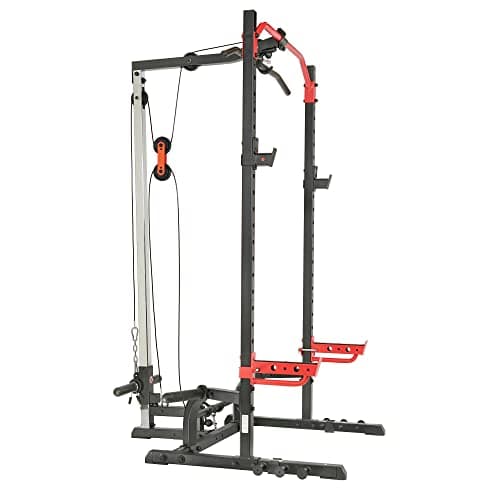
Sunny Health & Fitness Power Zone Squat Stand + Lat
Squat stand + cageLat pulldown includedPower Zone ecosystemAdjustable hooks
A squat stand that already includes the lat pulldown most stands make you add later.
- Build & steel
- 7
- Stability
- 7
- Footprint
- 7
- Expandability
- 8
- Value
- 7
Pros
- +Comes with the lat pull-down attachment built in, so you get pulling work without a separate tower
- +Part of the Power Zone line, so it shares attachments with the Sunny cages
- +Compact stand footprint with a real cable station bolted on
Cons
- −The most expensive squat option here — the cable hardware is what you pay for
- −Cables and pulleys are the parts most likely to need attention over a decade
Don't buy this if…
…you only want to squat and press. The lat stack is dead weight and dead cost if you never use it — a plain stand is cheaper and simpler.
Best rack with cables
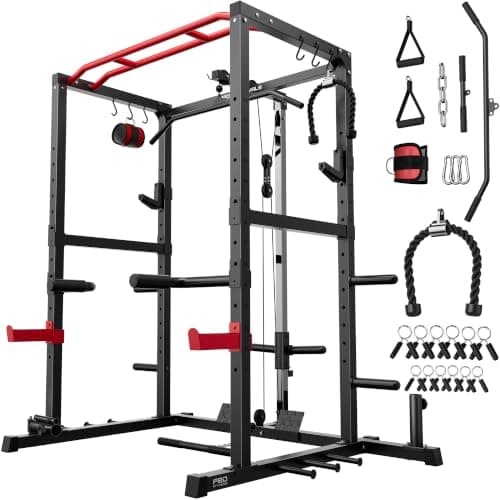
SPORTSROYALS Power Rack with Lat Pulldown
Pulley + lat systemLow-row + high-pulldownMulti-function cageJ-hooks
A cage with the cable stack already attached — the most gym-in-one-box on this list.
- Build & steel
- 7
- Capacity
- 7
- Expandability
- 8
- Footprint
- 6
- Value
- 9
Pros
- +The integrated pulley, lat pulldown and low row turn a squat cage into a near-complete gym
- +One purchase covers pressing, pulling and cable work — strong value per square foot
- +Adjustable hooks and safeties handle the barbell basics as well as a plain cage
Cons
- −Cable systems add moving parts — pulleys and cables are the components most likely to need service first
- −Heavier and more involved to assemble than a bare cage
Don't buy this if…
…you already own a functional trainer or cable machine. You would be paying for a pulley stack you don't need — a plain cage is cheaper and has fewer parts to wear.
Cheapest sensible rack
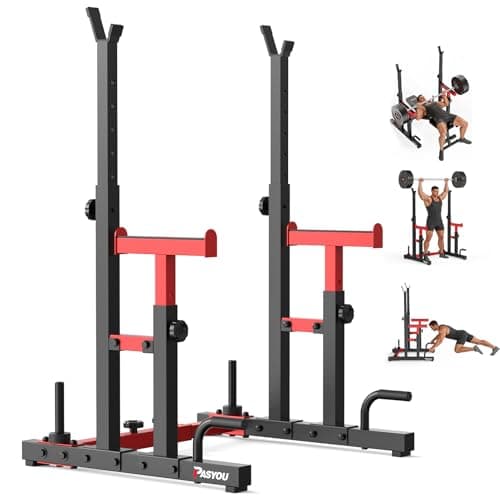
PASYOU Adjustable Power Rack (1,200 lb)
1,200 lb total ratedAdjustable uprightsSquat + benchCompact cage
A cheap way into a rack that squats and benches, with a surprisingly high rated total.
- Build & steel
- 6
- Capacity
- 8
- Expandability
- 5
- Footprint
- 8
- Value
- 9
Pros
- +A 1,200 lb total rating that is generous for the price bracket
- +Adjustable J-hook and safety positions cover squat, bench and rack pulls
- +Small enough to fit a garage bay without dominating it
Cons
- −A budget frame — expect some flex under a heavy loaded bar, and check bolt torque periodically
- −Attachment ecosystem is thin next to the bigger brands, so it grows less than a Sunny or Titan
Don't buy this if…
…you want a rack you can bolt a cable stack and lat tower onto down the line. This is a squat-and-bench cage, not a platform to expand — buy the ecosystem rack if expansion is the plan.
How to actually choose a squat rack
Stand vs cage: what you actually give up
A cage encloses you, so a failed squat or bench drops onto the safeties — the safest way to train alone. A stand relies on spotter arms or bailing the bar forward, which works but asks more of your form and your discipline. If you lift heavy without a spotter, that difference is real. If you train within yourself and use the spotter arms, a good stand does the job for less money and far less floor.
Stability and anchoring
A two-post stand is more tip-sensitive than an anchored cage, so load it evenly and rack the bar deliberately rather than dropping it in. Many stands can be bolted to a platform or a concrete floor, and if yours can, do it — anchoring turns a stand's biggest weakness into a non-issue. A wide, flat base and rubber feet are the next best thing if you can't drill.
Footprint and ceiling
This is where a stand wins. Measure the floor you can give up permanently and the height you have for a pull-up bar if the stand includes one. A stand fits rooms a full cage can't, and the ones with integrated pull-up bars save you buying a second piece of kit. If headroom is the constraint, a stand or a wall-mounted folding rack beats a cut-down cage every time.
When a full cage is the better buy
Be honest about your training. If you push toward failure on heavy squats and benches on your own, the enclosure earns its footprint — you can bail a missed rep onto the safeties and walk away. At that point spend up for the cage instead of buying a stand now and a cage later. For everyone else — most home lifters, most of the time — a sturdy stand is the right tool and the better value.
How we picked
We do not run a testing lab
We compiled manufacturer specifications, read the published warranties, checked the relevant standards and aggregated owner reviews, then scored each product against a published rubric. The scores are judgments from documented research — not measurements we took, because we do not run a lab and we will not pretend we do.
Go deeper
More in squat racks & stands
Questions
Frequently asked
Is a squat stand as good as a power rack?+
For most home lifting, yes — a sturdy stand racks the bar at the right height and gives you spotter arms to bail into, in a fraction of the footprint. What a stand gives up is the full enclosure: a cage catches a failed rep from every side, which matters most if you push heavy singles alone. We compare them directly in power rack vs squat rack.
Are squat stands safe?+
A stand with real spotter arms and a published capacity is safe for home training when you load it sensibly and rack the bar deliberately. The picks here ship with safety spotter arms for exactly that reason. The stands to avoid are unrated, narrow-base designs with no bail-out hardware. If you can anchor the stand to the floor, do — it removes the tip risk that is a stand's only real weakness.
Squat stand vs squat rack vs half rack — what's the difference?+
The terms overlap. A squat stand is the minimal two-post frame that holds the bar; a "squat rack" is often the same thing with a wider base or a pull-up bar; a half rack adds a rear frame and longer safeties for more catch coverage without becoming a full cage. More frame means more safety and more footprint. Pick the least frame that covers how you actually train.
Do I need to bolt a squat stand to the floor?+
You don't have to, but it's the single best upgrade you can make. Anchoring a stand to a platform or concrete floor removes the tip-sensitivity that separates a stand from a cage. If you can't drill, choose a stand with a wide, flat base and load it evenly.
Receipts
Sources
We do not run a testing lab, and we do not pretend to. Every spec, warranty term and standard above is the manufacturer's or a published source, cited and linked. Where we could not verify something, we say so on the page rather than quietly leaving it out. Read our full method.