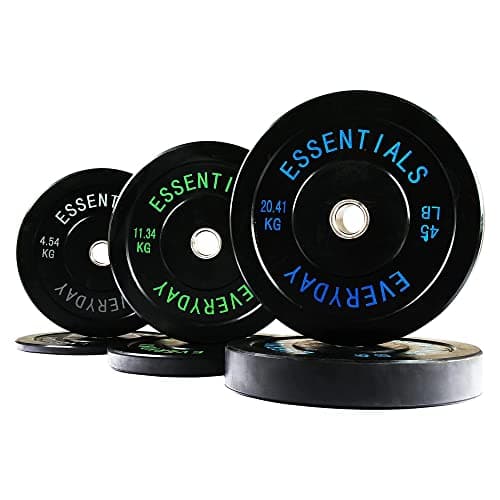
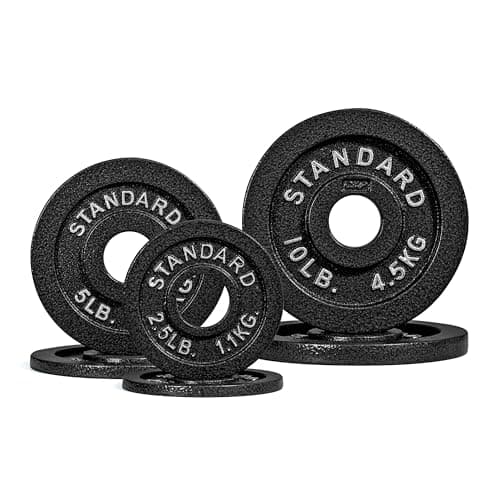
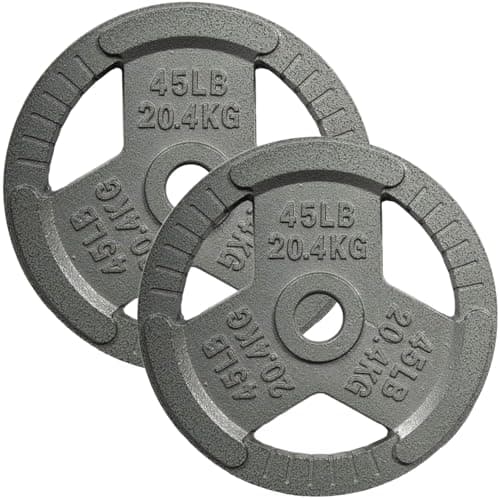
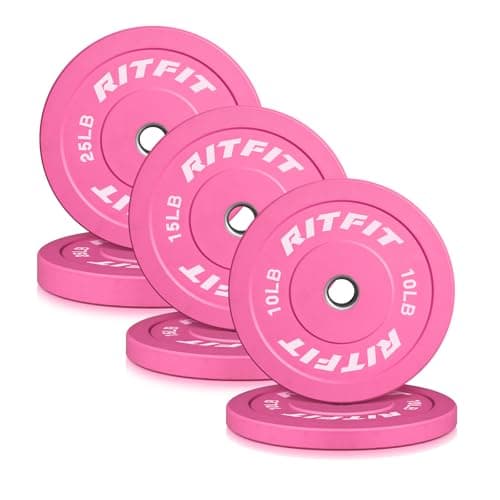
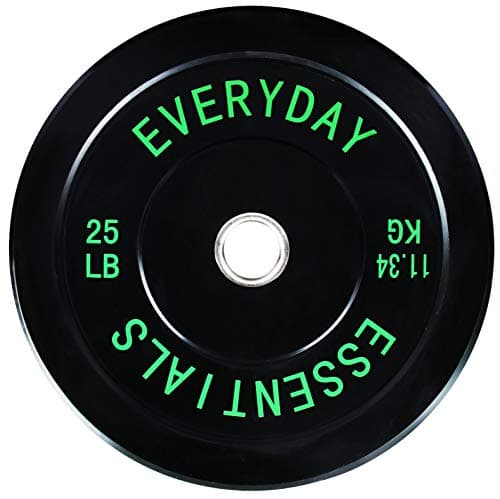
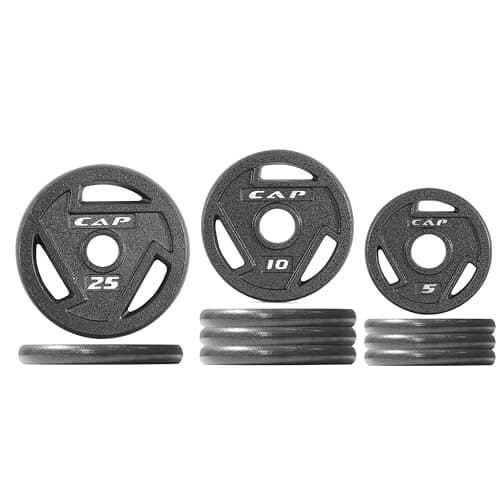
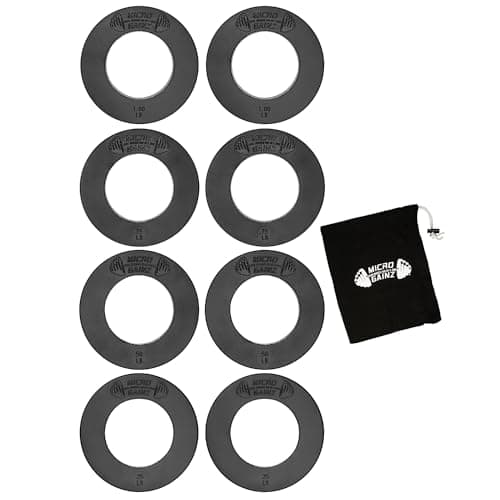
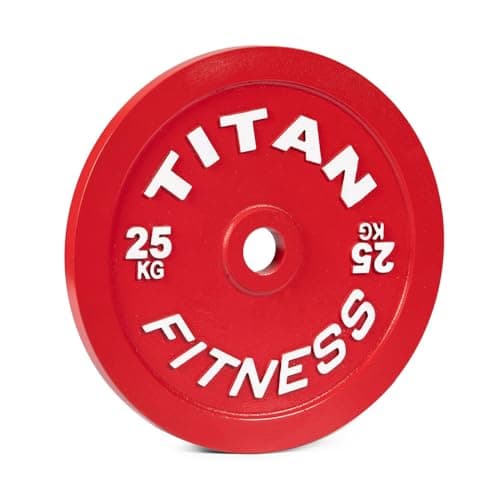
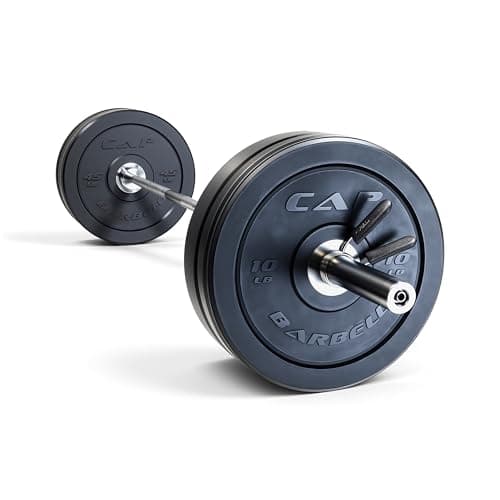
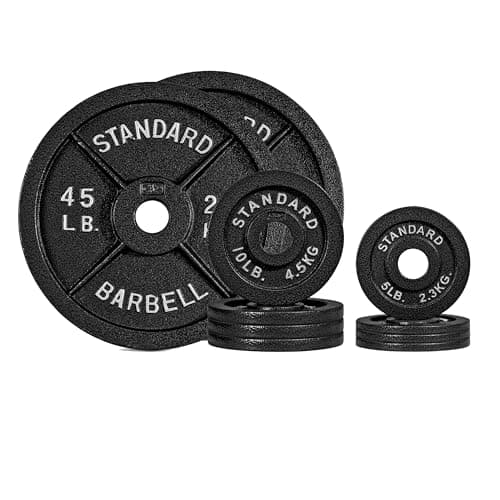
Buy the Signature Fitness steel-hub bumpers if you ever drop the bar from height, and CAP cast iron if you never do. That one question — whether the plates hit the floor at speed — decides more than brand, color or price, because it decides which kind of failure you have to worry about in the first place. If you do not own a barbell yet either, a bundle is usually the cheaper route — the ones worth buying are in the Olympic weight set roundup.
Plates are the closest thing to buy-it-for-life
A weight plate is a lump of iron, or a lump of iron wrapped in rubber. There is no motor, no bearing and no pad to wear out, which is why a good plate outlives almost everything else in the room. Cast iron plates cast decades ago still change hands and still work. Rubber bumpers are newer, but only two things on them can really age — the rubber compound and the steel hub at the center — and both age slowly. Treat plates as a lifetime purchase and the math shifts: you are not buying for this year, you are buying the last set you'll shop for. That is the same logic behind everything we recommend, and it is why we compare plate listings per pound rather than per plate — how much weight plates cost sets out the arithmetic.
What we rank on
- The steel hub. The center of a bumper plate is where cheap ones die. The insert the bar passes through takes the whole load, and on a budget bumper it is often a thin ring — or the rubber itself. Under repeated drops that center deforms, works loose and eventually pulls out, and a bumper with a wallowed-out hub is scrap. A real steel hub locked into the rubber is the single spec that separates a keeper from a throwaway.
- Rubber durometer. Durometer is how hard the rubber is. Too soft and the plate is a dead, bouncy pancake that mushrooms over time; too hard and it bounces alarmingly and can crack. We favor plates with a low, controlled bounce and a compound that settles down instead of smelling forever.
- Weight tolerance. A plate stamped 45 lb should weigh close to 45 lb. Budget plates can run a few percent off. For general training that rarely matters; if you care about an honest total on the bar, look for a stated tolerance and buy in matched pairs.
- Matching the plate to your floor. The most common expensive mistake is dropping cast iron on tile, or paying for bumpers you never drop. The plate has to suit the surface it lands on and the lifts you actually do — which is why we split the picks below into rubber and iron rather than pretend one wins outright.
Bumper or cast iron? The short version
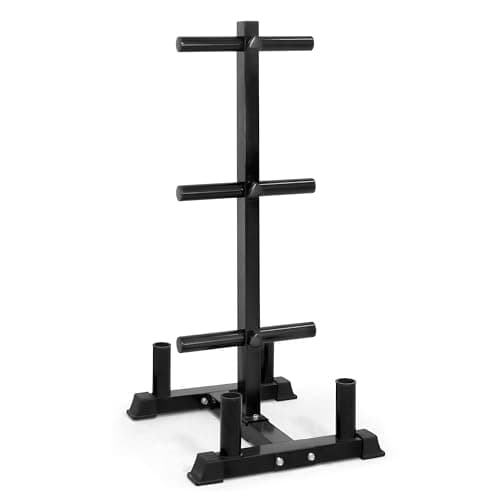
Bumpers are rubber with a steel hub, built to be dropped: the rubber protects your floor, your bar and the plate itself when a rep comes down from overhead. That is the whole reason they exist, and why weightlifters use them. Cast iron is denser, cheaper per pound and effectively indestructible in normal use — but drop it and it chips tile, cracks concrete and dents a bar. So bumpers win if you clean, snatch or bail a failed rep; iron wins on price and on how much weight fits on the sleeve when you lift under control. Most home gyms want bumpers for the working weight and can add cheap iron for slow, heavy pulls later. Whichever you buy, get it off the floor — a simple stand like the CAP Barbell Olympic Plate Tree sorts plates by weight and saves your back. If you are still on the fence, we lay the two side by side in bumper vs iron plates.
How to choose weight plates
Bumper or iron — start with your floor
Decide this before you look at a single listing, because it rules half the market out. If you do any lift you might drop — cleans, snatches, overhead work, or heavy deadlifts you let go of — you need bumpers, full stop. Iron on a hard floor damages the plate, the bar and the slab. If every rep is controlled and racked, iron is the cheaper, denser, longer-lasting choice. A concrete garage floor with a rubber mat tolerates iron better than tile, but it still won't forgive an overhead miss.
Steel hub vs no hub
On a bumper, the hub is the whole ballgame. A steel insert bonded into the rubber keeps the center from deforming and pulling out — the classic cheap-bumper death. Read the listing: the good sets say "steel hub" or "steel insert" plainly, and every bumper we rank has one. If a bumper is silent about the hub, assume the center is the weak point and treat the low price as a warning, not a bargain.
Weight tolerance and calibration
Calibrated competition plates hold a tight tolerance and cost accordingly; home plates are stamped nominal and run a little loose. That is fine for building strength — your body does not know if the bar is a pound heavy. If you track precise totals, buy matched pairs of the same model rather than mixing brands, and weigh a plate once so you know your set's real bias.
A full set or pairs?
A boxed set usually costs less per pound than buying pairs one at a time, and gets your whole spread of weights in a single order. Buy the set if you are outfitting from scratch. Buy pairs if you already own plates and just need to fill a gap — buying a full set to get two plates wastes money. Either way, budget for storage from day one; loose plates on a floor is how bars get dinged.