Skip to content
Plate&Rack

The load · Weight Plates

What Weight Plates to Buy First

Almost everyone buys plates in the wrong order: heavy first, small later. That is backwards, and it is why so many home gyms cannot make a small jump.

By Stephen V.Updated How we choose
#ad

We earn a commission when you buy through our Amazon links, at no extra cost to you. It never affects our rankings, and we say so when the cheaper product is the better buy. How this works.

Buy a set that includes the small plates before you buy more 45s. The plates that let you progress are more valuable than the plates that let you load heavy. You will reach for a 2.5 lb pair a hundred times before a second pair of 45s earns its money. This is also the thing almost every bundled Olympic weight set gets wrong — they ship tonnage, not small plates.

Why small plates come first

A bar and two 45 lb plates is 135 lb. A bar and two 25s is 95 lb. Between those two numbers there is nothing — unless you own the small plates. That gap is where beginners stall, not because they are not strong enough, but because the next available load is 40 lb heavier than the current one.

Small plates are also what let you run any sensible progression. Adding 5 lb a week to a press requires 2.5 lb plates. Adding 10 lb to a squat requires 5s. Without them, your only progression is a 45 lb jump, which nobody can do.

The order to buy in

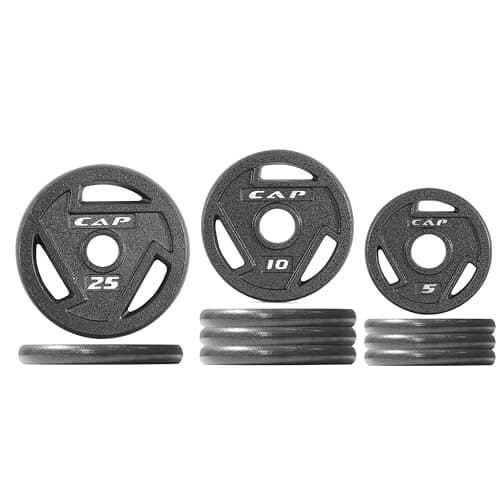
  1. A starter set with the small plates in it. The 2.5, 5 and 10 lb pairs plus a pair of 25s. A boxed set like the CAP 110 lb Elite set is the cheapest way to get this spread in one order, and per pound it beats buying pairs individually.
  2. A pair of 45s. Once the bar plus your set stops being challenging, this is the next jump. Buy one pair, not three.
  3. More 45s, as needed. Add pairs when you genuinely run out, not in advance. Iron does not go off, but money spent on plates you cannot lift yet is money not spent on a bench or a rack.
  4. Fractionals, when a lift stalls. Usually the overhead press, usually within the first year. Covered in the best fractional plates.

Set or pairs?

Boxed setIndividual pairs
Cost per poundUsually lowerUsually higher
Gets the small platesYes, in one orderOnly if you remember to buy them
RiskPaying for sizes you may not need yetEnding up with gaps
Best forStarting from nothingFilling a specific gap

The rule: buy a set to start, buy pairs to extend. Buying a whole second set to get two plates you are missing is the classic expensive mistake.

Iron or bumper first?

Decide this before you buy anything, because it is genuinely hard to change later. The question is not budget — it is whether you will drop the bar.

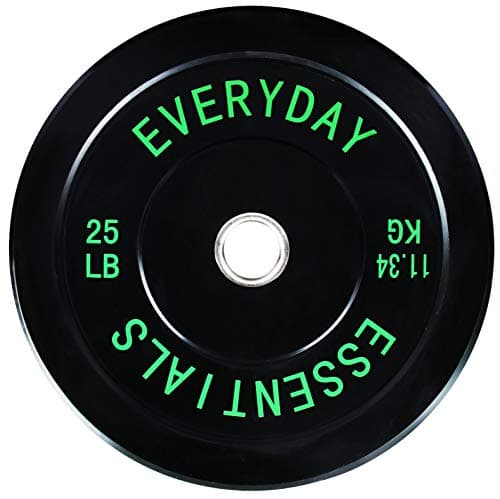
If you deadlift and put the bar down under control, and you squat in a rack with safeties, buy iron. It is denser, cheaper per pound and effectively permanent. If you do anything you may need to drop — Olympic lifting, or training alone at a level where bailing is realistic — buy bumpers, because the alternative is cracked plates and a cracked floor. The full comparison is in bumper vs iron plates.

A common and sensible hybrid: bumpers for the 45s that hit the floor and iron for everything above and below. You get drop protection where it matters and density everywhere else.

How much total weight do you need?

Less than the internet suggests, at first. A bar plus roughly 110 to 160 lb of plates covers the first stretch of training for most people, and the smaller plates in that total will get far more use than the big ones.

The mistake in the other direction is buying 300 lb of plates on day one because it was a good deal. Iron holds its value and does not spoil, so that is not a disaster — but it is money sitting on the floor that could have bought a rack with proper safeties, which is the purchase that actually makes training alone safe. Our beginner setup guide puts the whole order together.

Two things to check before ordering

First, the hole. Everything worth buying is 2 inch Olympic — see Olympic vs standard if you are unsure what your bar takes. Second, your sleeve length. Bumpers and handled plates are wider per pound than plain iron, and a short-sleeved bar fills up faster than you expect.
The short answer

Quick picks

#ProductBest forScorePrice
01
CAP Barbell CAP Barbell 110 lb Elite Olympic Cast Iron Plate Set
CAP Barbell 110 lb Elite Olympic Cast Iron Plate Set

Iron in a machined-face Elite finish — the set to buy once and never think about again.

Best cast iron plate set
7.2
$159.99Amazon
02
Signature Fitness Signature Fitness Olympic Bumper Plates (Steel Hub)
Signature Fitness Olympic Bumper Plates (Steel Hub)

Steel-hub bumpers sold one plate at a time — the cheapest honest way into bumpers without buying a whole set.

Best value bumper plates
8.2
$49.99Amazon

#ad · Live prices from the Amazon Product API, as of Sep 8, 2026. Where we have no verified live price, we show none — we would rather leave a gap than print a number that has rotted.

In detail

The picks, in full

01
CAP Barbell CAP Barbell 110 lb Elite Olympic Cast Iron Plate Set

Best cast iron plate set

CAP Barbell 110 lb Elite Olympic Cast Iron Plate Set

110 lb set2 in OlympicElite seriesCast iron
7.2/10

Iron in a machined-face Elite finish — the set to buy once and never think about again.

Durability
9
Tolerance
7
Hub & fit
8
Floor safety
4
Value
8

Pros

  • Cast iron is the single most durable material in a home gym — these outlive the rack they hang on
  • A 110 lb starter set covers a beginner's working weights without buying singles piecemeal
  • CAP's Elite line is a step above the economy plates in finish consistency and hole tolerance

Cons

  • Iron chips paint where plates knock together, and bare chips will surface-rust in a damp garage
  • Not droppable — iron on concrete damages the plate, the floor and eventually the bar

Don't buy this if…

you deadlift to failure and let the bar go. Bumper plates are the only sane choice for dropped lifts; iron is for controlled work.

$159.99View on Amazon

Price as of Sep 8, 2026. Prices change — Amazon's is the one that counts.

#ad · we may earn a commission from this link to CAP Barbell 110 lb Elite Olympic Cast Iron Plate Set

02
Signature Fitness Signature Fitness Olympic Bumper Plates (Steel Hub)

Best value bumper plates

Signature Fitness Olympic Bumper Plates (Steel Hub)

Steel hub insert2 in OlympicRubber bumperSold by weight
8.2/10

Steel-hub bumpers sold one plate at a time — the cheapest honest way into bumpers without buying a whole set.

Durability
9
Accuracy
7
Floor-friendly
10
Density
6
Value
9

Pros

  • A stainless steel hub is the durability upgrade that matters — it stops the center from deforming and pulling out, the classic cheap-bumper failure
  • High-density rubber with minimal bounce means you can drop them and protect your floor and bar
  • Sold as singles, so you buy exactly the weights you are missing instead of a set full of plates you already own

Cons

  • Wider than cast iron for the same weight, so a loaded bar runs out of sleeve sooner
  • Bumper rubber can have a mild smell when new, which airs out

Don't buy this if…

you never drop the bar and want maximum weight on a short sleeve. Cast iron packs more load into less space for slow lifts — bumpers earn their bulk only if you're dropping them.

$49.99View on Amazon

Price as of Sep 8, 2026. Prices change — Amazon's is the one that counts.

#ad · we may earn a commission from this link to Signature Fitness Olympic Bumper Plates (Steel Hub)

How we picked

We do not run a testing lab

We compiled manufacturer specifications, read the published warranties, checked the relevant standards and aggregated owner reviews, then scored each product against a published rubric. The scores are judgments from documented research — they are not measurements we took, because we do not run a lab and we are not going to pretend we do. Where a number came from a manufacturer or a standard, we name it and link it in Sources.

Questions

Frequently asked

What weight plates should a beginner buy first?

A boxed set that includes the 2.5, 5 and 10 lb pairs plus a pair of 25s. The small plates are what let you progress in manageable steps — a stack of 45s gives you one enormous jump and nothing in between.

Is it cheaper to buy a weight plate set or individual pairs?

A boxed set is usually cheaper per pound and gets you the full spread in one order. Buy a set to start and individual pairs to fill specific gaps later. Buying a second full set to get two missing plates is the expensive mistake.

How much weight do I need for a home gym?

A bar plus roughly 110 to 160 lb of plates covers most people at the start, weighted toward the smaller sizes. Add 45 lb pairs when you actually run out rather than in advance — money in unused iron is money not in a rack.

Should I buy bumper plates or iron plates first?

Iron if you set the bar down under control, bumpers if you drop it. Many home gyms end up with bumper 45s for the plates that touch the floor and iron for everything else, which is a sensible compromise rather than a fudge.

Keep reading

Receipts

Sources

We do not run a testing lab, and we do not pretend to. Every spec, warranty term and standard above is the manufacturer's or a published source, cited and linked. Where we could not verify something, we say so on the page rather than quietly leaving it out. Read our full method.