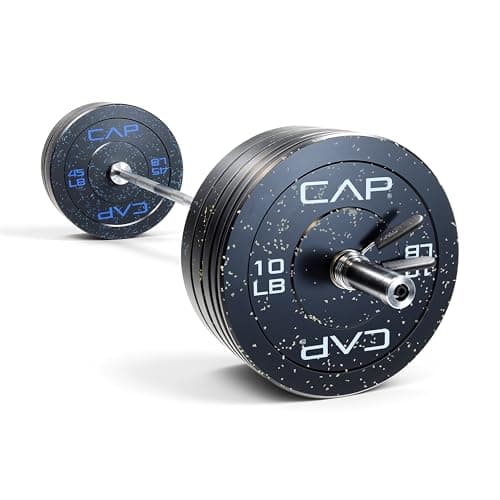
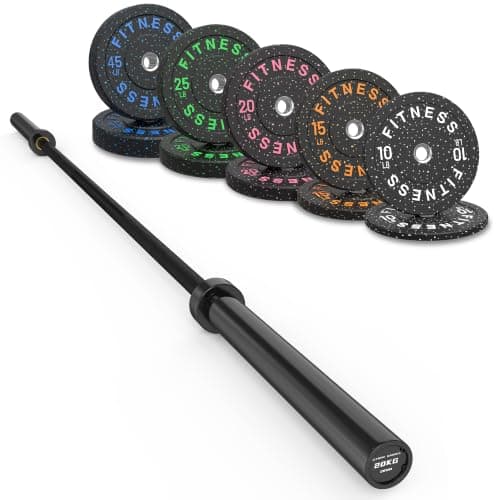
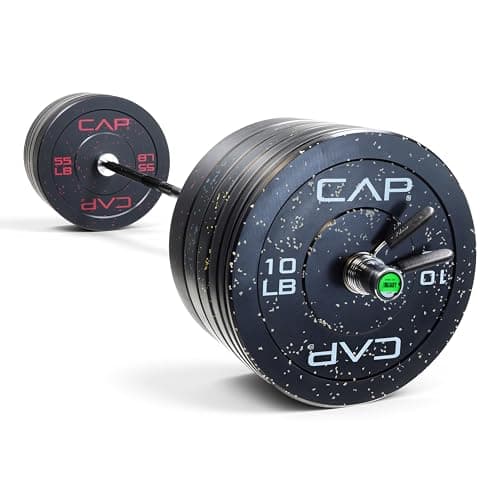
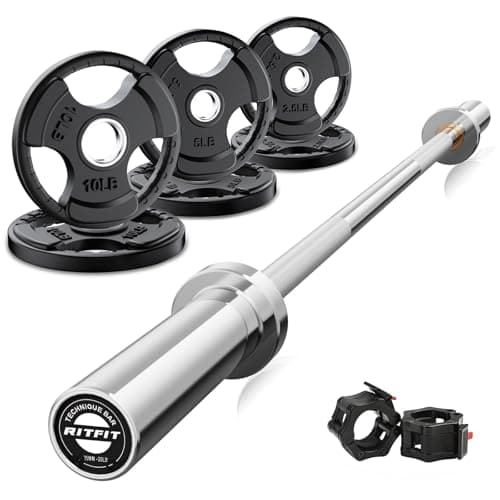
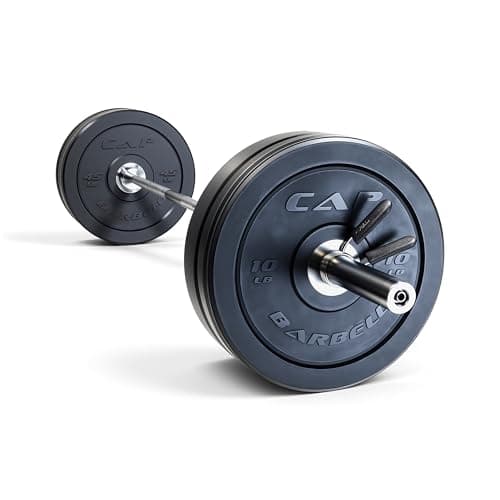
Before anything else: check whether the "weight set" you are looking at includes a barbell. Many do not, and the listings are titled almost identically. Once you have filtered for that, the CAP 160 lb PRO set is the one to buy for most rooms — it is the smallest set here that still ships a full 7 ft bar, and bar length is what decides whether the set works in a rack.
"Weight set" means two different products
This is the single most useful thing this page can tell you, and it costs people real money. On Amazon, the phrase covers both:
- A plate set.Plates only. No bar. Titled things like "260 lb Economy Olympic Bumper Plate Weight Set".
- A bar-and-plate set.Plates plus a barbell. Titled things like "260 lb Economy Olympic Weight Set with 7ft Chrome Barbell".
The same manufacturer sells both, at similar tonnages, with titles that differ by a handful of words in the middle. If you are buying your first bar and plates together, the words with barbell or an explicit bar weight are the ones to look for. Every set ranked on this page includes a bar. If it turns out you only want plates, the hub roundup at the best weight plates and the bumper plate roundup are the right pages instead.
The honest problem with combo sets
A bundle is genuinely the cheapest route to a loaded barbell, and for a first home gym that is a real argument. But it comes with a consistent catch, and pretending otherwise would be dishonest: the bar is almost always the least specified thing in the box.
Look at what these listings publish. Tonnage, always. Plate type, usually. Bar length, sometimes. Bar weight, once across this entire roundup. Tensile strength, shaft diameter, knurl pattern, sleeve construction — the four specs our barbell roundup actually ranks on — appear on none of them.
That is not the same as saying the bars are bad. It is saying you cannot know, and on the piece of equipment that follows you from your first squat stand to your last power rack, not knowing is the problem. A bar is the one item in a home gym that genuinely does last decades if it is built right, which is why how long barbells last spends its time on construction rather than on brands.
What we rank on
- Does it include a bar, and how long is that bar. A 7 ft bar racks in a standard power rack or squat stand. A shorter bar does not, and no amount of plate makes up for it. This is the first filter and it eliminates more sets than anything else.
- What the listing publishes about the bar. Length is the minimum. A stated bar weight is better and rare. Anything beyond that is rarer still, and we score it when we see it.
- Plate type. Bumper or cast iron changes what the set does to your floor and whether it tolerates being dropped. The full argument is in bumper plates vs iron plates; for a bundled starter set, bumpers are usually the right default.
- Tonnage, judged against who is buying. More plate is not automatically better. A beginner buying 370 lb has spent money on iron they will not load for a year.
- Cost per useful pound. Not per pound. Plate you cannot lift yet is storage, not training.
A note on who makes these
One finding worth stating plainly rather than hiding: on Amazon this category is dominated by a single brand. When we resolved live listings for this page, CAP Barbell accounted for most of the bar-and-plate sets actually in stock, across several tonnages. Three of our five picks are therefore CAP sets.
That is a description of the market, not a preference. Where a genuine alternative existed and was in stock, we ranked it — the HANDBODE set is here specifically because its listing publishes something CAP's do not.
How much weight do you actually need?
More people over-buy tonnage than under-buy it. A useful way to think about it: your first plate purchase needs to cover your working sets plus one progression step, not your eventual best lift.
For most untrained adults, a set in the 150 to 260 lb range including the bar covers squats, presses and rows for a long time, and the deadlift is the only lift that runs out early. Past that you are buying 45s, and 45s are the cheapest plates per pound to add later. The small plates — the ones that let you add five pounds instead of ten — are the ones worth having early, and almost no combo set includes enough of them. That argument in full is on what weight plates to buy first.
If you are assembling a whole gym rather than just a bar and plates, the order of purchase matters more than any single set — what equipment you need for strength training walks through it.
When to buy separately instead
A combo set is the right call for one specific buyer: somebody with no barbell, no plates, and a preference for one delivery and one decision. That is a large group and there is nothing wrong with being in it.
Buy the bar and the plates separately when any of these apply:
- You already own a barbell. Obvious, and still the most common mistake. A second unspecified bar has no use — buy plates on their own.
- You intend to lift heavy. A bar with no published tensile rating is fine at moderate loads and an unknown at high ones. If you can already pull three plates, buy a bar whose rating you can read, from the barbell roundup or the cheaper picks in best budget barbells.
- You want cast iron rather than bumpers. Combo sets skew heavily to bumpers. Iron is denser, cheaper per pound and takes less bar space — the cast iron roundup covers it.
- Your floor is bare concrete or tile and you have no mat. Then plate choice is a floor decision before it is a training one. See home gym flooring.
The specs to check before you order
- Bar length. 7 ft is the standard that racks. Anything shorter is a space-constrained compromise and should be bought knowing that, not discovered afterward.
- Sleeve diameter. Olympic is 2 inch. Standard is 1 inch and is not interchangeable. If a listing does not say, ask before ordering — this is the single most expensive detail to get wrong, and it is covered in Olympic vs standard plates.
- Whether the headline tonnage includes the bar.A "300 lb set" can mean 300 lb of plates, or 255 lb of plates plus a 45 lb bar. Those are different purchases.
- The plate breakdown. Total weight tells you nothing about whether you can make a small jump. Ten 45s is 450 lb and a useless set.
- Collars. Some sets include them, some do not, and a bar without collars is not safe to load asymmetrically. If they are missing, add collars to the order.
What lasts and what does not
Split a combo set into its parts and the two halves age completely differently.
The plates are effectively permanent. Cast iron has nothing to fail and only ever develops reversible surface rust. Bumper plates are close behind — the honest caveat is the rubber and the hub bond rather than the steel, which is covered in how long bumper plates last. In a decade you will still own every plate in the box.
The bar is the variable. A well-made bar outlives the building; a poorly finished one develops rust in a damp garage and its sleeves stop spinning. Neither outcome is predictable from a listing that publishes only a length and a finish — but both are manageable, and the maintenance is trivial either way: keeping a bar from rusting is a five-minute habit, not a project.
Which is why the honest way to buy a combo set is this: treat the plates as the permanent purchase and the bar as the part you may eventually upgrade. Priced that way, a bundle stops looking like a compromise and starts looking like what it is — the cheapest possible route to a loaded barbell, with an upgrade path built in. Run it through the cost per year math and it holds up well.
Storage, from day one
A 260 lb set arrives as a pile of plates on your floor, and plates on a floor scratch the floor, rust from the concrete up, and become the thing you trip over walking a loaded bar back to the rack. A plate tree costs a fraction of the set and solves all three — plate storage is ranked here.
And if you have not bought a rack yet, that is the next decision rather than this one. Plates without a rack limit you to deadlifts and cleans; the power rack roundup and the price-tier breakdown cover what each budget buys.