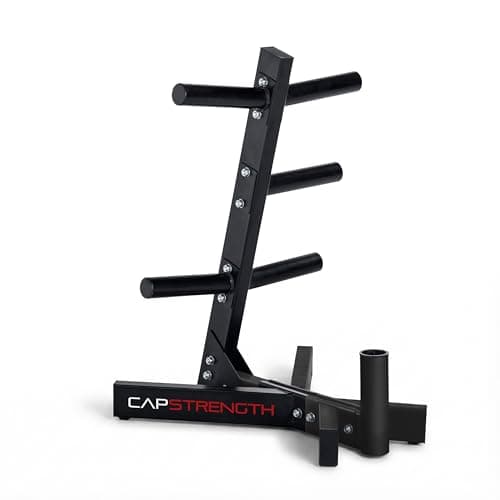
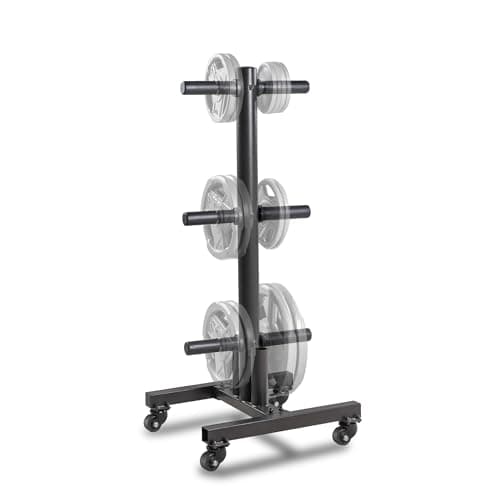
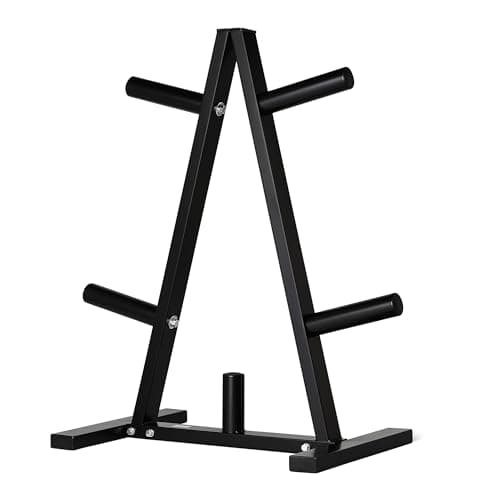
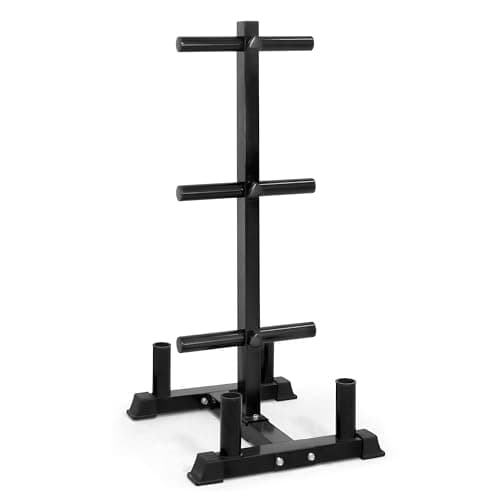
Buy the CAP bumper plate tree if you want plates and bars solved by one purchase, or the Amazon Basics tree if you just need the plates off the concrete for as little money as possible. Storage is the least glamorous purchase in a home gym and one of the highest-return ones.
Why storage is a durability purchase
This is a site about buying equipment once, so here is the case for a plate tree in those terms. Plates stacked on a concrete slab sit in the dampest air in the room and wick moisture from the floor — that is where the rust starts on iron. Plates leaning against a wall slide, chip each other, and eventually fall. Bars left on the floor corrode at the sleeves and get stepped on.
A tree costs about what one 45 lb plate costs and removes all of those failure modes for as long as you own the gym. Measured as cost per year of protected equipment, it is probably the best-value object on this entire site — and it is the one people leave until last.
What we rank on
- Published capacity.A tree holding 660 lb is a different object from one holding 300. We cite the maker's figure and treat plate collections as things that grow.
- Post count and post length. More posts means better sorting by weight, which is what actually speeds up a session. Post length decides how many plates each holds — and deep-dish iron eats post length far faster than bumpers do.
- Stability. Trees get loaded unevenly, which is exactly how they tip. Base width and base weight are the specs that matter, and a wide welded base beats a clever design.
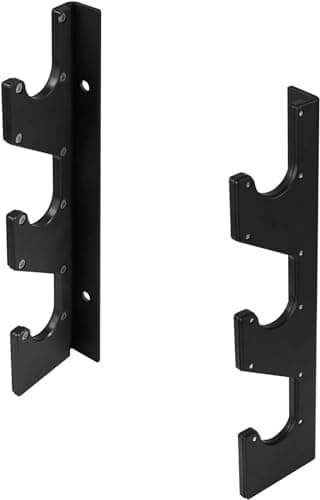
- Bar holders. A tree that also stores barbells solves two problems in one footprint. If yours does not, a wall-mounted bar holder is a cheap addition.
- Footprint. Storage that eats training space defeats the purpose. Wall-mounted options use space you were not using at all.
Tree, rack, or wall?
Plate tree
A vertical post frame with horns for plates. Cheapest, simplest, easiest to load. It takes floor space, and a tall loaded tree needs a stable base. This is the default answer and the right one for most gyms.
Storage rack with bar holders
Same idea, plus vertical or horizontal barbell storage. Costs more, saves a second purchase, and keeps bars vertical — which is what stops sleeve corrosion from floor contact.
Wall-mounted
Horizontal barbell holders and wall plate pegs use space that is otherwise dead. Excellent in a cramped garage, and requires studs or masonry — the same constraint as a folding rack. If you rent, this is usually off the table.
On the rack itself
Many racks sell plate horns that bolt to the uprights. They are convenient and they double as base ballast, which is a genuine stability benefit — see rack attachments. They hold far fewer plates than a tree, so they complement one rather than replace it.
Sizing it to your collection
Count what you own, then buy for roughly double. Plate collections grow — that is their nature — and buying a second tree in two years costs more than buying the right one now. If you own 200 lb of plates today, buy a tree rated well past 400.
One practical note about post length: bumper plates are much thicker per pound than cast iron, and deep-dish iron plates are thicker still than flat ones. A six-post tree that swallows an iron collection may hold noticeably less bumper weight than the number on the box suggests.
How to buy storage once
Measure the corner it is going in
Storage lives in the space a rack cannot use. Measure that corner — height as well as footprint — before comparing trees, because a tall tree in a low garage puts the top horn out of comfortable reach.
Buy for the collection you will have
Plate collections only grow. Rated capacity is cheap to over-buy and expensive to under-buy. Double your current weight and shop from there.
Check the horn diameter
Olympic trees have 2 inch horns for 2 inch plates. If you own standard 1 inch plates, an Olympic tree will hold them but they will flop around. Match the system — see Olympic vs standard.
Load it evenly
Tipping is the only real failure mode of a plate tree, and it is almost always caused by loading all the heavy plates on one side. Put 45s low and opposite each other, small plates high. It takes no extra effort and removes the problem.
Add a bar holder if the tree does not have one
Bars stored on the floor corrode at the sleeves and get stepped on. A pair of wall hooks costs less than a small plate. Our rust guide explains why floor storage in particular is so hard on a bar.