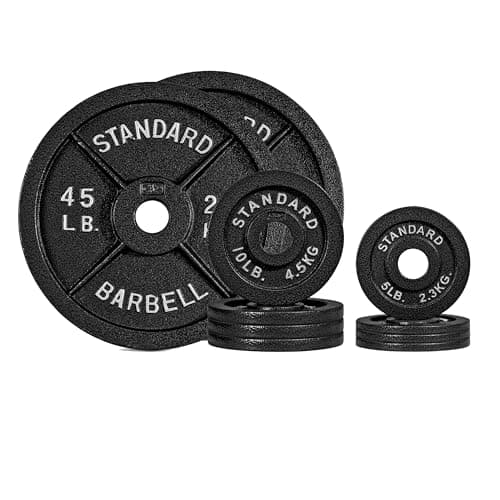
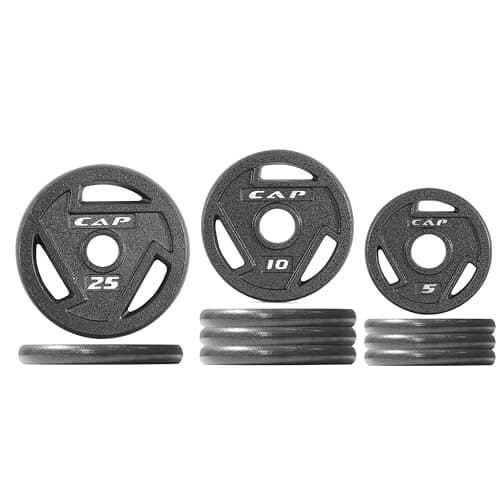
Buy the CAP Elite set if you want the better-finished iron and a starter weight range in one purchase, or the plain Classic set if you want more iron per dollar — 150 lb, including the pair of 45s. Cast iron is the single most permanent thing you can put in a home gym — it does not fatigue, it does not compress, and it does not have a service life in any meaningful sense.
Why iron is the buy-it-for-life plate
A rack can rust through, a bench pad compresses, a bearing wears. A cast iron plate is a solid lump of metal with a hole in the middle. Nothing in it degrades under use. The realistic ways to lose an iron plate are dropping it onto concrete hard enough to crack it, or letting it corrode for years in standing water — and even a rusty plate still weighs what it weighed.
That makes iron the best value per year of any purchase in a home gym, by a wide margin. Second-hand iron from the 1980s is still in daily use in garages everywhere. Nothing else in this category has that record, which is why our durability pillar puts it at the top of the hierarchy.
What we rank on
- Hole tolerance. The single most important spec nobody publishes well. A hole that is too tight binds on the sleeve; too loose and plates rattle and shift. Better-finished lines are more consistent here, and that consistency is most of what you pay extra for.
- Weight tolerance. Budget iron is typically accurate to within a couple of percent, which is irrelevant for training and relevant only if you are chasing exact totals.
- Finish. Painted or e-coated iron resists surface rust; bare iron does not. Chips are inevitable where plates knock together — the question is how fast they turn orange in your climate.
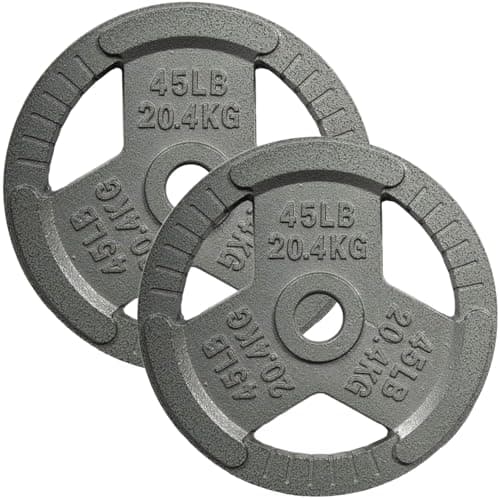
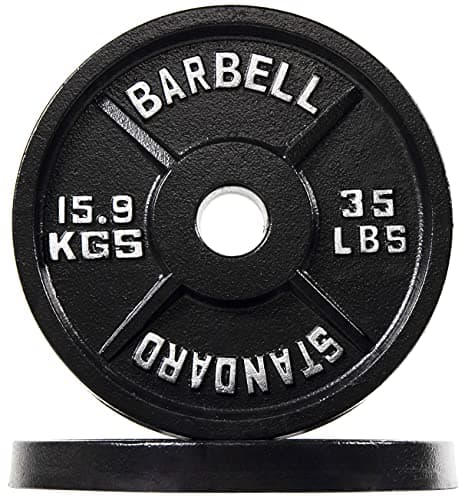
- Grip design. Tri-grip plates have molded handles and are far easier to carry and load. Flat plates stack tighter on the sleeve. It is a real trade-off, not a quality difference.
- Cost per pound. The honest metric for plates. Sets almost always beat buying pairs, sometimes by a wide margin.
The one rule: do not drop them
Iron on concrete damages the plate, the floor and — if the bar lands badly — the bar. Cast iron is hard and brittle; it chips and, in the worst case, cracks. If your training involves dropping a loaded bar from any height, you want bumper plates instead, and our bumper vs iron comparison lays out exactly where the line is.
For controlled training — squats to a rack, bench, press, deadlifts set down under control — iron is the better purchase in every way that matters: cheaper per pound, thinner on the sleeve so you fit more weight, and effectively permanent. Put a rubber mat under the lifting area and iron is entirely at home in a garage.
Sets or pairs?
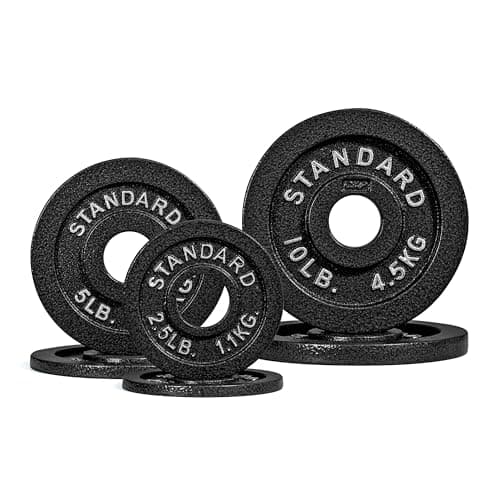
Buy a set to start, then buy pairs to fill gaps. A 110 or 150 lb starter set costs dramatically less per pound than assembling the same weight from individual pairs, and it gives you the small plates — 2.5s, 5s and 10s — that make sensible progressions possible.
Once the set is in the gym, you add pairs as you get stronger. That is where a 35 lb or 45 lb pair earns its higher cost per pound: you are buying exactly the plate you are missing rather than another collection of small ones you already have.
How much iron do you actually need?
A rough progression that avoids buying twice: 110 to 150 lb gets a new lifter through their first year of squats and presses. Around 300 lb total covers most people indefinitely for squat, bench and press. Past 400 lb you are in serious deadlift territory and should be thinking about sleeve length on your bar and about storage, because loose iron on a floor is both a tripping hazard and how plates get chipped.
Buying iron without regret
Check the hole size first
Olympic plates have a 2 inch hole and fit the bar you almost certainly own. Standard plates have a 1 inch hole and fit nothing else. This is the most common and most expensive mistake in the category — read Olympic vs standard before ordering.
Prefer a set for the small plates
Progress happens in 5 lb jumps, which means 2.5 lb plates. Sets include them; buying 45s alone leaves you stuck making 90 lb jumps. If you buy nothing else in a set, buy the small plates in one.
Tri-grip or flat
Tri-grip handles make loading and carrying markedly easier, especially for anyone with hand or back issues. Flat plates are thinner and let you fit more on the sleeve. If you deadlift heavy, flat wins on sleeve space; otherwise tri-grip is the more pleasant object to live with.
Store them off the floor
Plates on a concrete slab collect moisture, chip each other, and eventually get dropped on a foot. A plate tree costs about as much as a single 45 and solves all three.
Do the cost-per-year math, then stop worrying
A $160 set of iron kept twenty-five years is under $7 a year. There is no realistic scenario where buying good iron is the wrong financial decision — the only question is how much of it you need. That clarity is rare in this category and worth appreciating; see how we choose.