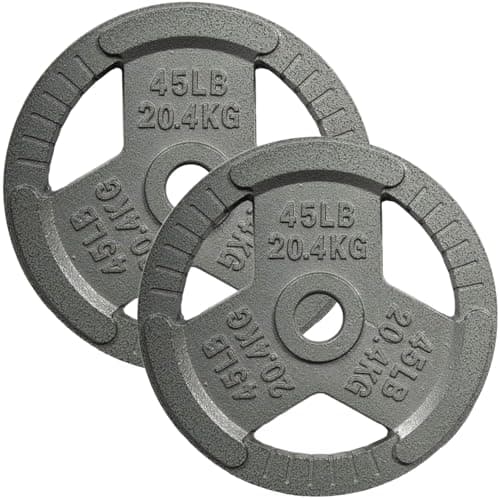
The Yes4All tri-grip plates are the pick: cast iron with three cut-out handles, which makes them the easiest plates in a home gym to load, carry and use on their own. If you never carry your plates and never train with them off the bar, plain iron is cheaper and denser.
What handles actually change
A plain 45 lb plate is an awkward object. You pick it up by pinching the rim or hooking the center hole, and both are unpleasant with cold hands. Cut three handles into it and it becomes something you can grip properly — which changes four things.
Loading gets easier and safer, because you control the plate all the way onto the sleeve instead of hoping. Carrying gets easier, which matters if plates live away from the rack. Storage gets easier, because you can hang and lift them onto a tree without a fight — see plate storage. And the plate becomes usable as a training tool in its own right: farmer carries, plate raises, loaded carries and warm-up work all become available.
What handles cost you
This is the part most roundups skip. Cutting handles removes material, so a handled plate of a given weight is physically larger than a plain one. On a loaded bar that means you run out of sleeve sooner — the same problem bumpers have, covered in bumper vs iron plates.
The cut-outs also create edges and thin sections. Iron is brittle; a plain disc is about as robust as an object gets, and a plate with three holes in it has more places to chip if you drop it on concrete. Neither problem is severe, but both are real, and if your plates never leave the bar you are paying a density penalty for a convenience you do not use.
The picks
Yes4All tri-grip — the handled pick
Cast iron with tri-grip handles, 2 inch Olympic, sold in pairs. It is the plate to buy if you want the handling benefits, and cast iron means the durability story is the same as any other iron plate: effectively permanent if you keep it off a wet floor.
CAP cast iron — plain, dense and cheapest per pound
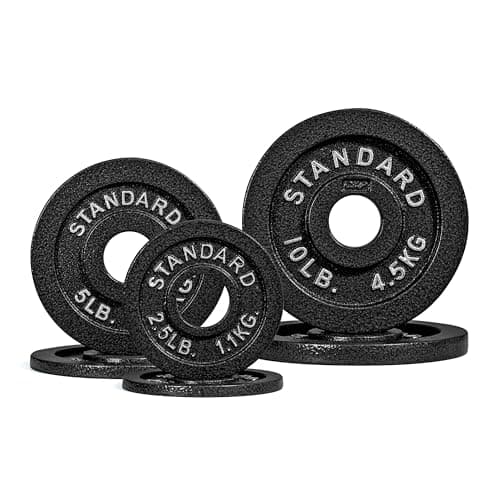
Baked enamel over cast iron with no cut-outs. Denser for the same weight, so more load fits on the sleeve, and typically the lowest cost per pound in the category. This is the correct default if your plates live on the bar.
Fitvids deep-dish iron — for filling gaps
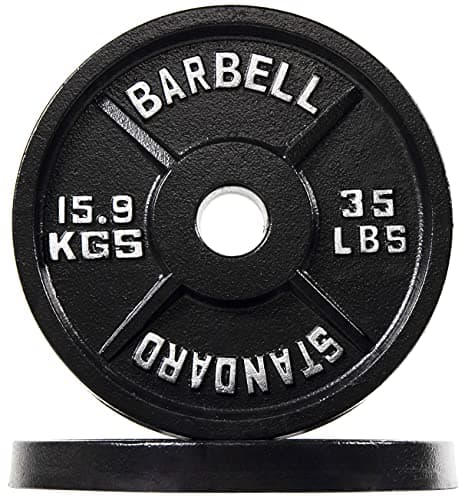
Old-style deep-dish iron sold by the pair, which makes it the sensible way to top up a set you already own rather than buying a whole new one. Deep-dish plates also sit slightly proud of the floor, which some lifters prefer for deadlift setup.
Handled or plain: the decision
| If you... | Buy |
|---|
| Carry plates between rack and storage regularly | Handled |
| Want to use plates for carries and raises | Handled |
| Load heavy and need maximum weight on the sleeve | Plain |
| Want the lowest cost per pound | Plain |
| Drop the bar | Neither — buy bumpers |
One rule for both
Do not drop them. Cast iron in any shape is close to indestructible in normal use and brittle under impact, and handled plates have more stress risers than plain ones. If your training involves dropping a loaded bar, this whole page is the wrong category — go to bumper plates, where the rubber is doing a job iron cannot.
What to check on a handled plate
Handled plates vary more than plain ones, because the cut-outs are a design decision rather than a standard. These are the things worth looking at before you order.
| Check | Why it matters |
|---|
| Handle opening size | A grip that fits a bare hand may not fit a gloved or chalked one |
| Edge finish inside the cut-outs | This is the surface your fingers load; a rough cast edge is unpleasant every session |
| Plate width per pound | Handled plates are wider than plain iron, and sleeve space is finite |
| Coating | Baked enamel or powder coat resists the rust that starts at chipped edges |
| Hole tolerance | A loose 2 in hole rattles on the sleeve; a tight one fights you when loading |
| Sold as pairs or singles | Decides whether you can fill one gap or must buy two |
Where handles pay for themselves
The value of a handled plate is proportional to how often the plate is off the bar. If your plates go from a tree, onto a sleeve, and back to the tree several times a session, you are gripping them dozens of times a week — and a plate designed to be gripped is meaningfully better than one that is not.
The same logic runs the other way. A plate that goes onto the bar once and lives there gains nothing from handles, and loses sleeve space for them. Storage habits, not training style, are usually what decides this purchase — which is why it is worth reading alongside plate storage rather than on its own.
Mixing handled and plain plates
There is no reason to buy exclusively one or the other, and a mixed set is often the sensible answer. A common arrangement: handled plates in the sizes you move most often — typically the 25s and 45s that come on and off for every warm-up — and plain iron in the smaller sizes that stay loaded or live in a tray.
The one thing to keep consistent is coating quality, because a mixed set is only as durable as its worst-finished plate. If one pair starts shedding enamel in a damp garage, it will be the pair that rusts and marks everything stacked against it.