Skip to content
Plate&Rack

The frame · Power Racks & Cages

The Best Power Racks by Budget

Price tiers in this category are not arbitrary. Each step up buys a specific, nameable thing — and past a certain point it stops buying anything you will feel in a home gym.

By Stephen V.Updated How we choose
#ad

We earn a commission when you buy through our Amazon links, at no extra cost to you. It never affects our rankings, and we say so when the cheaper product is the better buy. How this works.

The picks below run cheapest first. This page is organized by what each price tier buys, not by which rack is best overall — so the numbers beside them are tiers, not a ranking. If you want the single best rack regardless of price, that is the power rack roundup. If you want the cheapest one that is still worth owning, that is the budget roundup. This page is for the question those two do not answer: what am I actually giving up by spending less, and what am I actually getting by spending more?

What each step up actually buys

The useful thing about racks is that price maps onto specification more honestly here than in almost any other home gym category. There is no brand tax worth speaking of at the low end and no mystery premium at the top. Each tier buys something you can name.

Entry tier — a real cage, and not much else

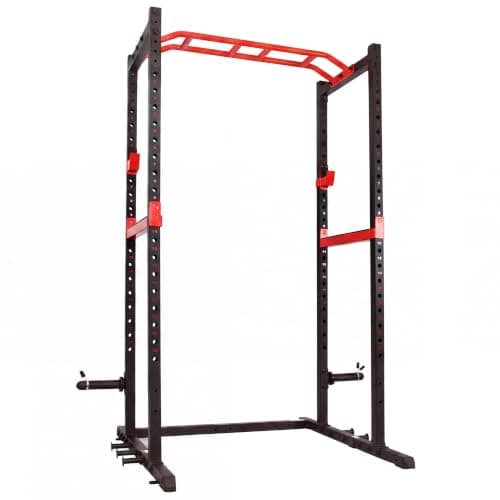
At the bottom of the market you get a bolt-together steel cage with a published rating, J-hooks, safeties and a pull-up bar. The VEVOR here states 1,000 lb, 2 × 2 inch uprights and eleven J-hook positions, which is a complete rack by any reasonable definition. What you do not get is an attachment ecosystem, a brand with a long model history, or hardware you can source in ten years.

That is a genuine limitation rather than a fatal one. If the rack is the frame you squat in and you have no ambitions beyond squatting, benching and pull-ups, an entry cage does that permanently. The steel does not know what it cost.

Lower-mid — size, and a brand that sells parts

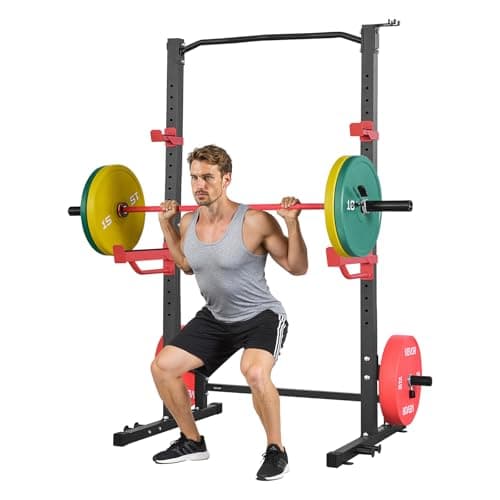
The next step buys a full-size frame from a maker with a catalog behind it. The Sunny full-size rack sits here: a larger frame, a multi-grip pull-up bar, and membership of an attachment line that is still being sold. Nothing about the steel is dramatically different from the tier below. What changed is that in five years there is somebody to ask for a J-cup.

On a site built around gear that outlives you, that is the single most underrated upgrade in the category — and it is the argument our replacement parts guide makes at length.

Mid tier — this is where the cables appear

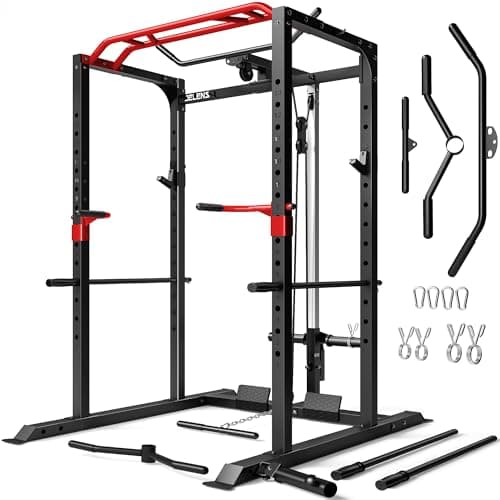
Around the middle of the range the specification jumps rather than creeps. The JELENS S11 here publishes a 2,000 lb rating, a lat pulldown, an adjustable pulley and included training attachments — for money that at the tier below buys a bare cage. This is the best-value band in the whole category and it is where most home gyms should be shopping.

It is also the tier that answers the question people actually search for, which is a rack with a lat pulldown built in rather than bolted on later. The full list is in the cable rack roundup, and whether you want that or a separate machine is settled in rack with cables vs functional trainer.

Upper-mid — the ecosystem, bought deliberately

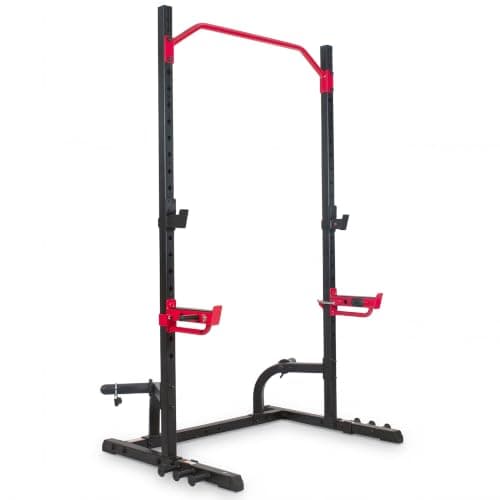
Above the cable tier you stop buying steel and start buying a system. The Sunny Power Zone cage is the example here: the rack itself is unremarkable next to a 2,000 lb cage, but it is part of a line where lat towers, dip bars and cable add-ons bolt straight on later. You are paying for the option to expand without replacing.

Whether that is worth it depends entirely on whether you will use the option. Most people who buy an ecosystem never add to it. If you know which attachment you want, buying the cheaper rack and the specific attachment is usually the better trade — the fitment rules are in the rack attachments guide.

Premium — published specifications and a warranty you can read

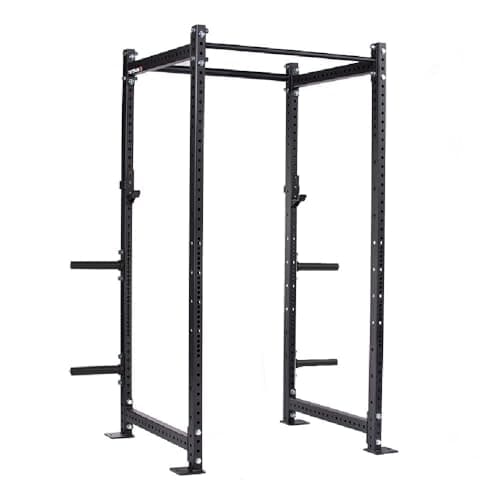
At the top of what a home gym sensibly spends, the thing you buy is information. The Titan T-3 short rack publishes a 1,100 lb capacity, a 36 inch depth and a specific frame height, and Titan publishes warranty terms you can look up before you order rather than after something breaks. That is a smaller-sounding upgrade than 2,000 lb of rating, and it is worth more.

The T-3 is also here for a second reason: the short frame is the answer to a low ceiling, which is a constraint no amount of money solves any other way. Our full review of it covers the headroom arithmetic.

Where the money stops mattering

Past roughly the mid tier, extra spend in a home gym stops buying strength and starts buying convenience, finish and brand. That is not a criticism — convenience is why people keep training — but it should be a conscious purchase.

Consider what a published rating actually means. A 2,000 lb cage and a 1,000 lb cage are both holding a bar that, for the overwhelming majority of home lifters, will never exceed 500 lb including the plates. Rating past that point is evidence somebody specified the steel, not headroom you will use. We make the same argument about barbells in barbell weight capacity explained and about racks in the steel gauge guide.

The things that do keep mattering as you spend more: upright dimension and hole pattern, because those decide what fits; hardware you can replace; and a maker who publishes terms. Everything else has diminishing returns quickly.

What we rank on

  • What the tier buys, not what the rack costs. Every pick here is the clearest example of its band. The point is the step, not the sticker.
  • A published rating, always. We will not rank a rack that states no capacity. A maker unwilling to put a number on the frame has told you something.
  • Upright and hole pattern. These decide the attachment ecosystem, which decides whether the rack grows or gets replaced.
  • Parts and brand persistence. The steel outlives you; the J-cup liners, pins and hardware do not. Weighted heavily as price rises, because that is what price is buying.
  • Cost per year, not price. A rack kept fifteen years at the mid tier costs less per year than an entry cage replaced twice — the arithmetic is on home gym cost per year.

The short answer

Quick picks

#ProductBest forScorePrice
01
VEVOR VEVOR Power Cage Squat Rack (1,000 lb)
VEVOR Power Cage Squat Rack (1,000 lb)

The cheapest cage here that still arrives complete — J-hooks, safeties and a pull-up handle in the box.

Best budget power cage
7.2
$159.90Amazon
02
Sunny Health & Fitness Sunny Health & Fitness Full Size Power Rack
Sunny Health & Fitness Full Size Power Rack

A full-size frame from a brand that still sells parts — the safest half-rack-money buy.

Best open rack overall
7.6
$249.99Amazon
03
JELENS JELENS S11 Power Cage with Lat Pulldown (2,000 lb)
JELENS S11 Power Cage with Lat Pulldown (2,000 lb)

The cheapest way into a cage that already has cables — you are not paying twice for the tower.

Best value cable rack
7.4
$309.99Amazon
04
Sunny Health & Fitness Sunny Health & Fitness Power Zone Cage (SF-XF9925)
Sunny Health & Fitness Power Zone Cage (SF-XF9925)

The mid-priced cage that behaves like a system — it grows with lat and cable add-ons.

Best all-round home cage
7.8
$339.98Amazon
05
Titan Fitness Titan Fitness T-3 Series Short Power Rack (36 in depth)
Titan Fitness T-3 Series Short Power Rack (36 in depth)

A genuine enthusiast-tier rack with Westside spacing and published numbers, at a price the marketplace brands cannot match on spec.

Best rack for a low ceiling
8.4
$629.99Amazon

#ad · Live prices from the Amazon Product API, as of Sep 8, 2026. Where we have no verified live price, we show none — we would rather leave a gap than print a number that has rotted.

In detail

The picks, in full

01
VEVOR VEVOR Power Cage Squat Rack (1,000 lb)

Best budget power cage

VEVOR Power Cage Squat Rack (1,000 lb)

1,000 lb rated2 × 2 in uprights11 J-hook positionsJ-hooks + safeties + pull-up
7.2/10

The cheapest cage here that still arrives complete — J-hooks, safeties and a pull-up handle in the box.

Build & steel
6
Capacity
8
Expandability
6
Footprint
7
Value
9

Pros

  • A published 1,000 lb total capacity that comfortably clears what any home lifter will ever load
  • Arrives complete — two J-hooks, two safety bars, a pull-up handle, four band pegs, plate posts and a bar hook, so there is no second order
  • Standard 2 × 2 in uprights, the commonest profile in home racks, so third-party J-hooks and spotter arms are easy to find later — measure hole diameter and spacing before ordering

Cons

  • The frame weighs about 60 lb, which is light for a cage — load the plate posts and keep it against a wall
  • The listing publishes no steel gauge and no warranty term, so the rated capacity is the only number you have

Don't buy this if…

you are chasing a 700+ lb total and want zero flex. At that level the heavier 3×3 racks are worth the money; for everyone else this is plenty of rack.

$159.90View on Amazon

Price as of Sep 8, 2026. Prices change — Amazon's is the one that counts.

#ad · we may earn a commission from this link to VEVOR Power Cage Squat Rack (1,000 lb)

02
Sunny Health & Fitness Sunny Health & Fitness Full Size Power Rack

Best open rack overall

Sunny Health & Fitness Full Size Power Rack

Full-size frameMulti-grip pull-up barSunny attachment lineSteel uprights
7.6/10

A full-size frame from a brand that still sells parts — the safest half-rack-money buy.

Build & steel
7
Capacity
7
Expandability
9
Footprint
7
Value
8

Pros

  • Full-size uprights give you a proper pull-up bar height and real catch range, not a stunted stand
  • Sunny's attachment line means dip bars, lat towers and spares are things you can still order in a few years
  • An established brand with a support channel — the quiet spec that decides ten-year ownership

Cons

  • An open frame, so a failed rep relies on spotter arms rather than a full enclosure
  • The listing does not publish a gauge figure; judge it on the rating and the brand rather than a number

Don't buy this if…

you train heavy singles alone. An enclosed cage with full-length safeties is the honest choice when there is nobody to bail you out.

$249.99View on Amazon

$349.9929% off

Price as of Sep 8, 2026. Prices change — Amazon's is the one that counts.

#ad · we may earn a commission from this link to Sunny Health & Fitness Full Size Power Rack

03
JELENS JELENS S11 Power Cage with Lat Pulldown (2,000 lb)

Best value cable rack

JELENS S11 Power Cage with Lat Pulldown (2,000 lb)

2,000 lb ratedLat pulldownAdjustable pulleyTraining attachments included
7.4/10

The cheapest way into a cage that already has cables — you are not paying twice for the tower.

Build & steel
6
Capacity
8
Expandability
8
Footprint
6
Value
9

Pros

  • A 2,000 lb published rating with the lat tower already attached, for less than most bare cages plus a tower
  • Adjustable pulley height covers pulldowns, rows, face pulls and triceps work from one station
  • Attachments are in the box, so the cable side is usable on day one

Cons

  • A high headline rating on a budget frame — expect flex under a heavy loaded bar despite the number
  • Cable and pulley quality is the usual budget compromise; plan on replacing the cable eventually

Don't buy this if…

you want a rack that is still exactly as tight in fifteen years. The steel will last; the cable assembly is the part that dates a budget cable rack.

$309.99View on Amazon

$369.9916% off

Price as of Sep 8, 2026. Prices change — Amazon's is the one that counts.

#ad · we may earn a commission from this link to JELENS S11 Power Cage with Lat Pulldown (2,000 lb)

04
Sunny Health & Fitness Sunny Health & Fitness Power Zone Cage (SF-XF9925)

Best all-round home cage

Sunny Health & Fitness Power Zone Cage (SF-XF9925)

Steel power cageMulti-grip pull-up barAdd-on ecosystemSafety-bar ready
7.8/10

The mid-priced cage that behaves like a system — it grows with lat and cable add-ons.

Build & steel
8
Capacity
8
Expandability
9
Footprint
6
Value
8

Pros

  • Part of Sunny's Power Zone line, so lat towers, dip bars and cable add-ons bolt straight on later
  • Full enclosed cage with catch bars — the safest way to squat and bench alone
  • A known brand with parts you can actually still buy, which is the whole point of a keeper rack

Cons

  • The listing does not publish an exact steel gauge, so heavy powerlifters should confirm the rated capacity first
  • Bigger footprint than a squat stand — this stays put once it is built

Don't buy this if…

your ceiling is under about 7'6" or your space is tight. A full cage needs headroom for the pull-up bar and a clear footprint; a squat stand is the honest answer for a small room.

$339.98View on Amazon

$399.0015% off

Price as of Sep 8, 2026. Prices change — Amazon's is the one that counts.

#ad · we may earn a commission from this link to Sunny Health & Fitness Power Zone Cage (SF-XF9925)

05
Titan Fitness Titan Fitness T-3 Series Short Power Rack (36 in depth)

Best rack for a low ceiling

Titan Fitness T-3 Series Short Power Rack (36 in depth)

1,100 lb capacity36 in depthShort frameWeight plate holders
8.4/10

A genuine enthusiast-tier rack with Westside spacing and published numbers, at a price the marketplace brands cannot match on spec.

Build & steel
9
Capacity
9
Expandability
9
Footprint
8
Value
7

Pros

  • A published 1,100 lb capacity and a 36-inch depth make this a full cage that still fits a basement or a low garage
  • Titan runs a documented replacement-part process and sells attachments across the T-3 line, so a worn J-cup is an order rather than a dead rack
  • Integrated plate holders load the base, which is exactly what stops a short rack from wanting to move

Cons

  • A short rack means the pull-up bar sits low — measure your reach before you assume you can hang from it
  • 36 inches of depth is tight for rack pulls or anything you want to walk around inside

Don't buy this if…

your ceiling is high enough for a full-height cage. The short frame exists to solve a headroom problem — if you do not have that problem, a standard-height rack gives you a usable pull-up bar for the same money.

$629.99View on Amazon

Price as of Sep 8, 2026. Prices change — Amazon's is the one that counts.

#ad · we may earn a commission from this link to Titan Fitness T-3 Series Short Power Rack (36 in depth)

Which tier is right for you

Buy at the entry tier if you are not certain you will still be training in two years, if the rack has to fit a rented space, or if the money genuinely is the constraint. An entry cage with a published rating and real safeties is a complete rack, and it is a far better purchase than a squat stand bought to save the same money.

Buy at the mid tier if you know you are keeping this. It is the best-value band in the category, it is where the cable systems start, and the difference between it and the entry tier is a specification jump rather than a finish upgrade.

Buy at the premium tier if you have a constraint money can solve — a low ceiling, a specific depth, a need for documented terms — or if you want to buy once and never think about it again. Do not buy premium for the rating alone.

The three things worth paying up for

  • Upright dimension and hole pattern. This decides what bolts on for the whole life of the rack. It is the one spec that is expensive to get wrong, because the fix is a new rack rather than a new part.
  • Adjustable safeties that suit your lifts. Pin-and-pipe, straps or steel catches — whichever your rack uses, they must adjust to the depth you actually squat to. If a rack is cheap because it omits them, it is not cheap. See safety bars vs safety straps.
  • A maker who still exists. Not glamorous, and the single best predictor of whether this rack is still fully functional in a decade.

The three things not worth paying up for

  • Rating past about 1,000 lb. Real, but not a number you will approach. Treat it as evidence of specification rather than as usable headroom.
  • Finish. Powder coat is powder coat. It wears at the J-cups and the pull-up bar on every rack at every price, and it is cosmetic when it does.
  • Bundled accessories you did not choose. A rack that includes a dip bar you will never use has sold you a dip bar. Price the rack, then price the attachments you actually want separately, and compare the totals.

Budget the room, not just the rack

The rack is rarely the last purchase. Before you decide a tier, price the things that arrive with it: a barbell and plates, a bench if you intend to press, flooring under the frame, and anchoring hardware if the rack needs it.

It is common to discover that the mid-tier rack plus a cheaper bench beats the premium rack plus no bench, and that is the comparison worth running. The whole-gym order of purchase is in what to buy, in what order.
How we picked

We do not run a testing lab

We compiled manufacturer specifications, read the published warranties, checked the relevant standards and aggregated owner reviews, then scored each product against a published rubric. The scores are judgments from documented research — they are not measurements we took, because we do not run a lab and we are not going to pretend we do. Where a number came from a manufacturer or a standard, we name it and link it in Sources.

Questions

Frequently asked

How much should you spend on a power rack?

Enough to get a published capacity, real adjustable safeties and an upright size that attachments are made for. In practice that is the entry-to-mid band. Spending beyond it buys ecosystem, documented warranty terms and convenience rather than a stronger frame.

Are cheap power racks safe?

A cheap cage with a published rating, adjustable safeties and correct assembly is safe for the loads a home lifter puts on it. What makes a rack unsafe is missing safeties, an unpublished rating, or bolts that were never re-torqued — none of which are strictly price problems.

What is the difference between a $200 rack and a $600 rack?

Usually not the steel. It is frame size, upright dimension, whether an attachment line exists, whether the maker publishes a warranty, and increasingly whether a cable system is included. The mid tier tends to buy the largest specification jump per dollar of the whole range.

Is it cheaper to buy a rack with cables or add them later?

Usually cheaper built in. A rack that ships with a lat tower generally costs less than the same class of bare rack plus a bolt-on attachment. Adding later wins only when you already own the rack — the full comparison is on rack with cables vs functional trainer.

Should I buy a more expensive rack or spend the money on plates?

Plates, almost always. Iron is the most durable thing in the room and you cannot train without load. A mid-tier rack plus a full plate set beats a premium rack with nothing to put on the bar — see what plates to buy first.

Do more expensive racks last longer?

The frames do not, meaningfully — steel tube is steel tube and every rack here outlives its owner structurally. What lasts longer on an expensive rack is the whole product, because the small parts that do wear are still purchasable. That is the honest case for spending more.

Keep reading

Receipts

Sources

We do not run a testing lab, and we do not pretend to. Every spec, warranty term and standard above is the manufacturer's or a published source, cited and linked. Where we could not verify something, we say so on the page rather than quietly leaving it out. Read our full method.