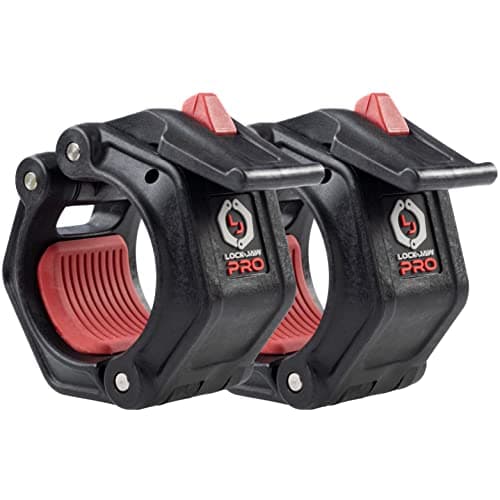
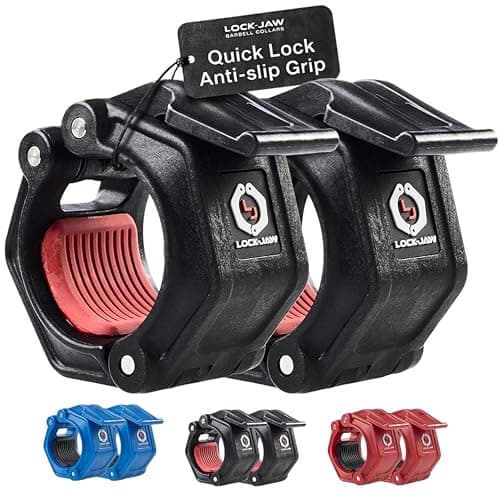
Buy the Lock-Jaw OLY 2 if you want the collar most people end up with anyway, or a pair of spring clips if you want something with literally nothing in it to fail. Both hold plates. They fail in completely different ways, and which one is right depends on how often you change weight.
Why collars matter more than their price suggests
A barbell without collars is a barbell whose load can shift. On a bench press, an uneven bar tilts and the plates slide — one side unloads, the other drives down. On a squat walkout, a plate creeping outward changes the bar's balance mid-rep. Neither is common, and both are entirely preventable for less than the cost of a single plate.
Collars are also the accessory people skip and then quietly buy twice: first a pair of cheap clips, then a pair of lever collars once they get tired of squeezing spring steel with chalky hands. This page is written to save you that second purchase.
The three types, and what each one is really for
Lever / cam collars
A hinged body wraps the sleeve and a cam lever pulls it tight. One motion on, one motion off, and the clamping force is high enough that plates do not move even under dropped loads. This is the format that dominates because the speed advantage compounds — over a session with six weight changes, you save minutes and a lot of small irritation. The trade-off is that the body is usually a polymer composite: durable, but not a lifetime metal part.
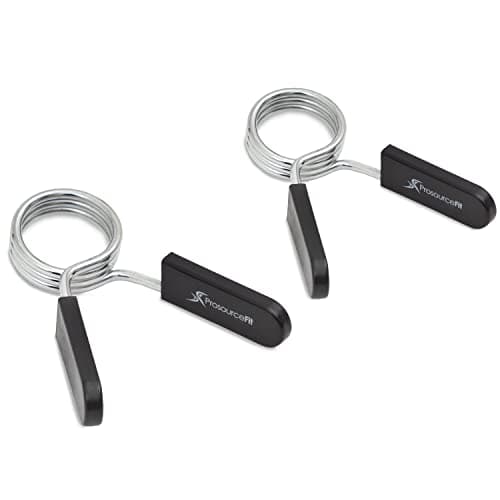
Spring clips
A single piece of spring steel that you squeeze open and let close. There is no mechanism at all, which makes it the most buy-it-for-life object in this entire category — the only thing that ages is the spring tension itself, over many years. The cost is ergonomic: two hands, a firm squeeze, every single time. If your grip is fried after deadlifts, this is a genuine annoyance.
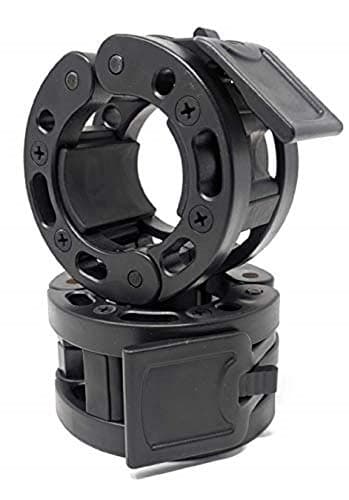
Quick-release / plastic-bodied collars
The middle option: lever convenience, lighter construction, lower price. Right for controlled lifting where plates never get dropped, wrong for Olympic work where a bar hits the floor loaded.
What we rank on
- Clamping force. Does the plate stack move under a heavy walkout, a bench tilt, or a dropped bar? This is the only job, and it is the first criterion.
- Speed of use. Measured in whether you actually bother using them on warm-up sets. A collar you skip is a collar that does nothing.
- Materials and service life.Steel outlives composite; composite outlives thin plastic. We say plainly which is which rather than calling everything "heavy duty".
- Bar fit. Everything here is for 2 inch / 50 mm Olympic sleeves — the standard on every bar in our barbell roundup. A 1 inch standard bar needs different collars entirely.
Do you need collars at all?
For a bench press or an overhead press, we would say yes — those are the lifts where an uneven bar becomes a problem fastest. For deadlifts, many lifters deliberately go without, because a bar that can shed a plate is safer than one that cannot when something goes wrong on the pull. For squats, collars if you walk the bar out; optional if you unrack and squat in place.
There is one case where collars are non-negotiable: any lift where the bar leaves your hands. If you drop a loaded bar and the plates are not locked on, the bar becomes unpredictable the moment it lands. That is also the case where you want the heavy-duty lever collar and not the spring clip.
How collars fail
Lever collars fail at the hinge or the cam, almost always because they were forced onto a sleeve with a burr, or because they lived in a damp garage and the pivot corroded. Spring clips fail by losing tension — a slow process measured in years, and obvious when it happens because the plates rattle. Neither failure is dangerous if you notice it, which is why the annual once-over we recommend for everything in a home gym includes the collars.
Choosing collars in ninety seconds
Match the sleeve, not the plates
Olympic collars fit a 2 inch (50 mm) sleeve. Standard collars fit a 1 inch bar. The plates you own do not decide this — the bar does. If you are unsure which bar you have, measure the sleeve, and read our Olympic vs standard guide.
Buy for your worst-case lift
If you ever drop a loaded bar, buy the heavy-duty lever collar and stop reading. If your lifting is controlled — squat, bench, press, set down under control — the standard lever collar or even spring clips are entirely adequate and cost a fraction.
Weight on the sleeve is a real consideration
Heavy competition-style collars add noticeable mass at the end of the bar. On a technique day with an empty bar, that changes the feel. It is a small thing, but it is the reason plenty of people own both a heavy pair and a light pair.
Buy a spare pair of clips regardless
Spring clips cost about as much as a coffee. Keeping a pair in the drawer means you are never without collars when the lever pair is on the other bar, on the curl bar, or lost behind the rack.
Store them on the bar
Collars that live on the floor get stepped on and kicked under racks. Leave them on the empty sleeve, or on a storage rack. It is the difference between a set that lasts a decade and one that vanishes in a year.