Skip to content
Plate&Rack

The load · Weight Plates

Calibrated vs Competition Plates

Two different answers to the same question: how close is this plate to the number printed on it? One is machined steel, one is color-coded rubber, and they suit opposite gyms.

By Stephen V.Updated How we choose
#ad

We earn a commission when you buy through our Amazon links, at no extra cost to you. It never affects our rankings, and we say so when the cheaper product is the better buy. How this works.

Most home gyms need neither. Buy calibrated steel if you compete in powerlifting and want your training weights to match the platform; buy competition bumpers if you drop the bar and want color coding and consistent thickness. For everyone else, standard iron or economy bumpers are the same weight for a lot less money.

We are saying that up front because this is the category where the marketing works hardest and the practical benefit is narrowest. The plates themselves are excellent. The question is whether the premium buys you anything you will use.

What each one actually is

Calibrated plates are machined steel discs. They are cast or cut, then machined to bring each plate to a tight tolerance around its stated weight, and usually finished with a thin painted or coated surface. They are thin, dense, and they do not bounce. Powerlifting federations use them because the bar has to weigh what the scoresheet says.

Competition bumper plates are rubber plates built to the international weightlifting specification: standardized diameter, standardized color by weight, tighter weight tolerance than economy bumpers, and a thinner profile for the same weight. They are designed to be dropped from overhead.

The shared property is tolerance — both are held closer to their stated weight than an economy plate is. Everything else about them is different, because they are built for different lifts.

The comparison in one table

Calibrated steelCompetition bumperEconomy plate
MaterialMachined steelRubber over a steel insertCast iron or economy rubber
Built forPowerlifting — squat, bench, deadliftWeightlifting — snatch, clean and jerkGeneral training
Weight toleranceTightestTightLoosest
Can be droppedNoYes, from overheadBumpers yes, iron no
Thickness per poundThinnest — most weight on a sleeveModerateThickest, for rubber
Color codedUsuallyYes, by standardRarely
LifespanEffectively permanent if not droppedLong — governed by drop cyclesIron permanent; economy rubber shorter
Cost per poundHighestHighLowest

Why tolerance exists, and when it matters to you

A cast iron plate is poured into a mold. Small variations in the pour and in the machining leave each plate a little over or under its nominal weight — usually by a percentage rather than a fixed amount, which is why a 45 lb plate can be further out than a 5 lb one. Nobody is cheating you; that is how casting works.

Two situations make that matter.

Competition. If a federation says the bar weighs 200 kg, it has to weigh 200 kg. Calibrated plates exist so that the number on the platform is the number.

Very small progressions. If you are adding 1 lb a week to a press, plate variance can be a meaningful fraction of the increment. In practice fractional plates are the cheaper fix for that — they are machined to a tight tolerance precisely because their whole purpose is a small accurate increment.

Outside those two, plate variance is invisible. If your working set is 225 lb and the true weight is 224.3, nothing about your training changes.

The one practical advantage people underrate: sleeve space

A barbell sleeve is a fixed length, and this is the argument for calibrated steel that has nothing to do with accuracy.

Steel is far denser than rubber, so a calibrated 25 kg disc is dramatically thinner than a 25 kg bumper. On a bar where you are running out of sleeve, that is the difference between fitting your working weight and not. Anyone pulling heavy on economy bumpers has met this problem — the plates reach the collar before the weight reaches the target.

Competition bumpers sit in the middle: thinner than economy bumpers of the same weight, thicker than steel. If you drop the bar and you are running out of sleeve, that is exactly the problem they solve.

The drop question decides it

Everything above is secondary to one thing: do you let go of the bar?

If yes — Olympic lifts, or deadlifts you drop from the top — then steel is off the table regardless of tolerance. Dropping calibrated steel damages the plate, the bar and the floor. Buy bumpers, and if the budget allows, competition bumpers for the thinner profile and the color coding.

If no — you squat, bench and lower deadlifts under control — then steel is fine and it is the more permanent object. Whether it needs to be calibrated steel is a separate and much narrower question, and the honest answer for most home lifters is that ordinary cast iron does the same job for a fraction of the money.

What color coding is actually for

It looks like decoration and it is not. Standardized colors mean a mis-loaded bar is visible from across the room — an unmatched pair reads instantly as wrong. In a competition setting that matters for obvious reasons; in a home gym it is a small genuine safety benefit when you are loading tired.

The caveat is that color coding only works if the set matches. Adding one competition pair to a set of black economy bumpers gets you the price of color without the benefit of it.

The honest recommendation

Compete in powerlifting? Calibrated steel, bought a pair at a time as budget allows. Training on the same plates you will compete on removes a variable.

Do the Olympic lifts? Competition bumpers. The standard diameter and the drop tolerance are what the lifts require.

Train at home, lift for yourself? Buy on what plates to buy first instead. Iron if you never drop the bar, economy bumpers if you do, and put the money you saved into a better bar — which you will notice every single session, unlike a tolerance you cannot feel.
The short answer

Quick picks

#ProductBest forScorePrice
01
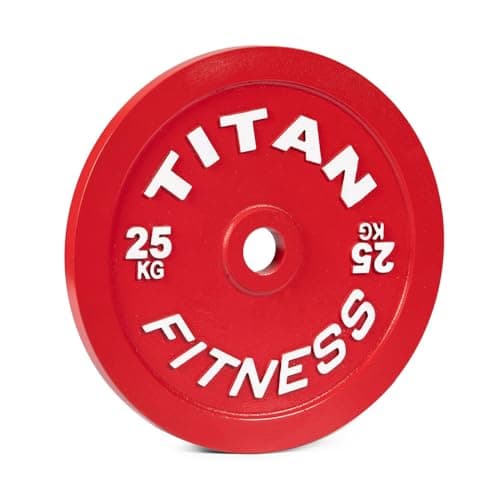
Titan Fitness Titan Fitness 25 kg Calibrated Steel Powerlifting Plate
Titan Fitness 25 kg Calibrated Steel Powerlifting Plate

Machined steel discs sold one at a time — the closest thing to a permanent plate, and priced accordingly.

Best calibrated plate
7.4
$145.99Amazon
02
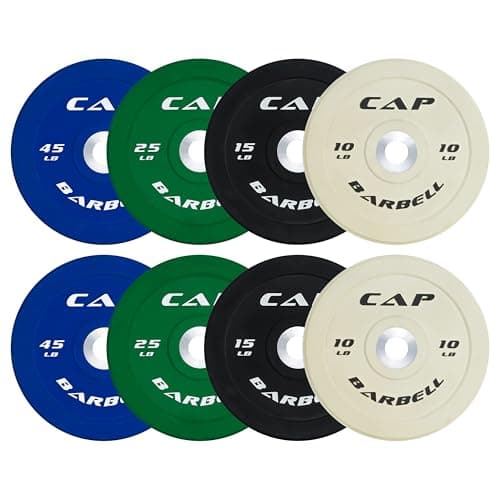
CAP Barbell CAP 160 lb Competition Olympic Bumper Plate Set
CAP 160 lb Competition Olympic Bumper Plate Set

A matched competition-style set in one purchase — the cheaper route to color-coded plates than buying pairs.

Best competition bumper set
7.8
$274.99Amazon
03
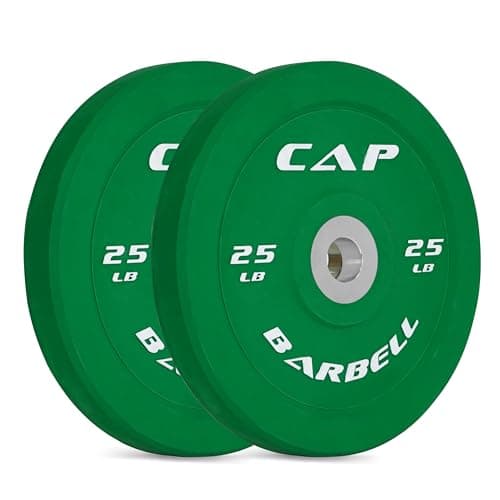
CAP Barbell CAP 25 lb Competition Olympic Bumper Plate (pair)
CAP 25 lb Competition Olympic Bumper Plate (pair)

Competition-style color-coded bumpers by the pair, so you can build the set one weight at a time.

Best competition bumper pair
7.6
$74.99Amazon

#ad · Live prices from the Amazon Product API, as of Sep 8, 2026. Where we have no verified live price, we show none — we would rather leave a gap than print a number that has rotted.

In detail

The picks, in full

01
Titan Fitness Titan Fitness 25 kg Calibrated Steel Powerlifting Plate

Best calibrated plate

Titan Fitness 25 kg Calibrated Steel Powerlifting Plate

25 kg calibratedMachined steel discSold individuallyOlympic 2 in bore
7.4/10

Machined steel discs sold one at a time — the closest thing to a permanent plate, and priced accordingly.

Accuracy
10
Durability
9
Drop tolerance
3
Sleeve space
10
Value
5

Pros

  • Calibrated means the weight is machined to a tolerance rather than cast and hoped for — the reason competition lifters use them
  • Thin steel discs let you fit far more weight on a sleeve than bumpers of the same total
  • Solid steel with a painted finish has no rubber to harden, crack or de-bond over decades

Cons

  • Sold individually and priced per plate, so a usable set is a serious outlay
  • Steel plates must not be dropped — on a home platform that is a genuine constraint, not a technicality

Don't buy this if…

you deadlift to failure and let the bar go. Calibrated steel is for controlled lowering onto a rack or a platform; dropping it damages the plate, the bar and the floor.

$145.99View on Amazon

Price as of Sep 8, 2026. Prices change — Amazon's is the one that counts.

#ad · we may earn a commission from this link to Titan Fitness 25 kg Calibrated Steel Powerlifting Plate

02
CAP Barbell CAP 160 lb Competition Olympic Bumper Plate Set

Best competition bumper set

CAP 160 lb Competition Olympic Bumper Plate Set

160 lb total setCompetition styleColor codedOlympic 2 in bore
7.8/10

A matched competition-style set in one purchase — the cheaper route to color-coded plates than buying pairs.

Accuracy
8
Durability
8
Drop tolerance
9
Sleeve space
7
Value
7

Pros

  • A matched set arrives in matching thickness and color, which is the entire practical benefit of competition plates
  • Cheaper per pound than assembling the same weights pair by pair
  • 160 lb plus a 45 lb bar covers a beginner's whole working range before any second purchase

Cons

  • 160 lb is a starting set — a stronger lifter will be adding plates within the year
  • A set commits you to the maker's colors and thickness if you later want it to match

Don't buy this if…

you already own black bumpers. Adding a competition set to them gets you two families of plates that do not match on thickness or color — buy more of what you own instead.

$274.99View on Amazon

Price as of Sep 8, 2026. Prices change — Amazon's is the one that counts.

#ad · we may earn a commission from this link to CAP 160 lb Competition Olympic Bumper Plate Set

03
CAP Barbell CAP 25 lb Competition Olympic Bumper Plate (pair)

Best competition bumper pair

CAP 25 lb Competition Olympic Bumper Plate (pair)

25 lb pairCompetition styleColor codedSteel insert hub
7.6/10

Competition-style color-coded bumpers by the pair, so you can build the set one weight at a time.

Accuracy
8
Durability
8
Drop tolerance
9
Sleeve space
7
Value
6

Pros

  • Buying by the pair lets you build up in the order you actually need, instead of paying for a full set of weights you will not load yet
  • Color coding is not decoration — it makes a mis-loaded bar obvious from across the room
  • Competition-style bumpers run thinner than economy bumpers of the same weight, which buys back sleeve space

Cons

  • Costs meaningfully more per pound than economy black bumpers that do the same structural job
  • Only worth the premium if you are matching a set — one odd pair among black plates loses the color advantage

Don't buy this if…

you just need weight on the bar. Economy bumpers survive the same drops for less money, and nothing about the color makes them last longer.

$74.99View on Amazon

Price as of Sep 8, 2026. Prices change — Amazon's is the one that counts.

#ad · we may earn a commission from this link to CAP 25 lb Competition Olympic Bumper Plate (pair)

How we picked

We do not run a testing lab

We compiled manufacturer specifications, read the published warranties, checked the relevant standards and aggregated owner reviews, then scored each product against a published rubric. The scores are judgments from documented research — they are not measurements we took, because we do not run a lab and we are not going to pretend we do. Where a number came from a manufacturer or a standard, we name it and link it in Sources.

Questions

Frequently asked

What are calibrated weight plates?

Machined steel discs held to a tight tolerance around their stated weight, used in powerlifting so that the bar weighs exactly what the scoresheet says. They are thin, dense and must not be dropped.

What is the difference between competition and standard bumper plates?

Competition bumpers follow the international weightlifting specification: standard diameter, standard color by weight, tighter tolerance and a thinner profile for the same weight. Economy bumpers are thicker, usually black, and held to a looser tolerance — structurally they survive the same drops.

Do I need calibrated plates for a home gym?

Almost certainly not. Plate variance is invisible unless you compete or you are making very small weekly increments, and fractional plates are the cheaper fix for the second case. The one non-accuracy reason to want calibrated steel is sleeve space — steel is far thinner per pound than rubber.

Can you drop calibrated plates?

No. Calibrated steel is for controlled lowering onto a rack or a platform. Dropping it damages the plate, the bar and the floor. If you let go of the bar, you need bumpers.

Why are competition plates color coded?

So a mis-loaded bar is visible instantly — an unmatched pair reads as wrong from across the room. It only works if the whole set matches, so adding one competition pair to a set of black bumpers buys the price without the benefit.

Keep reading

Receipts

Sources

We do not run a testing lab, and we do not pretend to. Every spec, warranty term and standard above is the manufacturer's or a published source, cited and linked. Where we could not verify something, we say so on the page rather than quietly leaving it out. Read our full method.