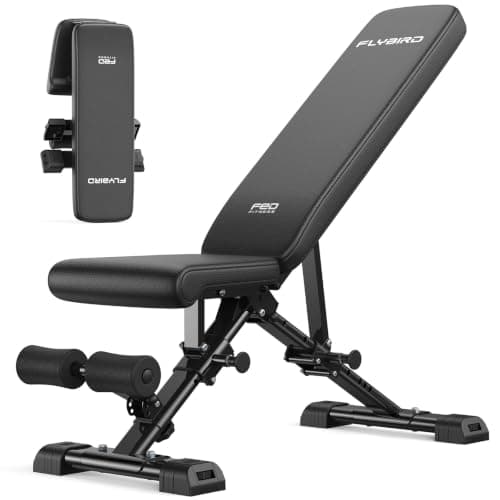
The longest-lasting weight bench is the one with the fewest moving parts and a capacity that was certified rather than claimed. A steel bench frame lasts indefinitely. The pad lasts perhaps five to ten years of regular use before it needs re-covering, and an adjustment mechanism develops play somewhere in between. Almost nobody throws a bench away because the steel failed — they throw it away because the vinyl split and they did not know a pad is a replaceable part.
Our durability hierarchy puts benches in tier three, alongside adjustable dumbbells, for exactly this reason: it is the one large piece of gym equipment with both a mechanism and an upholstered surface. Everything on this page follows from those two facts.
Which weight bench lasts the longest?
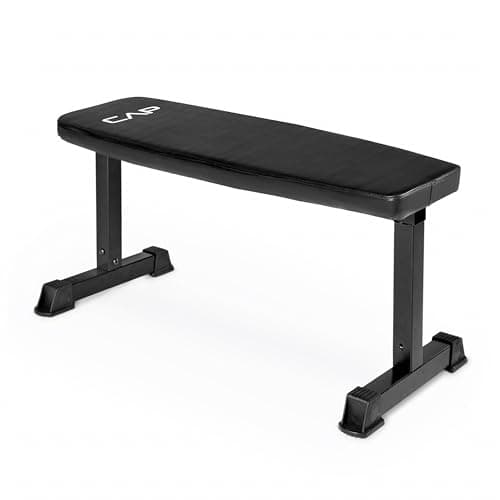
Rank benches by what can actually wear out and the order comes out the same way every time. Count the mechanisms first. A welded flat bench has none, so it is the literal answer to the question — the CAP flat above is the cheapest thing on this site that is close to permanent. An adjustable bench adds a ladder, and a folding one adds a hinge on top of that. Two moving parts is the floor for a bench that inclines; anything beyond two is a bench that bought you a station you may never use.
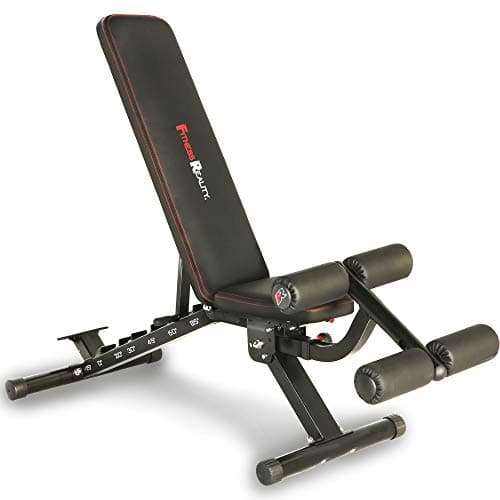
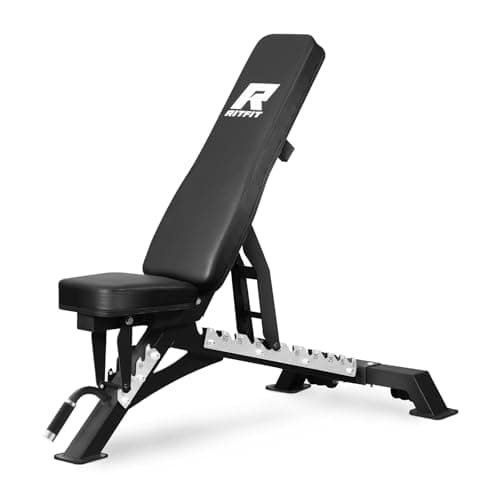
Then look at what backs the capacity number.The FLYBIRD WB5's 800 lb is ASTM-certified — tested against a published external standard — while the RitFit's 1,300 lb and the Fitness Reality's 850 lb are the manufacturers' own stated figures. The certified number is the smallest one on the table and the best-supported claim on it, which is the whole argument of weight bench capacity explained.
Then check the pad is a part rather than a fate. Every bench here will need its vinyl seen to eventually, and that is a good outcome, not a bad one: a pad is a backer board, foam and a skin, and re-covering it is an afternoon. The bench that dies is the one whose owner never learned that.
The failure points, in the order they happen
| Failure point | What causes it | How to slow or prevent it |
|---|
| Vinyl splitting at the seams and edges | Sweat, ultraviolet light and repeated flexing at the fold line | Wipe after every session; keep it out of direct sun; use a towel |
| Foam compressing flat | Load over years, worst under the shoulder blades | Nothing preventive — but replacing foam is half of a re-cover job |
| Ladder or pin adjustment developing play | Bolts settling, and holes ovalling under repeated load | Re-torque annually; adjust the bench unloaded, not with a bar on it |
| Folding hinge loosening | Every fold cycle is a movement at the pivot | Buy a fixed frame if you will not actually fold it |
| Foot caps wearing through | Dragging the bench across a hard floor | Lift rather than drag; caps are a hardware-store part |
| Frame failure | Overloading far beyond the rating, or corrosion in a wet room | Stay inside the published capacity; keep the room dry |
Read that table top to bottom and it is a story about upholstery and hardware. The frame is at the bottom because it almost never gets there.
Why the pad goes first
A bench pad is three things stacked: a rigid backer board, a slab of foam, and a vinyl skin stapled round the underside. Each ages differently.
The vinyl is attacked by sweat, which is salty and mildly acidic, and by ultraviolet light if the bench lives near a window. It fails at the seams and at the fold line on an adjustable bench, because that is where it flexes.
The foam compresses. Slowly, permanently, and mostly in one place — under the shoulder blades, where the load concentrates during pressing. A flattened pad is why an old bench feels unstable at the top even though nothing has broken.
The backer board outlives both, unless water gets into it.
None of this is a reason to buy a new bench. Re-covering a pad is a genuine afternoon job with a staple gun, upholstery vinyl and a sheet of high-density foam, and we walk through it in home gym replacement parts.
Why a flat bench outlasts an adjustable one
A welded flat bench is a frame, a pad and four feet. There is no ladder, no pivot, no pin and no hinge. It cannot develop play because it has nothing to develop play in.
An adjustable bench trades that for angles, and the trade is real: a ladder adjustment is a hook-and-slot mechanism carrying your bodyweight plus the bar, and over years the contact points wear and the holes oval. That is the wobble people describe on old adjustable benches, and it is mechanical rather than structural.
This is not an argument against adjustable benches — incline pressing is worth having, and we rank them highly. It is an argument for knowing what you are buying, which is the whole point of flat vs adjustable bench. If you press flat and nothing else, the flat bench is genuinely the buy-it-for-life option, and it costs a fraction as much.
What folding costs you over a decade
Every fold is a cycle at a pivot. A bench folded after every session sees a few hundred cycles a year at a joint that a fixed bench does not have at all.
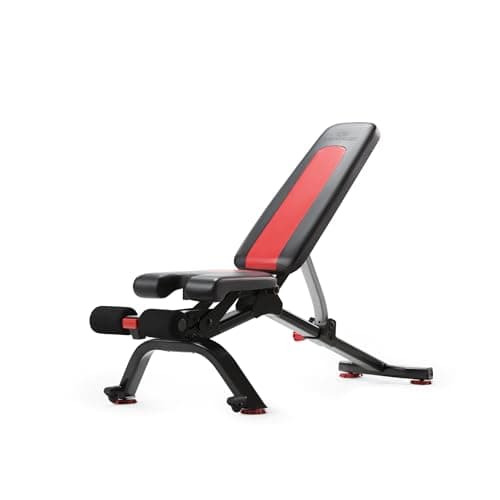
The practical rule: buy a folding bench only if you will actually fold it. If it lives permanently under a rack, a fixed frame at the same price is stiffer and has one fewer thing to loosen. If you genuinely need the room back, folding is worth the joint — and a stowable bench that stands upright rather than folding flat splits the difference, because standing it up is not a mechanism at all.
The maintenance that actually matters
- Wipe the vinyl after every session. Thirty seconds. Sweat left to dry on vinyl is what kills pads, and it is the single highest-return habit on this page.
- Re-torque the bolts annually. Same week you do the rack. Bolts settle; a settled bolt is the origin of most "my bench is wobbly" complaints.
- Adjust it unloaded. Changing the back angle with a loaded bar sitting on the uprights puts a shock load through the ladder that it was not designed for.
- Keep it out of the sun. Ultraviolet light degrades vinyl the same way it degrades nylon safety straps.
- Lift, do not drag. Dragging wears the foot caps and scars the floor.
When a bench is actually finished
Retire it when the frame is bent, when a weld has cracked, or when the adjustment mechanism no longer locks positively in every position. Those three are structural and none of them is worth repairing at home on a bench you sit under a loaded barbell.
Everything else — split vinyl, flat foam, a rattly pin, worn feet — is maintenance. A bench with a tired pad and a sound frame is a bench that needs an afternoon, not a replacement.
What to buy if lifespan is the priority
A certified capacity rather than a claimed one, because it means the frame was tested rather than asserted — the argument is in weight bench capacity explained. A fixed frame over a folding one if the bench will live in place. And the fewest stations you will actually use, because every extra pad, roller and pivot is another item on the failure list — which is the argument we make against leg-developer benches for people who will not use the leg developer.
How to buy a bench that lasts: five decision factors
Everything above is the wear model. This is how to shop with it — the five things to check on a listing, in the order they decide the answer.
1. Count the mechanisms, not the positions
A listing sells you positions: seven back angles, three seat angles, a leg developer, a preacher pad. Durability counts the opposite way. Every position is bought with a pivot, a pin or a ladder, and every one of those is a thing that can develop play. A flat bench has zero. A fixed-frame adjustable has one. A folding adjustable has two. Decide how many angles you will genuinely press at, then buy the bench that reaches them with the fewest parts.
2. Prefer a certified capacity to a bigger claimed one
Capacity is normally lifter plus load, so a 200 lb lifter pressing 250 lb puts 450 lb through the frame — which nearly every bench worth owning clears. That makes the size of the number far less interesting than what stands behind it. An ASTM certification means the frame was tested against an external standard; a larger unqualified number means someone typed a larger number. Given the choice, take the tested one.
3. Check the pad is serviceable
The pad is the part that will actually reach the end of its life while you own the bench, so look at how it is attached before you buy. Bolted-through pads on a flat plate come off with a socket and go back on re-covered; pads riveted or glued to a formed frame are a harder afternoon. Some makers sell replacement pads outright, which is the strongest signal on the whole listing. We walk through the re-cover itself in home gym replacement parts.
4. Weigh the frame, and look at the feet
Shipping weight is a proxy for tube wall and frame mass, and it is one of the few honest numbers on an Amazon listing. A heavier bench sits still when you unrack off-center; a light one shifts, and every shift is a shock load through the ladder. Wide feet with real caps matter for the same reason. We sorted benches by frame mass and tube spec in the best heavy-duty weight benches.
5. Buy the stations you will actually use
A leg developer is two rollers, a load peg and a pin. A Roman chair is another pad and another pivot. They are worth owning if you will use them weekly and are pure failure surface if you will not — and unlike a pad, an unobtainable roller usually ends that station for good. The longest-lasting bench in your gym is the simplest one that still covers your program.
So which one?
If you press flat and nothing else, buy the CAP flat bench and stop thinking about it. If you want incline as well, the FLYBIRD WB5 is the certified-capacity bench with the fewest parts for the money. If you press heavy and want the frame to sit still under a hard unrack, step up to the Fitness Reality 2000 or the RitFit. And if the bench has to disappear between sessions, the BowFlex 5.1S stands upright to store instead of folding, which means storing it is not a mechanism at all.