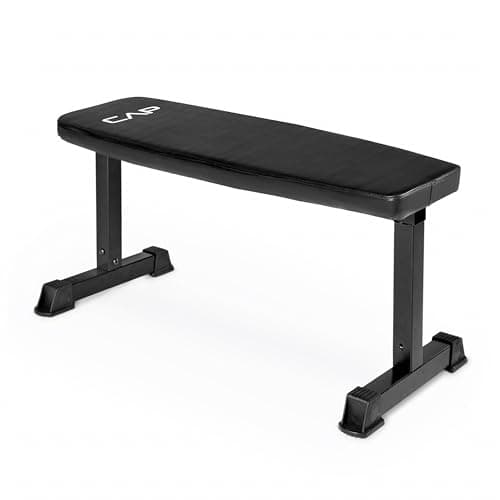
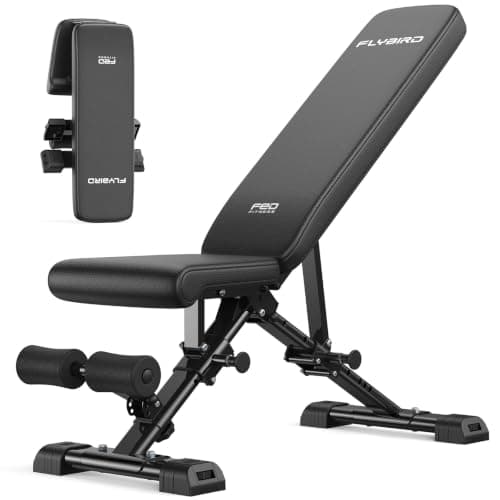
For most home lifters, buy the adjustable bench. It does everything a flat bench does and then angles up for incline pressing, incline dumbbell work and rows, so one bench covers your whole program instead of one movement. A modern ASTM-rated folding adjustable like the FLYBIRD is plenty sturdy for home loads, so the old reason to prefer flat — that adjustables felt wobbly — mostly no longer holds. The flat bench wins in one honest case: if you press flat exclusively and would rather own a bench with nothing to wear out, the welded CAP is more rigid and closer to permanent.
The two benches, side by side
| What matters | Adjustable (FID) bench | Flat bench |
|---|
| Moving parts & durability | Ladder or pin that can develop play over years; a good one stays tight | None — a welded frame with nothing to loosen or break |
| Exercises possible | Flat, incline and often decline pressing, rows, incline curls — your whole program | Flat pressing, flat dumbbell work, rows; also a sturdy box or step |
| Stability under load | Very solid on a well-built ASTM-rated frame; a touch of play on cheap ones | The most rigid at a given price — all the steel holds you up, none folds |
| Price | Costs more for the mechanism and range | The cheapest bench worth owning |
| Best for | Most home lifters who want one bench to do it all | Flat-only pressers who value permanence and rigidity |
Why the adjustable wins for most people
The case is simple: range. Incline pressing hits the upper chest and shoulders in a way flat pressing does not, and incline dumbbell work and seated presses need an angle. An adjustable bench gives you all of that plus the flat press, so a single purchase covers your entire program. The old knock against adjustables — that the ladder wobbled and the seat-to-back gap was uncomfortable — has largely been answered by benches with tighter ladders, no-gap seats and verified capacity ratings. You give up a little theoretical permanence for a lot of versatility, and for most home gyms that is the right trade.
When to buy the flat bench instead
The flat bench is not the compromise pick — for the right person it is the better one. If your pressing is flat and you never plan to incline, a welded flat bench is more rigid at the same price, has nothing to develop play, and costs less. It is the buy-it-for-life choice for the minimalist, the heavy flat presser who wants the most solid platform for the money, and anyone adding a second bench next to a rack. We make that full case in best flat benches, and rank both types on how long each actually survives in the longest-lasting weight bench.
Whichever you choose, remember the bench is only half a pressing setup. If you barbell bench alone, put it inside a power rack with safeties so a failed rep lands on the catches, not on you, and load it from our weight plates roundup. The reasoning behind every ranking is in how we choose.
One question comes before this one, and plenty of people skip it: whether a bench belongs in your gym yet at all. We answer that directly, including the three cases where it does not, on do you need a weight bench.