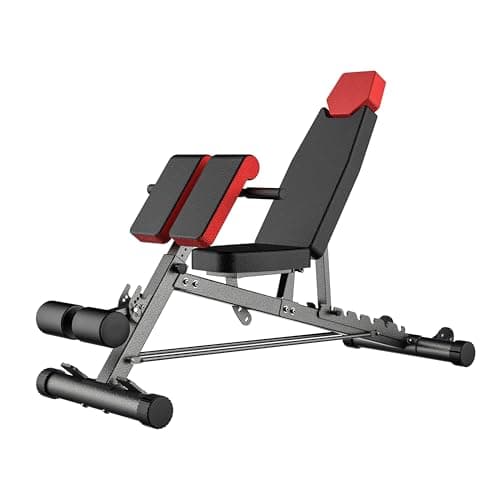
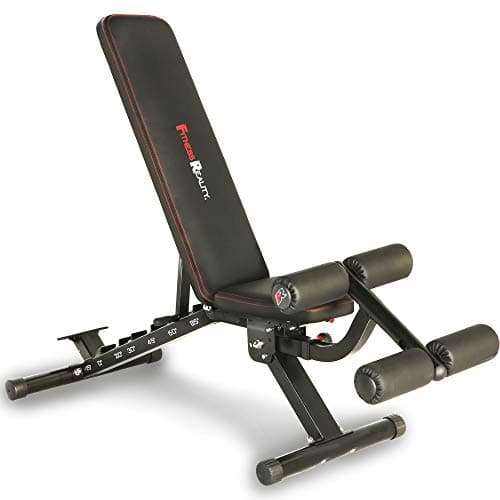
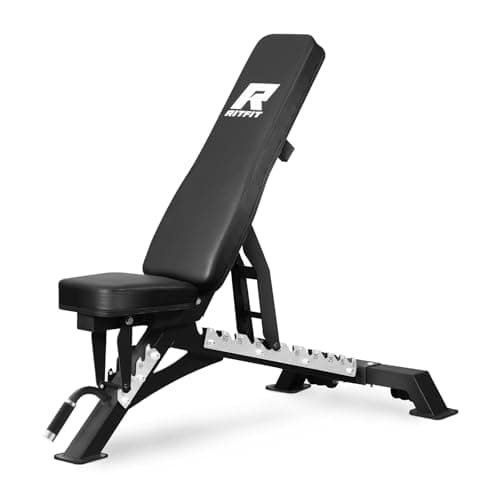
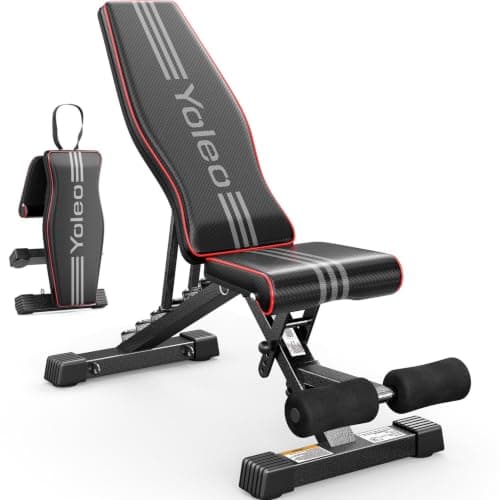
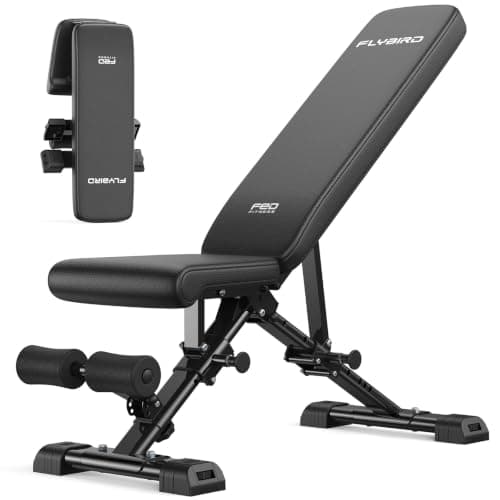
Buy the FLYBIRD WB5 if you want a certified capacity figure at a sensible price, or the Finer Form FID if you want the full flat-incline-decline range on a heavier frame — the two are put head to head in FLYBIRD WB5 vs Finer Form. An adjustable bench is the piece of equipment most likely to develop an annoying wobble, and the mechanism is why. If the bench has to fit between the uprights of a cage and come back out again every session, the criteria shift to footprint and handling — that ranking is on the best benches for a power rack.
Adjustable benches fail in one place
Not the pad. Not the frame. The adjustment mechanism. Every adjustable bench has a back pad that pivots and locks into a series of positions, and every one of those positions is a joint carrying load through a pin, a ladder tooth or a pop-pin hole. Over years, those contact points wear, the fit gets sloppy, and the bench develops the small back-and-forth movement that owners describe as "it never used to do that".
This is not a reason to buy a flat bench instead — though for many people that is genuinely the right call, and we say so in flat vs adjustable. It is a reason to judge adjustable benches on the mechanism first and everything else second — and, if you press heavy, to read the capacity claims the way the best heavy-duty weight benches reads them: tested, certified or merely stated.
What we rank on
- The adjustment mechanism. A ladder-and-hook system with a positive seat is generally more durable than a pop-pin through thin tube, because the load is spread over a bearing surface rather than a single pin. Fewer, better-engineered positions beat a long list of sloppy ones.
- Certified vs claimed capacity. An ASTM-certified 800 lb figure means someone tested to a published standard. An uncertified 1,500 lb figure means someone wrote a number. We weight certification heavily, because it is the only third-party evidence available in this category.
- The pad gap. The space between the back pad and the seat pad at incline. A large gap is the single most common complaint about budget benches — it puts a hole exactly where your lower back needs support.
- Pad density and covering. A dense pad resists compressing flat. A tough vinyl cover resists splitting where your heels and elbows land. Both are wear items on any bench.
- Frame footprint and stability. A bench that rocks under an uneven press is worse than a wobble at the pivot. Wide feet and a low-set frame beat clever folding geometry.
FID, adjustable, or flat-plus-incline?
"FID" means flat, incline and decline. Decline is the position most people use least, and it is the one that adds mechanism, weight and cost. Be honest about whether you will use it — if the answer is "probably not", a flat-and-incline bench is a simpler machine with fewer joints and it will stay tight longer.
The genuinely valuable positions are flat, low incline (around 30 degrees) and upright for seated pressing. A bench that does those three well is a bench that covers essentially all home training. Everything beyond that is refinement.
Bench and rack have to fit each other
The mistake that costs the most: buying a bench that does not fit inside your rack. Measure the internal width of your power rack or the spacing of your squat rack uprights, then check the bench's widest point — usually the feet or the adjustment handle, not the pad.
Also check height. Bench pad height plus your body has to leave the bar path clear of the J-hooks and the safeties. A bench that is too tall makes a rack's hook positions unusable, and no amount of good steel fixes that.
What a bench costs per year
A $150 adjustable bench kept ten years is $15 a year — and a bench is one of the pieces most likely to actually last that long provided the pad is not stored in sunlight and the pivot is kept clean. The failure mode is almost never catastrophic; it is gradual, and it is usually the pad splitting before the frame does anything at all. Budget accordingly and buy the certified frame.
Three cuts of this category are ranked separately, because each is decided on a spec this page treats as secondary. For dumbbell training — steep back angles, pad width, a seat to brace against — see the best benches for dumbbells. For what each price step actually buys, see weight benches by budget. And if the wedge of air between the seat and the backrest is what brought you here, the gap has its own page.
How to choose an adjustable bench
Look for a certification, not a big number
ASTM certification means the capacity was tested against a published standard. In a category where everyone claims four figures, that is the only piece of independent evidence you get.
Check the pad gap in the photos
Look at a listing image of the bench set to incline. If there is a visible gap between the seat and the back pad, that gap is where your lower back goes. Some benches close it completely; those are worth paying for.
Count the positions you will actually use
Seven back positions sounds better than four. In practice most people use flat, one low incline, one high incline and upright. Prefer a bench with fewer, more solid detents over one with a long list of sloppy ones.
Measure it against your rack
Widest point of the bench versus internal width of the rack. Pad height versus your J-hook positions. Do both before ordering — this is the number-one cause of a returned bench.
Plan for the pad, not the frame
The frame will outlive you; the pad will not. Keep it out of direct sunlight, wipe the sweat off (vinyl degrades from the inside when sweat sits in the seams), and accept that a re-pad or a replacement is a normal part of a fifteen-year bench's life. That is exactly the kind of planned wear our durability guide tells you to expect.