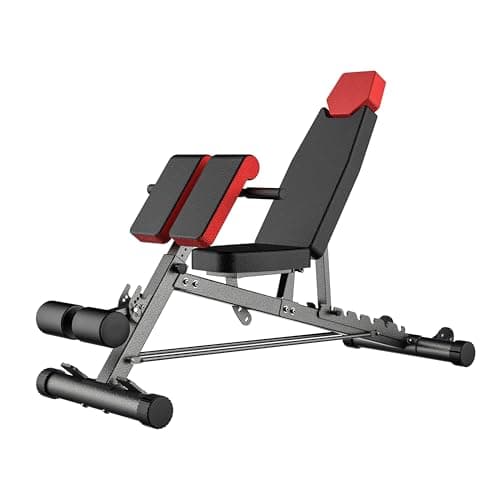
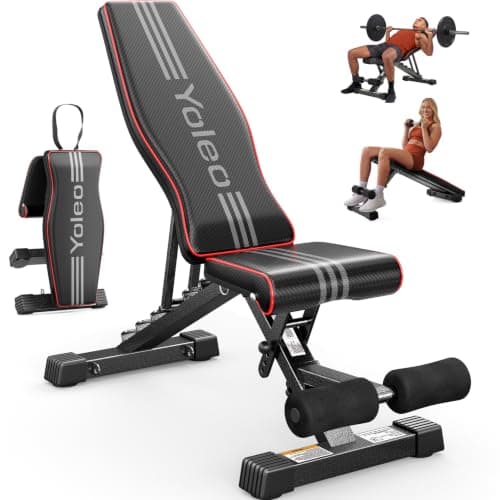
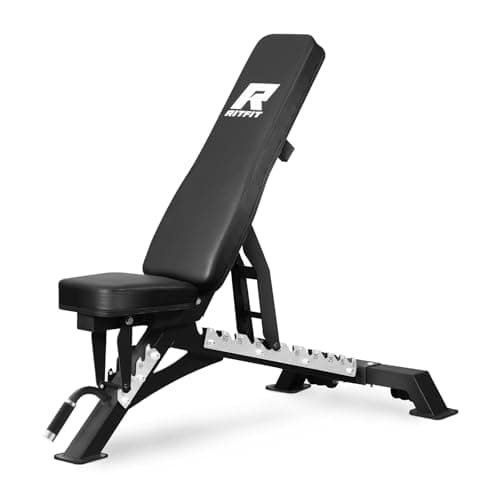
For heavy pressing, buy the RitFit: it publishes the highest figure on the page, 1,300 lb, says the bench was tested to it, and backs the number with a 50 by 70 mm 1.5 mm steel frame and a 57 lb bench weight. The Finer Form FID is the alternative if you want a 1,000 lb frame that also does back extensions. Below those two the ratings drop but the two ASTM-certified benches — the FLYBIRD WB5 and the YOLEO — are the ones whose numbers were checked by someone other than the seller, and for a lot of lifters that is worth more than a bigger figure nobody verified.
Three kinds of capacity number
Every bench on this page publishes a load figure. They are not the same kind of figure, and the difference is the whole point of ranking heavy-duty benches rather than just sorting by the number:
- Tested. The RitFit listing says the bench was "tested for up to 1,300 lb". That is a claim of an in-house test — better than a bare number, not an independent one.
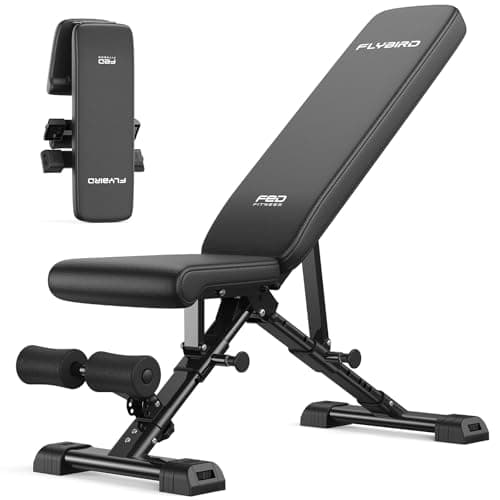
- Certified. The FLYBIRD WB5 and the YOLEO both describe their figures as ASTM-certified: 800 lb and 827 lb. That means the bench was tested against a published standard by a third party, which is the strongest claim on the page even though the numbers are the lowest. The YOLEO goes further and publishes a maximum user weight, 330 lb, which is a separate and more useful figure for a heavy lifter than the load rating.
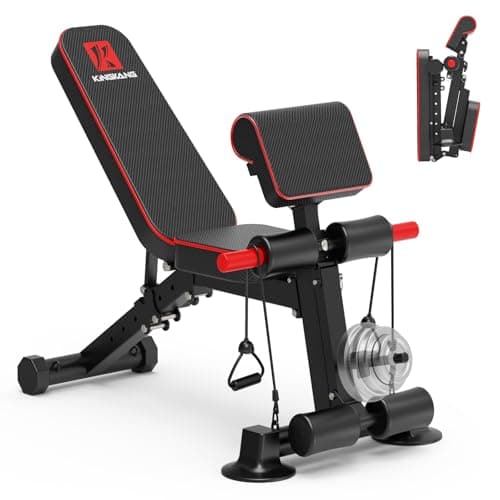
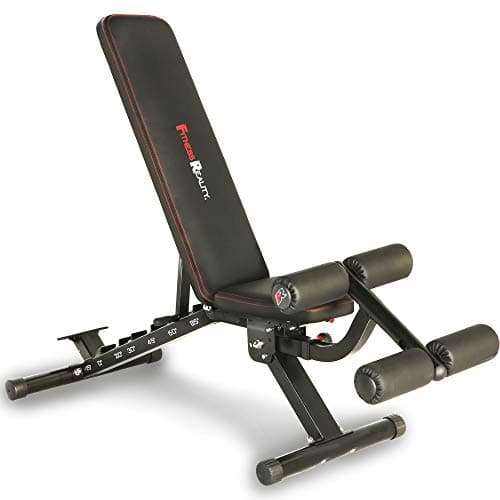
- Stated. "Supports up to 1,000 lb" (Finer Form), "safe for users up to 1,050 lb" (KingKang), "850-pound capacity" (Fitness Reality). These are manufacturer statements with no method given. We do not treat them as false; we treat them as unverified.
How those numbers get produced, and why a bench rated 1,000 lb is not built for a 1,000 lb bench press, is explained in weight bench capacity explained. This page assumes you have read it and asks the next question: given that the rating is a blunt instrument, what else tells you a bench is heavy-duty?
What we rank on beyond the rating
- Tube spec. The RitFit publishes 50 by 70 mm steel at 1.5 mm wall. The KingKang publishes 2-inch tubing. The Fitness Reality publishes a triangular support structure and a steel frame. A published dimension beats an adjective; a published wall thickness beats a dimension.
- Frame weight. The heaviest frame here is the Fitness Reality at 65 lb, then the RitFit at 57 lb and the Finer Form at 46 lb. The three that fold are lighter — 34 lb (KingKang), 28.5 lb (FLYBIRD) and 23 lb (YOLEO). A heavier bench moves less under a heavy unrack, and it is the one spec on a bench listing that cannot be inflated.
- Pad geometry. A heavy bencher wants a long, wide back pad and no gap at the hinge. The Fitness Reality publishes a 37-inch backrest and a no-gap design; the FLYBIRD a 30-inch backrest and 15.7-inch seat; the YOLEO a 13-inch wide seat and 28-inch backrest; the RitFit a 2.75-inch pad. Most benches do not publish pad width at all.
- Feet. Wide feet and a leveling foot keep the bench from rocking on an uneven garage floor. The KingKang publishes 4-inch foot pads; the FLYBIRD an adjustable leveling footpad; the RitFit enlarged anti-slip feet.
The six, on the numbers they publish
| Bench | Capacity claim | Kind of claim | Frame / tube | Bench weight | Folds |
|---|
| RitFit adjustable | 1,300 lb | Tested (in-house) | 50 x 70 mm, 1.5 mm wall | 57 lb | No (wheels) |
| Finer Form FID | 1,000 lb | Stated | Not published | 46 lb | No (wheels) |
| K KiNGKANG | 1,050 lb | Stated | 2 in tubing | 34 lb | Yes |
| Fitness Reality 2000 | 850 lb | Stated | Steel, triangular support | 65 lb | Yes |
| FLYBIRD WB5 | 800 lb | ASTM-certified | Thickened steel, dual triangle | 28.5 lb | Yes |
| YOLEO | 827 lb; max user 330 lb | ASTM-certified | Dual-triangle steel | 23 lb | Yes |
All figures quoted from the manufacturer listings read on 2026-09-18 and linked in Sources.
Why the ASTM benches rank below the bigger numbers
Because this is a heavy-duty page and the certified figures are the lowest on it. A lifter who benches 315 with a 220 lb body is putting well over 500 lb on the pad at the bottom of the rep, and while every bench here clears that on paper, the two lightest frames — 23 and 28.5 lb — are the ones most likely to shift under a hard unrack. We rank the RitFit and Finer Form first for frame mass and tube spec, and we keep the ASTM pair on the page because their claims are the best-supported. If you are between them, our FLYBIRD WB5 review argues the case for the certified bench at length.
The rack matters as much as the bench
A heavy bench press happens inside a rack with safeties set an inch below chest height, or it does not happen alone. No bench on this page changes that. If you are shopping for a bench to press heavy on, the safeties on your rack are the first check — see safety bars vs safety straps— and the bench's job is simply to not move and not compress. A flat bench does that job with fewer parts, which is why flat vs adjustable is worth reading before you pay for incline positions you will use twice.
How to buy a bench for heavy lifting
Add your bodyweight to the bar
The load on the bench is you plus the barbell at the bottom of the rep, with a dynamic component when you unrack. Do the addition honestly before you read a rating, then read the rating as a manufacturer statement, not a promise.
Prefer a published wall thickness
One bench here publishes it. If two benches you are comparing carry similar ratings and one states the tube dimension and wall, that one is the safer buy, because the maker is showing its work.
Weigh the fold against the mass
Every folding bench on this page is under 35 lb; every fixed bench is over 45. If you need the fold, accept the trade and set the bench on rubber so it cannot skate. If you do not, do not pay for a hinge you will never use — it is one more joint to loosen.
Look for the hinge gap
On an adjustable bench, the gap between seat and back pad at flat is where a heavy bencher's hips sit. Fitness Reality publishes a no-gap design; check the others in the listing photos and prefer the smaller gap.
Re-torque, and check the ladder
A bench under heavy load loosens faster than one under light load. Tighten the frame bolts monthly, and check the ladder adjustment for play — slop in the ladder is the first sign a bench is wearing, and it is covered in how long weight benches last.