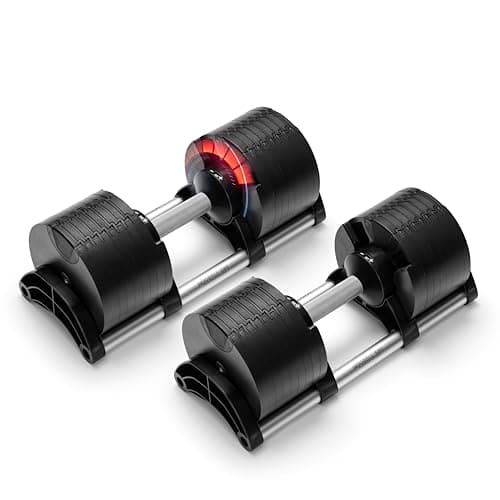
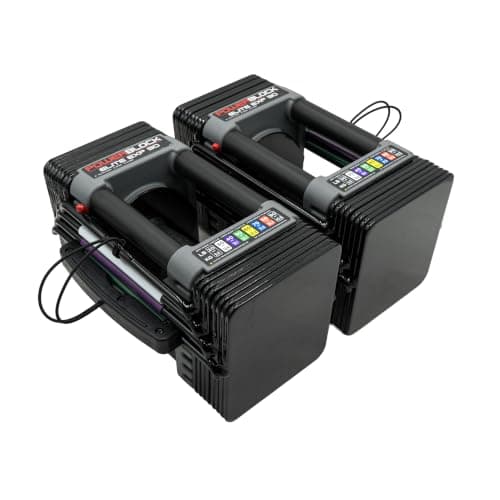
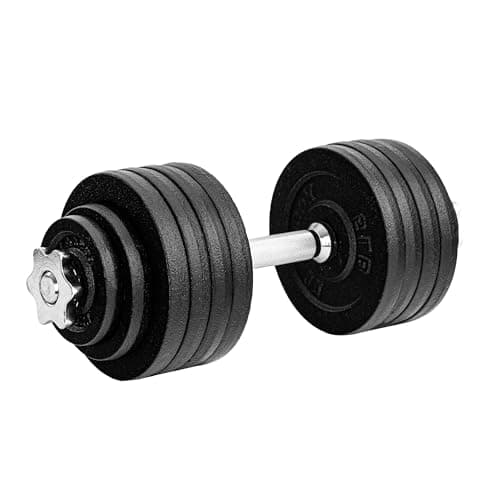
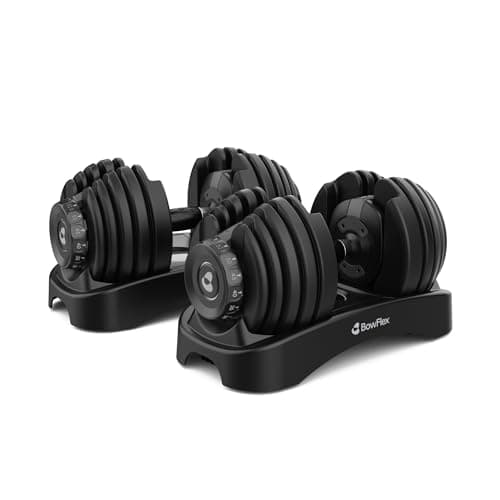
Every adjustable dumbbell is the same three things: a handle, a stack of steel or iron plates, and a selector that decides how many of those plates come with the handle when you lift it. The selector is the entire product difference, and it is the only part that can fail. There are four designs in common use. The BowFlex SelectTech 552 is the dial; the NÜOBELL is the twist handle; the PowerBlock Elite EXP is the selector pin; the Yes4All cast iron is the spinlock, which is the one with no mechanism at all. If you only take one thing from this page: the plates are permanent and the selector is not.
The common principle
An adjustable dumbbell solves a storage problem. A fixed-dumbbell set from 5 to 75 lb in 5 lb steps is fifteen pairs of iron and a rack to hold it. An adjustable holds those same plates in one cradle, permanently, and the handle picks up only the ones you selected. The plates you did not select stay in the cradle. That is it — everything else is engineering around the question of how the handle grabs the right number of plates and holds them securely while you press them over your face.
Which is why the engineering matters more here than in almost any other home gym category. A barbell that fails bends. A dumbbell selector that fails drops plates.
The four mechanisms
1. The dial
You turn a numbered dial on one or both ends of the handle, and inside the handle a set of pins or combs slide across to engage the plates up to that number. Lift the handle and those plates come with it; the rest stay in the tray. The BowFlex SelectTech 552 is the best-known example and publishes a 5 to 52.5 lb range per hand, replacing what the listing describes as fifteen sets.
What is good: it is the fastest mechanism and the most intuitive — one motion, no parts in your hand. What fails: the dial itself, the pins or combs it drives, and the plastic tray the plates sit in. The 552 listing states the tray and outer housing are the less rugged part of the design, and that is exactly where owners report problems. A dial dumbbell is a set-down dumbbell, never a drop-it dumbbell.
2. The twist handle
You set the dumbbell in its cradle and rotate the whole handle. The rotation drives an internal collar that engages successive plates. The NÜOBELL works this way, publishes a 5 to 80 lb range and a compact loaded shape, and it is the mechanism that comes closest to feeling like a real dumbbell in the hand.
What is good: the loaded shape is short and balanced rather than long, the range is the widest in common use, and the motion is fast. What fails: the connecting pieces, the locking mechanism and the selector are substantially plastic, and the plastic joining the steel plates is the documented weak point of the design. The upside is that NÜOBELL publishes the longest named warranty in the category — two years, extended to four when bought direct from the manufacturer.
3. The selector pin
You pull a pin out of a steel block, slide it into the hole corresponding to the weight you want, and lift. The PowerBlock Elite EXP uses this design, publishes a 5 to 50 lb Stage 1 range and expansion kits that take the same handle to 70 and then 90 lb.
What is good: a pin through steel is the most robust selector of the three real mechanisms, and the block shape has no long plates sticking out to bend. It is the most drop-tolerant adjustable we rank. The expansion path also means a stronger lifter does not rebuy the set. What fails: very little. The pin is the part to keep track of, and the shape takes acclimatising to — it sits in the hand differently from a traditional dumbbell.
4. The spinlock
Not really a mechanism at all. A threaded steel handle, loose cast iron plates, and two collars you screw on by hand. The Yes4All cast iron adjustable is this design and reaches 52.5 lb.
What is good: there is nothing to break. No dial, no comb, no plastic carrier, no tray. The plates work with other spinlock handles, so a cracked handle is a cheap replacement rather than a dead set. It tolerates being dropped in a way no other design here does. What fails: nothing, functionally — but changing weight means unscrewing a collar, swapping plates and screwing it back on, which is roughly thirty seconds against two.
The four, side by side
| As published | BowFlex 552 | NÜOBELL | PowerBlock Elite EXP | Yes4All spinlock |
|---|
| Mechanism | Dial | Twist handle | Selector pin | Screw collars |
| Published range | 5–52.5 lb each | 5–80 lb each | 5–50 lb, expandable to 90 | Up to 52.5 lb |
| Plate material stated | Not published | Steel plates | Steel build | Cast iron |
| Weight change time | Seconds | Seconds | Seconds, pin by hand | Tens of seconds |
| Expandable | No | No | Yes, to 70 and 90 lb | Yes, buy more plates |
| Published warranty | Not published on listing | 2 years, 4 direct | Not published on listing | Not published on listing |
| Documented weak point | Plastic tray and housing | Plastic joining the plates | Few; shape is the trade | None |
Every cell is quoted from the manufacturer listing linked in Sources, or marked as not published. Only one of these four publishes a warranty term on its listing, which is worth knowing before you rely on one.
Why this matters more than the weight range
The plates inside every one of these are iron or steel. Iron does not wear out. A plate from a set bought in 1990 is identical in function to a plate bought today, which is the same reason cast iron plates are effectively a lifetime purchase.
So the service life of an adjustable dumbbell is not the service life of the weight. It is the service life of the selector, and the selector is where the plastic is. That is why a set bought for durability should be judged on its mechanism, and why how long adjustable dumbbells last is a question about mechanisms rather than about pounds.
It also explains the ranking order on the dumbbells hub: convenience and durability pull in opposite directions here. The fastest mechanisms have the most plastic in the load path, and the one with no plastic at all is the slowest to use.
What makes any of them die early
- Dropping. Every mechanism here except the spinlock is a machine with plastic in it. Setting a dumbbell down under control is fine; letting it fall the last foot is what cracks a tray or a plate carrier. If you train in a way where dumbbells hit the floor, buy iron.
- Half-selected lifts. Lifting while the dial, collar or pin is between positions puts the load on an engagement surface designed to be either in or out. Seat the selector fully, every time.
- Grit in the cradle. These are sliding mechanisms. Garage dust, chalk and sand belong nowhere near the tray. Wipe it out occasionally and the mechanism keeps working smoothly.
- Storing them loaded on the floor. The cradle is the designed resting place. Leaving a selector engaged with the weight on a hard floor loads the mechanism when it should be carrying nothing.
None of that is onerous, and all of it is the difference between a set that lasts a decade and one that lasts three years. If one does break, what you can and cannot do about it is on can adjustable dumbbells be repaired.
How to choose a mechanism
Match the mechanism to how you train
Constant weight changes in supersets and circuits: dial or twist. A handful of working weights per session: a spinlock gives you the whole range with nothing to break. Heavy work where the dumbbell occasionally gets put down hard: the selector-pin block is the most drop-tolerant of the real mechanisms.
Check the plastic in the load path
Read the listing for what holds the plates to the handle. Steel-to-steel engagement outlasts plastic-to-steel, and the listings that tell you which they use are doing you a favour. Where nothing is published, assume plastic is involved.
Check whether it expands
One of these four takes the same handle from 50 to 90 lb with add-on kits, and one lets you simply buy more plates. Expandability is how you avoid the most expensive mistake in this category, which is outgrowing the set — see the heaviest adjustable dumbbells.
Find the warranty before you need it
Only one listing of these four publishes a term. Where the listing is silent, check the brand site before you buy, because on a mechanism product the warranty is a real part of the price. We keep a broader list on lifetime warranty home gym equipment.
Ask whether you need a mechanism at all
If you already own a barbell and plates, a spinlock handle is a cheap way to add dumbbell work using the weight you have. Mechanism-free equipment is the whole premise of this site, and in this category it is also the cheapest option on the shelf.