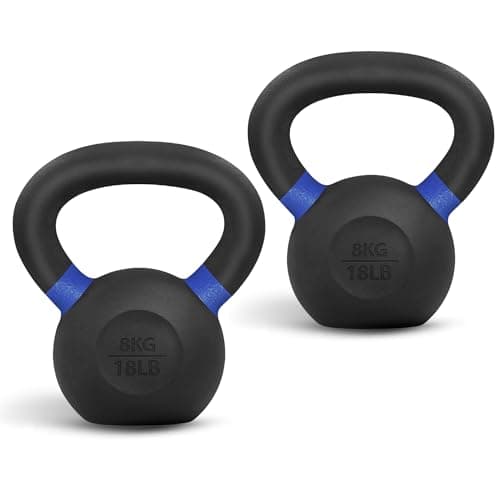
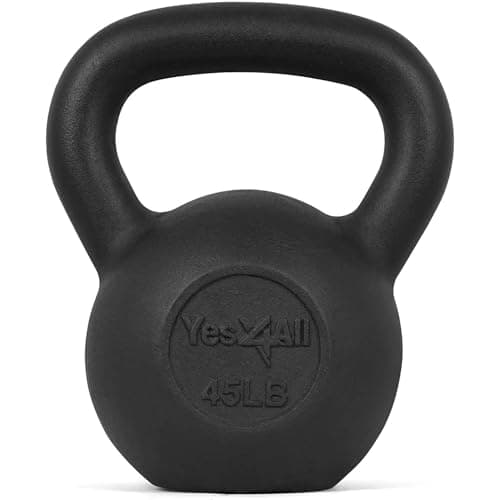
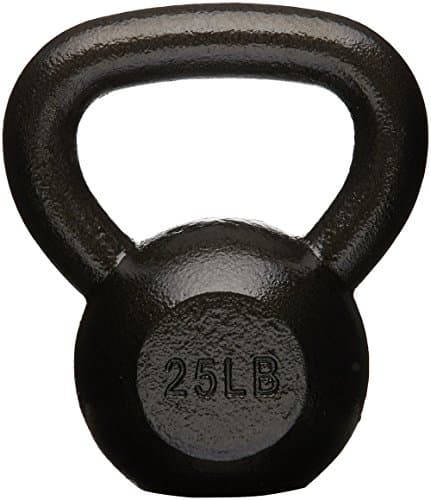
Buy a single-piece cast iron bell in the weight you will actually swing. Powder coat if you use chalk, painted if you do not, competition sizing if you snatch, adjustable only if floor space genuinely forces it. A kettlebell is one of the very few pieces of gym equipment with no service life at all.
Why kettlebells belong on a buy-it-for-life site
There is nothing to wear out. A one-piece iron casting has no bearings, no pads, no mechanism and no fasteners. Barring being dropped from height onto concrete — which chips it cosmetically rather than ruining it — a cast iron kettlebell you buy this year will outlive the house it is in.
That puts it alongside cast iron plates at the top of the durability hierarchy in our pillar guide. The interesting question is not whether it lasts. It is which one to buy, and that comes down to three details most listings gloss over.
The three details that decide which bell to buy
1. The handle
Handle diameter decides whether two hands fit comfortably for swings and whether the bell racks cleanly against your forearm for cleans and presses. Too thick and your grip fails before your hips do; too thin and heavy bells dig in. A wide handle with a smooth, seam-free underside is what you want — casting seams inside the handle are the most common complaint about cheap bells, and they are exactly where your hand goes.
2. The finish
Powder coat holds chalk and gives a predictable, slightly textured grip. Gloss paint looks better and gets slick with sweat. Vinyl coating protects floors but wears and splits over time. If you use chalk or train barehanded for high reps, powder coat is worth the small premium; if the bell mostly does goblet squats and carries, paint is fine.
3. The base
A flat, wide base means the bell stands stable for renegade rows and push-ups, and does not rock on a rubber floor. It sounds trivial until you are doing push-ups on two of them. Almost all modern bells get this right; older designs sometimes do not.
Cast iron vs competition vs adjustable
Cast iron
The standard bell: body size grows with weight, handle diameter grows a little too. Cheapest per pound, effectively permanent, and the right answer for the large majority of home training. This is what most people should buy.
Competition
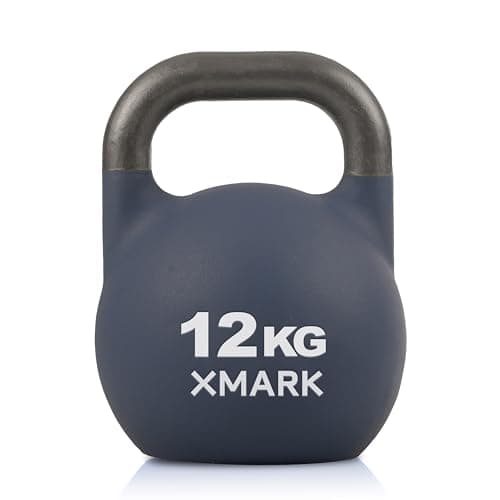
Steel bells built to a fixed external size across every weight — a 12 kg and a 32 kg are the same dimensions, with the heavier one having thicker walls. That consistency means your technique does not change as you go heavier, which matters a great deal for snatch and jerk volume and hardly at all for swings and goblet squats. It costs substantially more per pound.
Adjustable
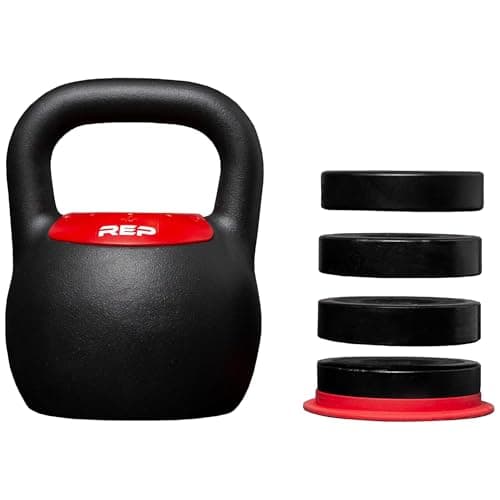
One bell that covers a range, in the floor space of one bell. Genuinely useful in a small gym. It is also the only kettlebell format with a mechanism, which means it is the only one with a failure point — and it is not designed to be dropped. Buy it for space, not for durability. The full field, ranked on the selector rather than the casting, is in the best adjustable kettlebells.
What weight should you actually buy?
The honest answer is that most people buy too light. A kettlebell swing is a hip movement, and hips are strong. Common starting points are around 8–12 kg (18–26 lb) for smaller or less experienced lifters and 16–20 kg (35–44 lb) for larger or stronger ones — with the caveat that the same bell that is right for swings will be too heavy for presses and too light for heavy carries.
That is the real argument for the adjustable bell, or for buying two fixed bells rather than one: the weight that suits a swing is rarely the weight that suits a press. If you are choosing a single starting bell, choose for the swing — it is the movement you will do most.
Kettlebells or dumbbells?
They overlap less than people assume. Dumbbells are better for pressing, rows and anything where you want the load centered in your hand. Kettlebells are better for ballistic hip work, carries and any movement where an offset center of mass is the point. Most gyms benefit from both — see our full comparison, and the adjustable dumbbell roundup if the pressing side is what you are missing.
How to buy kettlebells once
Buy for the swing first
If you buy one bell, size it for two-handed swings. That is the movement that justifies owning a kettlebell at all, and it wants more weight than beginners expect.
Feel the handle if you can
Handle diameter and the smoothness of the casting inside the handle are the two things that decide whether a bell is pleasant to use for years. If you cannot handle one first, prefer a wide-handle design from a brand with a lot of owner feedback.
Prefer powder coat if you chalk up
Chalk plus gloss paint is a slick combination. Powder coat is the finish that holds chalk properly. It is slightly abrasive when new and wears in within a few sessions.
Do not buy a full ladder up front
Two bells — one for ballistics, one lighter for pressing and getups — covers far more training than five bells of adjacent weights. Add heavier ones as you actually outgrow what you own.
Protect the floor, not the bell
The bell will survive being set down on concrete; the concrete and your neighbors' patience may not. A rubber mat under the swing area handles it — see the flooring guide. Vinyl-coated bells are the other approach, at the cost of a coating that eventually splits.