Skip to content
Plate&Rack

The free weights · Dumbbells & Kettlebells

Cast Iron vs Competition Kettlebells

Competition bells are all the same size whatever they weigh. Cast iron bells grow as they get heavier. That single difference drives the price, the feel and the answer.

By Stephen V.Updated How we choose
#ad

We earn a commission when you buy through our Amazon links, at no extra cost to you. It never affects our rankings, and we say so when the cheaper product is the better buy. How this works.

For a home gym, cast iron — it is cheaper per pound and a single-piece casting is about as buy-it-for-life as equipment gets. Competition bells earn their premium if you own several weights and want every one of them to feel identical in your hand.

The difference in one table

Cast ironCompetition
Bell sizeGrows with weightIdentical at every weight
Handle diameterThickens with weightConsistent across the range
ConstructionUsually one-piece castingSteel shell, weighted
Typical weightsPoundsMetric (kg), color coded
Cost per poundLowerHigher
Best forGeneral training, one or two bellsOwning a full range, technical work

Why competition sizing exists

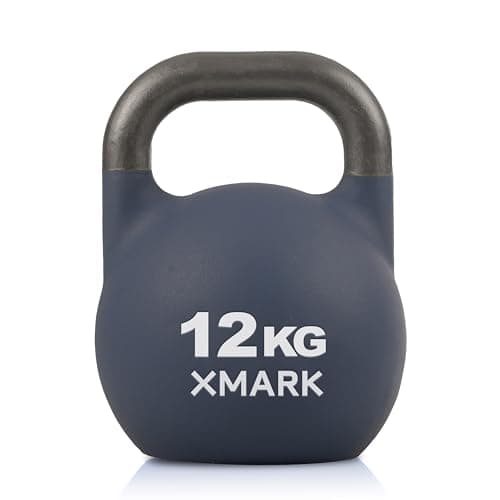
A competition kettlebell is a steel shell of fixed external dimensions, filled to whatever weight is required. A 16 kg and a 32 kg bell are the same size, with the same handle diameter and the same window for your hand.

That consistency is the entire product. If you train kettlebell technique across multiple weights, the bell sits in the same place in your forearm on every rack position, and the handle feels the same in every grip. You are not relearning the movement each time you change weight — which for snatches and cleans, where the bell rotates around your hand, genuinely matters.

The XMARK is the competition bell we rank, and this is the case for it: consistent handle diameter and competition sizing across metric weights.

Why cast iron is usually the right home buy

There is nothing to outlive

A single-piece cast iron bell has no seams, no shell, no filler and no mechanism. It is one object. On a site about equipment that outlives you, that is close to the ideal — the failure mode is surface rust, and surface rust on cast iron is cosmetic and reversible.

It costs less per pound

Competition bells cost more to make — precision dimensions, a shell, controlled filling — and that shows up in the price. If you are buying one or two bells for swings and general conditioning, you are paying a premium for a consistency benefit that only appears across a range you do not own.

Growing size is not actually a problem for most people

The knock on cast iron is that heavier bells are bigger with thicker handles. That is true, and for most home training it is fine — you are not doing high-rep competition snatches across five weights. A thicker handle on a heavy bell arguably trains grip harder, which is not a loss.

The finish question

This matters more than the iron-versus-competition question for anyone actually training.

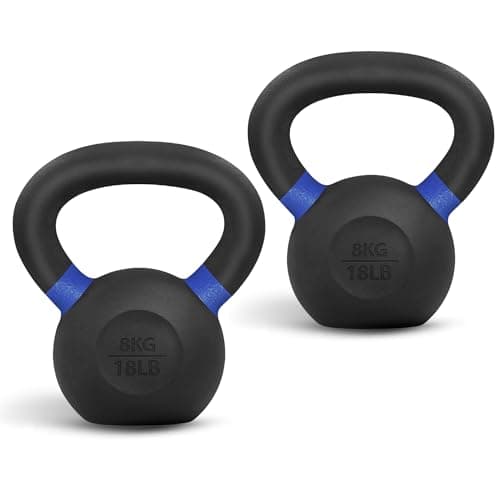
  • Powder coat gives a slightly textured surface that holds chalk and stays grippy when your hands are damp. It is the best general-purpose kettlebell finish, and it is why the Yes4All powder-coated pair rates well.
  • Gloss paint or enamel looks smart and turns slick the moment your hands sweat. It is the cheapest finish and the worst one to hold.
  • Bare or lightly finished steel on competition bells is usually smooth and consistent, designed to be used with chalk.

If you buy one thing from this page, buy the powder coat. A slick handle on a swinging weight is a safety issue, not a comfort preference.

What to actually buy

One or two bells for swings, carries and conditioning: powder-coated cast iron. This covers the large majority of home kettlebell use, and it is where the money goes furthest.

A full range for technical kettlebell training: competition bells, so the handle and rack position stay constant as you move up. Accept the cost per pound as the price of that consistency.

A flat base either way. Kettlebells get put down between sets and used for renegade rows and push-ups. A wobbly base is an annoyance every session.

Not sure kettlebells are the right tool at all? Our dumbbells vs kettlebells comparison covers that decision, and the kettlebell roundup ranks the bells themselves.
The short answer

Quick picks

#ProductBest forScorePrice
01
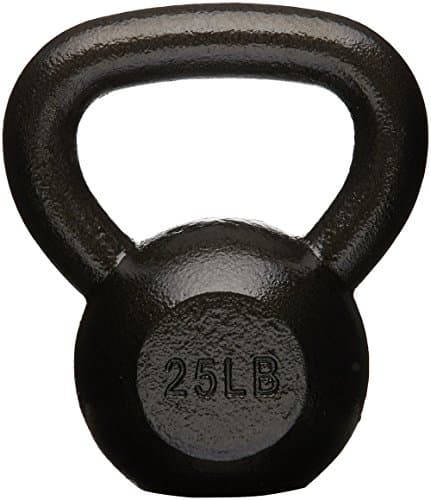
Amazon Basics Amazon Basics Cast Iron Kettlebell (Wide Handle)
Amazon Basics Cast Iron Kettlebell (Wide Handle)

One piece of cast iron with a wide handle — there is no mechanism here to outlive, which is the point.

Best value kettlebell
7.8
$35.99Amazon
02
Yes4All Yes4All Powder-Coated Cast Iron Kettlebell (Pair)
Yes4All Powder-Coated Cast Iron Kettlebell (Pair)

Powder coat is the finish that survives chalk, sweat and a concrete floor — worth the small premium.

Best finish for grip
8.6
$55.51Amazon
03
XMARK XMARK Competition Kettlebell
XMARK Competition Kettlebell

Competition dimensions mean every weight feels the same in the hand — the reason serious lifters pay more.

Best competition kettlebell
8.2
$95.00Amazon

#ad · Live prices from the Amazon Product API, as of Sep 8, 2026. Where we have no verified live price, we show none — we would rather leave a gap than print a number that has rotted.

In detail

The picks, in full

01
Amazon Basics Amazon Basics Cast Iron Kettlebell (Wide Handle)

Best value kettlebell

Amazon Basics Cast Iron Kettlebell (Wide Handle)

Solid cast ironWide handleFlat baseSingle-piece casting
7.8/10

One piece of cast iron with a wide handle — there is no mechanism here to outlive, which is the point.

Durability
9
Handle
7
Finish
6
Base
8
Value
9

Pros

  • A single-piece iron casting is about as buy-it-for-life as home gym equipment gets — nothing wears out
  • Wide handle takes two hands comfortably for swings, which is what most people actually buy a kettlebell for
  • Among the lowest cost per pound in the category from a supplier with easy returns

Cons

  • Painted iron rather than powder coat, so the finish scuffs and chalk sticks to it less predictably
  • Fixed weight — a full ladder of sizes gets expensive and eats floor space

Don't buy this if…

you want the whole range from light to heavy. An adjustable kettlebell replaces five bells for less money and less floor, at the cost of a mechanism.

$35.99View on Amazon

Price as of Sep 8, 2026. Prices change — Amazon's is the one that counts.

#ad · we may earn a commission from this link to Amazon Basics Cast Iron Kettlebell (Wide Handle)

02
Yes4All Yes4All Powder-Coated Cast Iron Kettlebell (Pair)

Best finish for grip

Yes4All Powder-Coated Cast Iron Kettlebell (Pair)

Powder-coated cast ironNon-slip handleFlat bottomSold as a pair
8.6/10

Powder coat is the finish that survives chalk, sweat and a concrete floor — worth the small premium.

Durability
9
Handle
8
Finish
9
Base
9
Value
8

Pros

  • Powder coat holds chalk and gives a predictable grip, unlike gloss paint that turns slick with sweat
  • Flat bottom means it stands for renegade rows and push-ups without rocking
  • Sold in pairs, which is how doubles work — front squats and presses need two

Cons

  • Powder coat can feel abrasive on bare hands during high-rep snatches until it wears in
  • Pair pricing makes a full ladder of weights a significant outlay

Don't buy this if…

you only swing single-handed. A single bell in the right weight costs half as much and covers swings, goblet squats and carries.

$55.51View on Amazon

$63.4813% off

Price as of Sep 8, 2026. Prices change — Amazon's is the one that counts.

#ad · we may earn a commission from this link to Yes4All Powder-Coated Cast Iron Kettlebell (Pair)

03
XMARK XMARK Competition Kettlebell

Best competition kettlebell

XMARK Competition Kettlebell

Competition sizingConsistent handle diameterSteel constructionMetric weights
8.2/10

Competition dimensions mean every weight feels the same in the hand — the reason serious lifters pay more.

Durability
9
Handle
9
Finish
8
Base
9
Value
6

Pros

  • Competition bells share one body size across weights, so technique doesn't change as you go heavier
  • Consistent handle diameter is the spec that decides whether a rack position is comfortable
  • Steel competition bells are dimensionally stable and effectively permanent

Cons

  • Costs substantially more per pound than a cast iron bell doing the same swings
  • Uniform body size means a heavy bell has thicker walls, not a bigger silhouette — no visual weight cue

Don't buy this if…

your kettlebell work is swings and goblet squats. Competition sizing is a benefit for snatch and jerk volume; for general strength it is money spent on consistency you won't feel.

$95.00View on Amazon

Price as of Sep 8, 2026. Prices change — Amazon's is the one that counts.

#ad · we may earn a commission from this link to XMARK Competition Kettlebell

How we picked

We do not run a testing lab

We compiled manufacturer specifications, read the published warranties, checked the relevant standards and aggregated owner reviews, then scored each product against a published rubric. The scores are judgments from documented research — they are not measurements we took, because we do not run a lab and we are not going to pretend we do. Where a number came from a manufacturer or a standard, we name it and link it in Sources.

Questions

Frequently asked

What is the difference between cast iron and competition kettlebells?

Size consistency. Competition bells are identical in external dimensions and handle diameter at every weight; cast iron bells grow as they get heavier. Competition bells are steel shells filled to weight, cast iron bells are usually a single casting.

Are competition kettlebells worth the extra money?

Only if you own several weights and train technique across them. The consistent handle and rack position is the benefit, and it only shows up across a range. For one or two bells used for swings and carries, cast iron gives you more weight for the money.

What kettlebell finish is best?

Powder coat. It holds chalk and stays grippy with damp hands, where gloss paint turns slick. On a weight that swings, grip is a safety feature rather than a comfort preference.

Do cast iron kettlebells rust?

The surface can, especially in a damp garage, but on solid cast iron it is cosmetic rather than structural and comes off with a brush. A powder-coated bell resists it far better. It is nothing like the problem rust is on a barbell knurl.

Keep reading

Receipts

Sources

We do not run a testing lab, and we do not pretend to. Every spec, warranty term and standard above is the manufacturer's or a published source, cited and linked. Where we could not verify something, we say so on the page rather than quietly leaving it out. Read our full method.