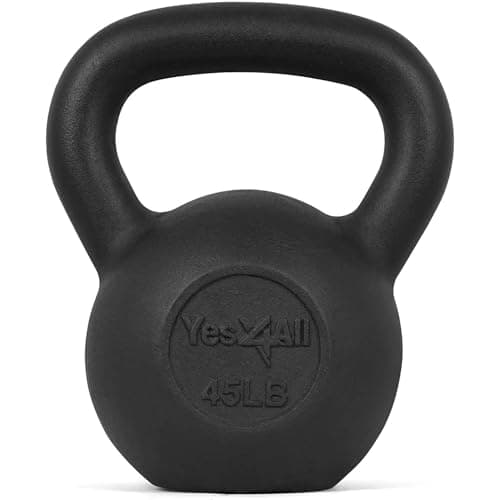
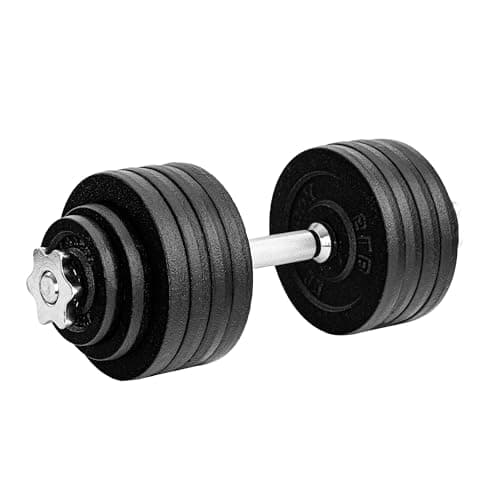
For most people building a first home gym, a pair of adjustable dumbbells is the smarter first buy. They cover more exercises, load more progressively for building strength, and have a gentler learning curve than a kettlebell. A kettlebell is a superb second purchase — unbeatable for swings, carries and conditioning — but as a single do-everything tool, the dumbbell simply does more. The exception is the trainee whose main goal is swings and metabolic work; for them, a cast-iron kettlebell wins outright. If the real question behind your shortlist is dumbbells against a loaded bar rather than against a bell, that one is settled in adjustable dumbbells vs a barbell set.
The comparison at a glance
| Factor | Adjustable dumbbells | Kettlebell |
|---|
| Versatility | Wider — presses, curls, rows, lunges and more, each hand loaded evenly | Narrower but distinct — swings, cleans, carries, Turkish get-ups |
| Durability | Adjustable models rely on a mechanism that can fail; cast-iron spinlock sets are very tough | Highest — a one-piece iron casting has no seam or moving part to break |
| Cost to cover a range | One adjustable pair covers many weights; lower cost per pound across a full range | Each bell is one fixed weight, so a useful ladder means buying several |
| Exercises covered | Most — the broadest set of standard strength movements | Fewer, but includes ballistic work dumbbells do less naturally |
| Learning curve | Gentle — presses and rows are intuitive from day one | Steeper — the swing and get-up reward proper coaching |
Why the dumbbell usually wins as the first buy
A dumbbell is the more general tool. It presses, curls, rows, lunges and shrugs, and it loads each hand evenly, which makes it the natural way to build balanced strength across the whole body. An adjustable pair also solves the range problem in one purchase: instead of buying a ladder of separate weights, you dial or swap to whatever the exercise needs. That breadth, plus the gentle learning curve, is why we point most first-time buyers at a dumbbell set — and why the adjustable dumbbell sits at rank one in this comparison.
There is a durability footnote worth stating plainly. A quick-change adjustable dumbbell relies on a selector mechanism that can fail, whereas a kettlebell is often a single iron casting with nothing to break — a distinction that disappears the moment you buy an adjustable kettlebell, which has a mechanism of its own. If you want the dumbbell's versatility anda build that lasts, the spinlock cast-iron set is the answer — iron plates and a screw collar, close to as durable as the kettlebell itself. We cover that trade-off across the adjustable-dumbbell roundup.
When the kettlebell is the better first buy
Buy the kettlebell first if your training centers on swings, cleans, snatches, carries and conditioning. The offset handle and compact mass make those ballistic movements feel natural in a way a dumbbell never quite matches, and a single well-chosen bell can drive a whole workout. A one-piece cast-iron bell is also the most durable weight in this entire comparison — there is no seam, filler or moving part to fail, so you can set it down hard for years. The catch is that one bell is one weight; covering a range means buying several, and the swing rewards proper coaching before you load it heavy.
For most home gyms the honest answer is a sequence, not a versus: start with the adjustable dumbbells for the broad strength base, then add a kettlebell or two once swings and carries are on your program. A bench extends the dumbbells further than a second bell would, so it usually comes before the kettlebell in the buying order.