Skip to content
Plate&Rack

The bar · Barbells

Barbell Knurling Explained

Knurling is the only part of a bar you touch every rep, and the vocabulary around it is a mess. Here is what the patterns, marks and aggression levels actually mean.

By Stephen V.Updated How we choose
#ad

We earn a commission when you buy through our Amazon links, at no extra cost to you. It never affects our rankings, and we say so when the cheaper product is the better buy. How this works.

Knurling is the cross-hatched grip cut into a barbell shaft. It exists so the bar does not rotate in your hands, and its aggression is a trade between grip security and skin. Nearly everything else written about it is preference dressed up as specification.

What the marks mean

Most quality bars have knurl rings — narrow smooth bands interrupting the knurling. They are reference marks, not grip features. Their job is to let you place your hands in the same position every rep without looking.

There are two standard positions, which is why bars advertise dual knurl marks: the powerlifting mark, set narrower, and the Olympic weightlifting mark, set wider. A bar with both gives you a reference for a bench press grip and for a snatch grip. A bar with one gives you a reference for whichever discipline it was built around. The CAP Beast and the Synergee Games bar both carry dual marks; plainer bars like the Body-Solid OB86 do not.

For a home gym, dual marks are a genuine convenience and nothing more. You can lift perfectly well off a bar with no marks by learning where your hands go relative to the sleeves.

Aggression: what passive and sharp actually mean

There is no industry standard for knurl aggression, which is why the language is so vague. What varies is the depth of the cut and the sharpness of the peaks:

DescriptionFeels likeSuits
Passive / mildTexture you notice but never fightGeneral training, high-rep work, beginners
MediumPositive grip without tearing at volumeMost home gyms — the sensible default
Aggressive / sharpBar will not move; hands pay for itHeavy singles, competition deadlifting

The trap is assuming sharper is better. Sharper is better for one heavy pull and worse for everything else — an aggressive knurl shreds hands across a high-volume session and makes chalk almost mandatory. For a bar that has to do squats, presses, rows and pulls in the same week, medium is the correct answer for nearly everyone.

The center knurl question

Some bars have a knurled band in the middle of the shaft. Its purpose is to stop the bar sliding down your back during a squat, particularly a low-bar squat with a dry shirt.

The cost is that the same band scrapes your neck and collarbones during front squats and cleans, and catches your chest on a touch-and-go bench press. This is why it is genuinely contested rather than simply good or bad:

  • Want a center knurl if you squat heavy, especially low-bar, and rarely front squat or clean.
  • Skip it if you front squat, do Olympic lifts, or bench with the bar touching. A general-purpose home bar is usually better without one.

Many all-round bars ship with either no center knurl or a deliberately mild one, which is the sensible compromise for a bar that has to do everything.

How knurling wears, and what actually kills it

Knurling does not really wear out from lifting. Steel peaks flatten very slowly under hands. What ruins knurling is corrosion and neglect: rust forms in the valleys of the cross-hatch, where moisture and chalk collect and where a cloth does not reach. Left alone, the pattern fills in and goes from grippy to gritty to smooth.

This is why the finish matters as much as the cut. A ceramic or chrome coating resists the corrosion that fills the knurl; bare or lightly finished steel needs brushing and oiling. The practical routine is in how to stop barbell rust — a nylon brush along the knurl, not just a wipe along the shaft.

What to actually look for when buying

In priority order: a medium knurl you can use for everything, dual marks if you value the reference, a finish that protects the pattern from corrosion, and a center knurl only if you have a specific reason to want one. Everything else — diamond versus volcano patterns, hill versus mountain profiles — is manufacturer vocabulary that varies more between brands than the actual feel does.

And a note on honesty: knurl feel is the one bar characteristic that genuinely cannot be assessed from a listing. We rank bars on published, checkable specs — capacity, coating, dimensions, marks — and we say so on how we choose. Anyone describing exactly how a bar feels in the hand from a product page is guessing.
The short answer

Quick picks

#ProductBest forScorePrice
01
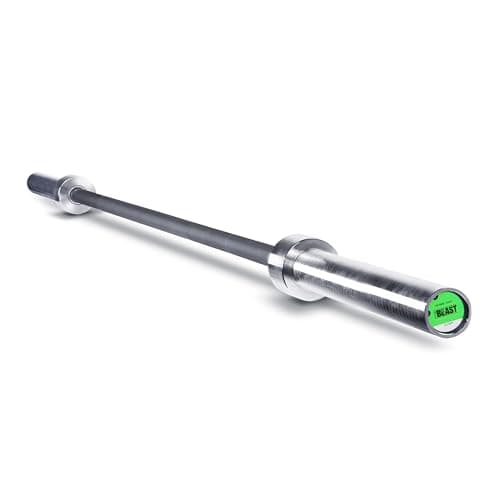
CAP Barbell CAP The Beast 7 ft Olympic Barbell (1,200 lb)
CAP The Beast 7 ft Olympic Barbell (1,200 lb)

The value bar that keeps showing up in real garage gyms — 1,200 lb rated for the price of a cheap one.

Best value all-round bar
8.0
$149.00Amazon
02
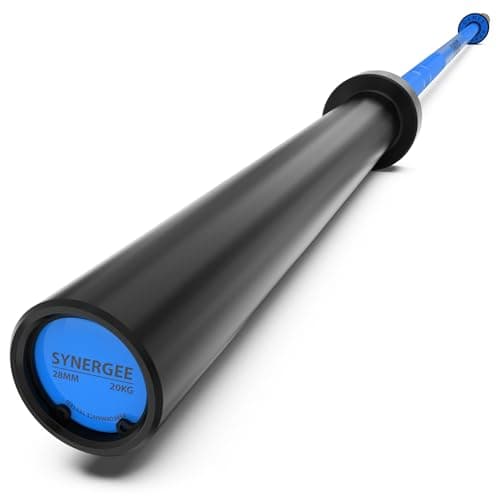
Synergee Synergee Games 20 kg Barbell (1,500 lb)
Synergee Games 20 kg Barbell (1,500 lb)

A ceramic-coated 1,500 lb bar that punches into a much higher price bracket.

Best step-up bar
8.4
$169.95Amazon

#ad · Live prices from the Amazon Product API, as of Sep 8, 2026. Where we have no verified live price, we show none — we would rather leave a gap than print a number that has rotted.

In detail

The picks, in full

01
CAP Barbell CAP The Beast 7 ft Olympic Barbell (1,200 lb)

Best value all-round bar

CAP The Beast 7 ft Olympic Barbell (1,200 lb)

7 ft / 45 lb1,200 lb capacityDual knurl marksAlloy steel
8.0/10

The value bar that keeps showing up in real garage gyms — 1,200 lb rated for the price of a cheap one.

Tensile / build
8
Coating
7
Knurl & spin
7
Capacity
9
Value
9

Pros

  • A 1,200 lb rated capacity is well beyond anything a home lifter will load, and beyond most bars at this price
  • Dual knurl marks suit both powerlifting and Olympic hand positions
  • CAP is a long-standing brand, so it is easy to buy and easy to replace

Cons

  • The finish is functional, not premium — keep it wiped down and it will not rust, but it is not stainless
  • Sleeve spin is on bushings, so it is smooth enough for lifting but not a competition-bearing feel

Don't buy this if…

you are an Olympic lifter who needs fast bearing spin and a lot of whip. This is a stiffer all-round bar; a dedicated Olympic bearing bar is the tool for cleans and snatches.

$149.00View on Amazon

Price as of Sep 8, 2026. Prices change — Amazon's is the one that counts.

#ad · we may earn a commission from this link to CAP The Beast 7 ft Olympic Barbell (1,200 lb)

02
Synergee Synergee Games 20 kg Barbell (1,500 lb)

Best step-up bar

Synergee Games 20 kg Barbell (1,500 lb)

20 kg / 44 lb1,500 lb ratedCeramic coatingDual knurl marks
8.4/10

A ceramic-coated 1,500 lb bar that punches into a much higher price bracket.

Tensile / build
9
Coating
9
Knurl & spin
8
Capacity
9
Value
7

Pros

  • A 1,500 lb rating and a genuinely durable ceramic coating that resists rust better than plain black oxide
  • Dual marks and a moderate whip make it a comfortable do-everything bar
  • A step up in finish and spin from the budget bars without a competition-bar price

Cons

  • Costs more than the value bars — you are paying for the coating and the higher rating
  • The coating color is cosmetic; some owners prefer a plain finish they can re-oil easily

Don't buy this if…

your budget is the constraint and you just need a bar that works. The CAP Beast does the core job for less; the Synergee is the nicer bar, not a necessary one.

$169.95View on Amazon

Price as of Sep 8, 2026. Prices change — Amazon's is the one that counts.

#ad · we may earn a commission from this link to Synergee Games 20 kg Barbell (1,500 lb)

How we picked

We do not run a testing lab

We compiled manufacturer specifications, read the published warranties, checked the relevant standards and aggregated owner reviews, then scored each product against a published rubric. The scores are judgments from documented research — they are not measurements we took, because we do not run a lab and we are not going to pretend we do. Where a number came from a manufacturer or a standard, we name it and link it in Sources.

Questions

Frequently asked

What are the two rings on a barbell for?

They are hand-placement reference marks, not grip. The narrower pair is the powerlifting mark and the wider pair is the Olympic weightlifting mark. A bar with both lets you find a bench grip and a snatch grip consistently without looking down.

Do I want an aggressive knurl?

Probably not. Aggressive knurling helps for heavy singles and shreds your hands across higher-volume training. For a home bar doing squats, presses and pulls in the same week, a medium knurl is the right choice for almost everyone.

Should a home gym barbell have a center knurl?

Only if you squat heavy and do not front squat, clean or bench touch-and-go. The center band grips your back on a squat and scrapes your neck and chest on everything else. A general-purpose bar is usually better without one.

Does knurling wear out?

Barely, from lifting. What destroys knurling is rust filling the valleys of the pattern until it goes smooth. Brush along the knurl and keep a protective finish on the bar and it will outlast you.

Keep reading

Receipts

Sources

We do not run a testing lab, and we do not pretend to. Every spec, warranty term and standard above is the manufacturer's or a published source, cited and linked. Where we could not verify something, we say so on the page rather than quietly leaving it out. Read our full method.