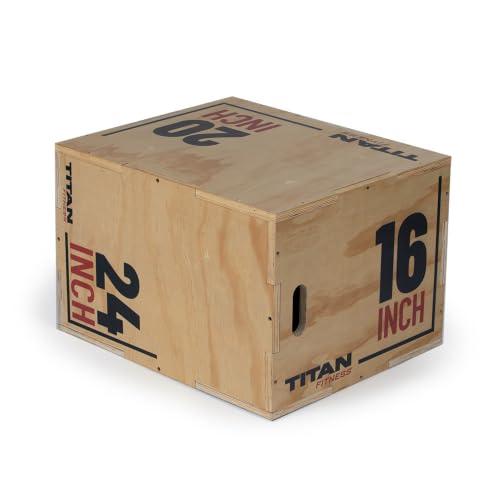
The best plyo box is the Titan Fitness 3-in-1 Pro-Duty wood box, because it is the only one in the category that tells you what it is rated to hold — 440 lb — as well as what heights it gives you. It is for someone who jumps confidently and wants a box that also takes loaded step-ups. The budget pick is the BalanceFrom foam box, and it is a better first purchase than any wood box for a specific reason: the plywood edge is the thing that sends people to urgent care, and a foam face does not.
A plyo box belongs on a buy-it-for-life site because, done right, it is one of the most permanent objects you can own. There is no mechanism, no bearing, no coating that perishes and nothing to calibrate. A welded steel box or a properly built plywood box outlasts the room it sits in. Done wrong — thin plywood, screws into end grain, a damp garage floor — it is a consumable, and the failure is a joint working loose under a landing. Construction is therefore the whole review.
What to look for, in the order it matters
1. Construction: welded steel, plywood, or foam
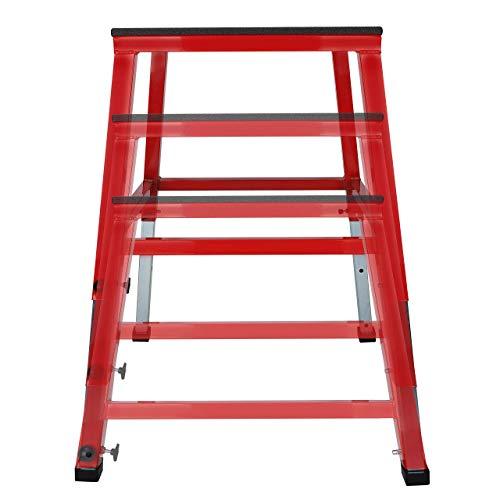
These are three genuinely different products that share a shape. Welded steel has no fasteners to loosen and nothing to delaminate, which makes it the longest-lasting construction here by a wide margin — the jFit box is the only one built this way. Plywood is the standard and is fine when the panels are thick and the box is assembled square; its failure modes are delamination in damp air and screws pulling out of end grain over years. Foam is the outlier: it compresses, the vinyl scuffs, and it is the only one of the three that will not injure you when you catch the edge with a shin.
If your gym is a garage, the moisture point is not theoretical. Plywood in an unconditioned garage over a concrete slab takes on and gives up water with the seasons, which is exactly the cycle that opens up a glued or screwed joint. The same humidity logic that governs keeping gym equipment from rusting in a garage applies to wood, in a different direction.
2. Published capacity — and the silence where it should be
Four of these five listings publish no weight rating at all. That is worth saying plainly because the number matters more than it looks: a plyo box is not only jumped onto, it is stood on for step-ups while holding dumbbells, and it is used as a bench-height platform for hip thrusts and dips. A 200 lb lifter holding two 50 lb dumbbells is loading the top face with 300 lb, dynamically. Titan's 440 lb figure is the only published number in the group and the only one you can plan against. Everywhere else, this page says "not published" rather than estimating, for the same reason the rest of the site does.
3. The heights you will actually use
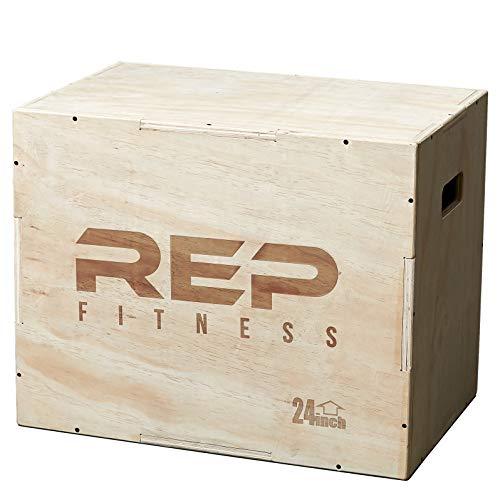
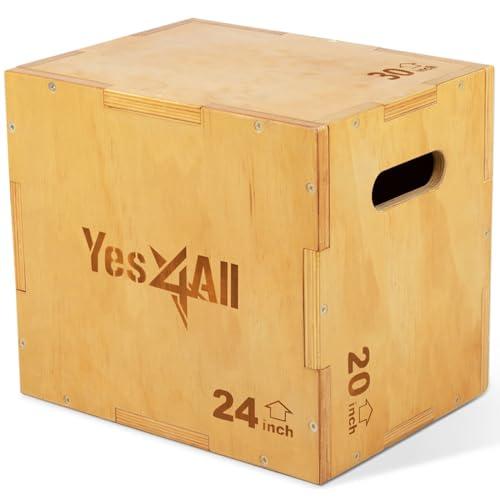
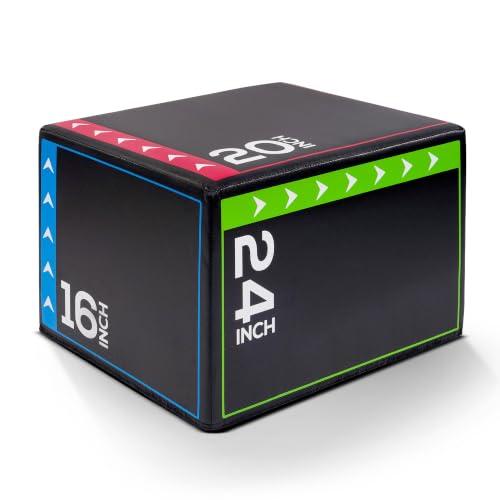
A 3-in-1 box gives you three faces by flipping it. The useful question is which three. The 16-20-24 inch set covers nearly every program: 16 for step-ups and beginners, 20 as the default jump, 24 as the stretch. The 20-24-30 set reaches the standard 30 inch competition height but gives up the low face. The 12-16-20 steel box goes lower than any wood box here, which makes it the most useful of the three for step-ups, single-leg work and anyone rehabbing a knee.
4. How the height changes
Wood 3-in-1 boxes change height by being tipped over, which is a two-hand job with an awkward object and is the reason most people pick one height and leave it. The jFit steel box adjusts instead, which sounds like a small thing and is not: a box whose height changes in seconds gets used at three heights, and a box you have to wrestle gets used at one.
Where a plyo box fits in a strength gym
Not where most listings suggest. The jumping is the headline, but in a barbell gym the box earns its floor space three other ways. It is a box squat platform, which is the cleanest way to teach sitting back into a squat and the only way to train a dead-stop squat without a rack full of pins. It is a step-up platform, which is the most honest single-leg accessory movement there is. And it is a fixed-height surface for hip thrusts, dips, and elevated push-ups, which means it substitutes for several pieces of apparatus you would otherwise buy.
That is also the argument for buying one with a published capacity: a box used only for jumps barely needs a rating, while a box used for loaded step-ups and hip thrusts is bearing your bodyweight plus a barbell. If your training leans that way, the Titan's number and the jFit's welded frame are the two picks that make sense, and the foam box is the one to skip.
One honest caveat on the whole category: a plyo box is not a substitute for the frames and bars that do the actual loading. If you are building a gym from nothing, the order of purchase in home gym equipment: what to buy, in what order puts a box well down the list, after a rack, a bar and plates — and the frames that do that loading are ranked on the best power racks under $1,000. A box is a cheap, permanent accessory, not a foundation.
The safety point nobody puts in a product listing
The characteristic plyo box injury is not a fall. It is the shin: you misjudge a jump by two inches, your foot catches the top edge and your lower leg scrapes down the vertical face. On plywood that leaves a wound; on steel it is worse; on foam it is a bruise. This is the entire reason commercial facilities hand beginners a soft box, and it is why we rank the foam box as the honest first purchase despite it being the least durable thing on this page.
The second-order point is flooring. A box landed on hard is also a box that moves, and a plyo box on bare concrete skitters. Rubber underneath it fixes that and protects the slab — the home gym flooring roundup covers the thickness worth buying. If you own a box and your training is mostly bodyweight, the best power towers for calisthenics and the best gymnastic rings are the two pages that pair with it.
Who each pick is for
Titan 3-in-1 wood — you want the published rating and the 16-20-24 heights, and you already jump cleanly. jFit welded steel — you want the construction that cannot loosen, you train step-ups and single-leg work, and 20 inches is tall enough. Rep 3-in-1 wood — you specifically want a 30 inch face and you accept a listing that publishes no capacity. Yes4All 3-in-1 wood — you want a plain plywood 3-in-1 from a brand that already supplies your plates. BalanceFrom foam — you are learning box jumps, or anyone in the house is, and a missed rep should cost you nothing.