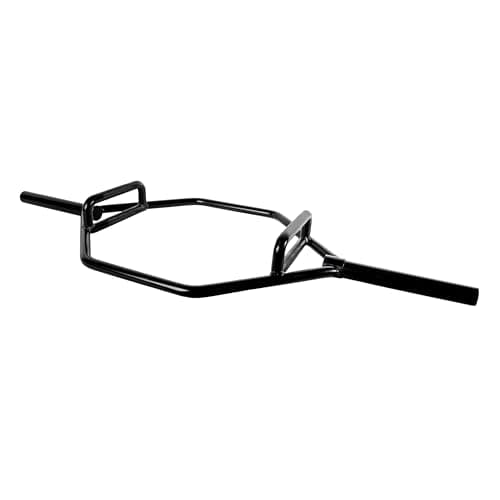
The CAP thick combo-grip hex bar is the one to buy: 1,000 lb published capacity and 9 inch loadable sleeves, which is more of both than anything else near the price. If you want to walk with the bar — carries, lunges, split squats — buy the CAP open-frame version instead and accept the 500 lb ceiling.
Why a trap bar earns its space
A hex bar puts the load in line with your body instead of in front of it. The practical effect is a pull that is easier on the lower back and easier to learn than a straight-bar deadlift, which is why it survives in home gyms long after other specialty bars get sold. The one other bar that survives on the same logic is the safety squat bar, which removes a joint problem rather than adding a novelty. It also does shrugs, farmer carries and — on an open frame — lunges, from one object.
It is a second bar, not a first one. If you do not yet own a full-length Olympic bar, buy that first from the barbell roundup; a trap bar cannot bench, cannot back squat and will not rack in J-hooks.
How we ranked them
Three published specs do almost all the work here, and two of them are routinely missing from listings.
Published capacity is the ceiling you will hit first. Trap-bar deadlifts are typically the heaviest thing a home lifter pulls, so a 400 lb bar is a genuinely shorter runway than a 1,000 lb one. Loadable sleeve length decides whether you can physically fit the plates, and it matters more with bumpers than iron because bumpers are wider per pound. Open versus closed frame decides whether the bar can do carries and lunges at all. Finish and handle options rank after those three.
The picks in context
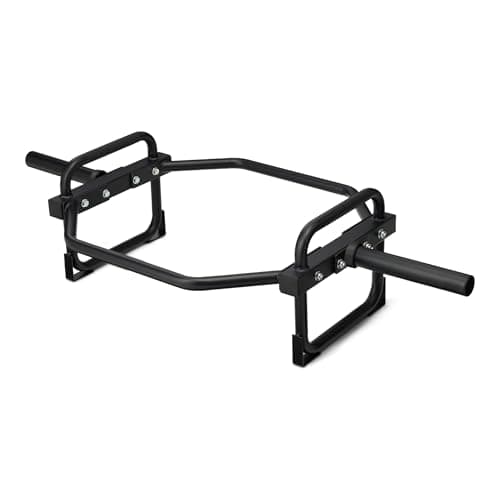
CAP thick combo grip (1,000 lb) — the default
The highest published capacity here, 9 inch loadable sleeves, a 26 inch interior opening and two handle positions rather than one. That last feature is quietly the most useful: you get a higher start and a longer pull from the same bar instead of buying two. The handles are 32 mm — thicker than a standard bar, which trains grip on the way past and is the one thing to be sure you want. Closed frame, so no walking.
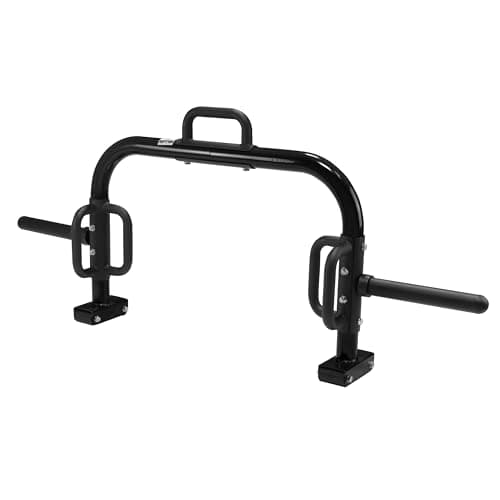
CAP Deluxe open trap bar (500 lb) — the versatile one
The open U-frame is the whole point. You can walk forward out of it, so farmer carries, walking lunges and split squats are all on the table. It is also the only bar here tested to ASTM standards rather than carrying a bare manufacturer number, and the integrated loading jacks lift the sleeves off the floor so plate changes stop being a wrestling match. The cost is 250 lb of capacity against the closed CAP bars.
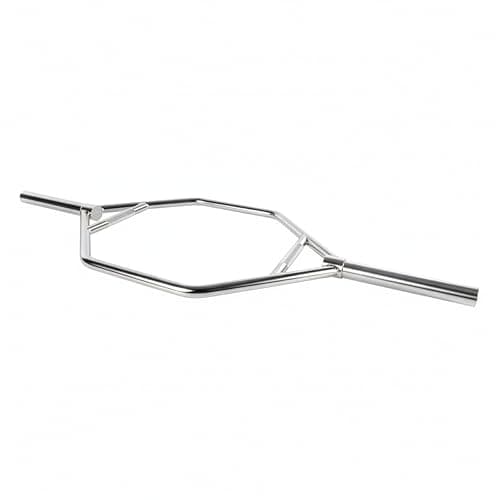
CAP flush neutral grip in chrome (750 lb) — for damp garages
The same frame numbers as the black bar in the specs that matter for loading — 9 inch sleeves, a 25 inch opening — in chrome instead of powder coat, which is the finish to want in a garage that sweats. The trade is the handles: CAP no longer lists a chrome combo bar, so this one has flush neutral handles only, the traditional trap-bar pull from the floor, and a 750 lb ceiling rather than 1,000. Chrome buys corrosion resistance, not versatility. The same logic we apply to curl bar finishes applies here.
Amazon Basics hex bar (500 lb) — cheapest with a real number
The lowest price here attached to a published capacity rather than an unstated one, which is the line we will not cross. The gap is information: no published loadable sleeve length, so you do not know how much you can fit until it arrives, and plain dual-grip handles with no height choice.
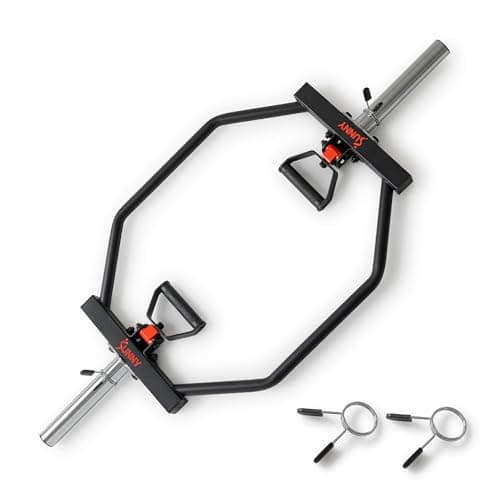
Sunny hex bar with swivel handles (400 lb) — for cranky wrists
Rotating handles let the wrist find its own angle through a heavy pull, and the 11 inch loadable sleeves are the longest in this roundup. The trade is the lowest published capacity here at 400 lb, which a strong puller will reach. Buy it for the wrists, not for the ceiling.
Open frame or closed?
| Closed hex | Open U-frame |
|---|
| Deadlifts and shrugs | Yes | Yes |
| Walking carries and lunges | No — the frame boxes your stride | Yes |
| Typical published capacity | Higher | Lower |
| Balance when set down loaded | More stable | Less stable |
| Getting in and out | Step over the frame | Walk in |
The honest rule: if the trap bar exists to pull heavy, buy closed. If it exists to add variety — carries, lunges, single-leg work — buy open and treat the lower capacity as the price of that variety.
One open-frame format is missing from the field above: the stand-up open trap bar, an open-back frame that stands upright for loading instead of lying flat. Synergee makes one, and Knurl Knock covers it alongside the same CAP and Sunny bars in its roundup of the best trap bars — worth a look if walking movements are the main reason you want one.
What a trap bar does not replace
It does not replace a straight bar. You cannot bench, back squat or overhead press with one, and it will not sit in rack J-hooks — the two bars are laid out side by side in trap bar vs straight bar. It also does not replace plates you do not own — a trap bar with nothing to load is an expensive frame. Buy it as an addition to a working barbell setup, which is the same advice we give about curl bars.