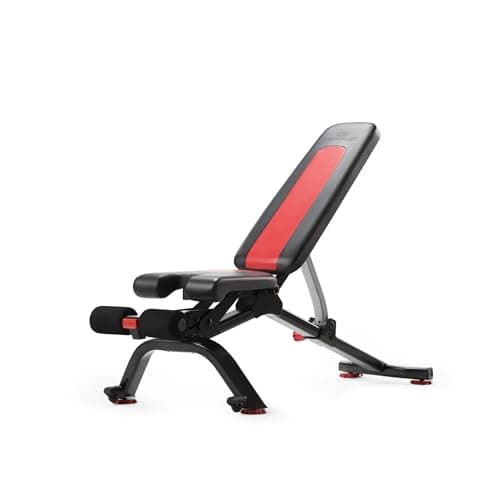
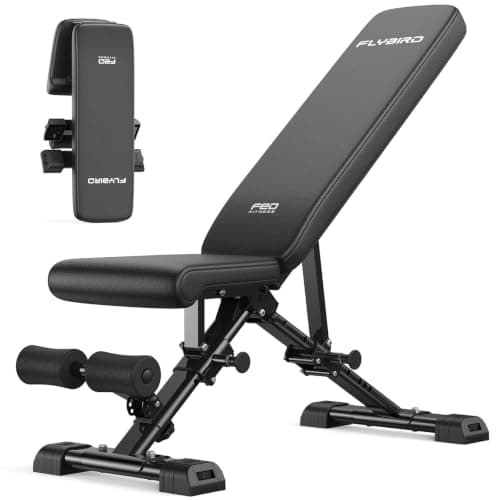
The best weight bench for tall lifters is the FLYBIRD WB5, because it is the only bench we rank that publishes a backrest length: 30 inches. It is for anyone over about six feet who wants their head supported at a steep incline and their hips supported when flat, and it adds an ASTM-certified 800 lb rating and a full incline-to-decline range. It is the budget pick too — nothing cheaper on this site publishes a pad dimension at all. If you want the widest pad rather than the longest, the BowFlex 5.1S is the comfort pick and stows upright.
Here is the problem this page exists for. Bench listings publish capacity ratings obsessively and pad dimensions almost never. Capacity is the spec that matters least to a tall buyer — your bodyweight plus the bar is nowhere near 800 lb — and pad length is the spec that decides whether the bench is usable. One of these five publishes it. We are not going to invent the other four.
Why length, not capacity, is the tall lifter's spec
Lie down on a short bench and two things happen. At a steep incline your head hangs past the top of the pad, so your neck carries the weight of your own skull on every rep. Flat, your hips drop off the bottom edge, which takes your glutes off the bench and your leg drive with them. Neither is dangerous in the way a failed capacity is dangerous; both make a bench you own feel wrong every session, which is why people replace them.
A 30 inch backrest supports the torso from tailbone to head for most adults. Shorter pads are common at the budget end because less vinyl and less steel costs less, and because the specification is invisible on a listing photo. This is the same reason we treat the pad as the bench's real wear part rather than the frame in how long weight benches last.
Measure these three things on yourself first
- Shoulder to tailbone, lying down. This is the length the backrest has to cover. If it is more than the published pad, the pad is too short — full stop.
- Seat height against your shin. On a bench press you want your feet flat with your shins roughly vertical. A tall lifter on a low bench ends up with knees high; on a tall bench, with heels up. Neither gives you leg drive.
- Arm length against your rack. This is the one people forget. A tall lifter with long arms needs the bar further off the chest at the start, which means the J-hook height on your rack matters as much as the bench. We cover rack-and-bench fit in the best benches for a power rack.
Pad width is a different problem from pad length
Width affects shoulder position rather than support. A narrow pad lets the shoulder blades sit back and down, which powerlifters want; a wide pad spreads load and is more comfortable for general pressing, which is what the BowFlex 5.1S publishes. Tall lifters often have broad shoulders and find narrow pads unstable, so if comfort rather than competition mechanics is the goal, the wide pad is the right call.
The 5.1S costs you the decline position — it publishes six back positions and no decline — and it stows upright with transport wheels, which is a genuine advantage in a shared room. The full detail is in our 5.1S review.
When the frame length matters more than the pad
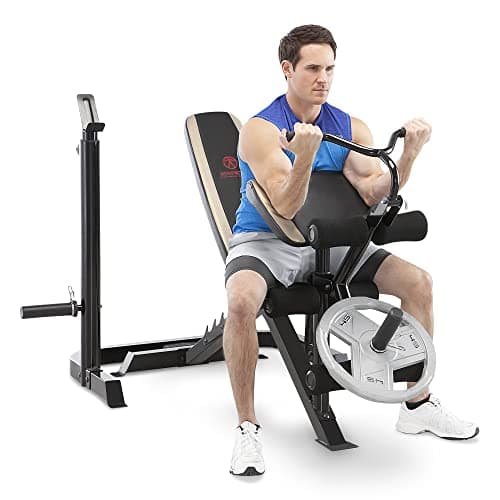
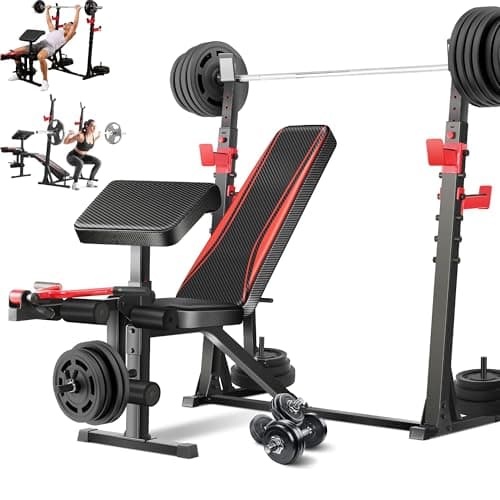
Two of these five are Olympic benches with uprights and a leg station built in, and they are here for a reason that is specific to tall buyers: a longer frame carries a longer pad and sets the bar catches further apart. The Marcy MD-879 publishes an adjustable back with a leg developer and an integrated squat rack, and it has been sold long enough that pads and parts are findable — which, on a bench with mechanisms, is most of the durability argument. The Aceshin publishes a 900 lb rating with leg extension, preacher curl and squat uprights.
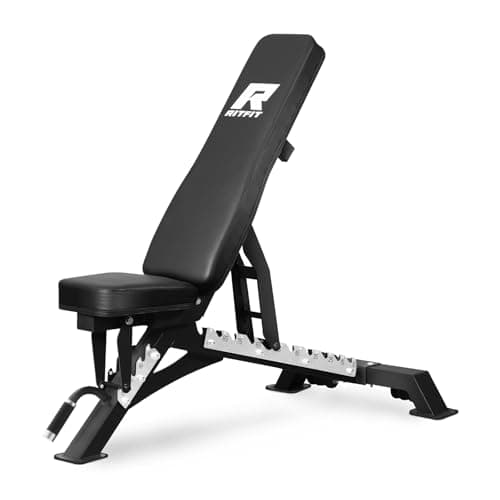
The RitFit is the pick if you press heavy and want margin: a stated 1,300 lb, full FID adjustment and a leg lock for secured decline work. Read that rating as a static manufacturer figure rather than a certification, which is the point of weight bench capacity explained.
Who each pick is for
FLYBIRD WB5 — over six feet, wants the published 30 inch pad and a certified rating, and wants it to fold. BowFlex 5.1S — broad shoulders, wants the widest and most comfortable pad, does not need decline. Marcy MD-879 — wants a long Olympic frame with uprights and a leg station, from a model old enough that pads are findable. RitFit — presses heavy, wants full FID travel and a leg lock. Aceshin — wants the most stations on a long frame for the least money.
If price is the binding constraint rather than height, the band-by-band picks are on the best weight bench under $200. The full ranking is on the best adjustable benches.