Buy the three-tier steel rack if you own more than about three pairs, the A-frame if you own fewer and floor space is tight, and check the published capacity before either. The single most common mistake in this category is putting iron hex dumbbells on a stand rated for light neoprene ones.
Why storage is worth buying at all
Dumbbells on the floor cause three specific problems, and only one of them is aesthetic.
They damage the floor. A hex dumbbell resting on its edge concentrates its whole weight on a small area, and moving it drags that edge. This is how rubber flooring gets gouged and how a concrete slab gets chipped — see our flooring guide.
They are a trip hazard in a room with a loaded barbell in it. That is not a hypothetical; the most likely thing to make you stumble while walking a bar back to the rack is a dumbbell you left out.
They rust from the floor up in a damp garage, for the same reason plates do — concrete wicks moisture. The full explanation is in how to clean rusty weight plates.
A rack solves all three for less than the price of one heavy pair.
What we rank on
- Published capacity. The number of pairs a rack can carry, in pounds. Most listings in this category do not state one, and that absence is itself a specification.
- Material. Welded steel is a permanent object. Molded plastic is not, and we say so plainly on the pick where it applies.
- Access. Angled tiers put every pair at a sensible pick-up height. Flat shelves make you bend into the rack, which is where shins meet steel.
- Footprint against capacity. A three-tier rack holds far more per square foot than an A-frame, and takes far more floor. Which wins depends entirely on your room.
The shapes, and who each suits
Three-tier rack
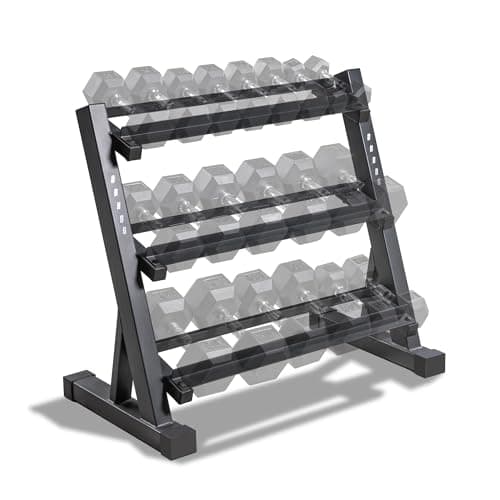
Three angled shelves, usually welded steel, holding five or six pairs. The standard commercial-gym shape, scaled down. Best access, most capacity, largest footprint. This is the right buy if you have a set of fixed hex dumbbells and intend to keep adding to it.
A-frame
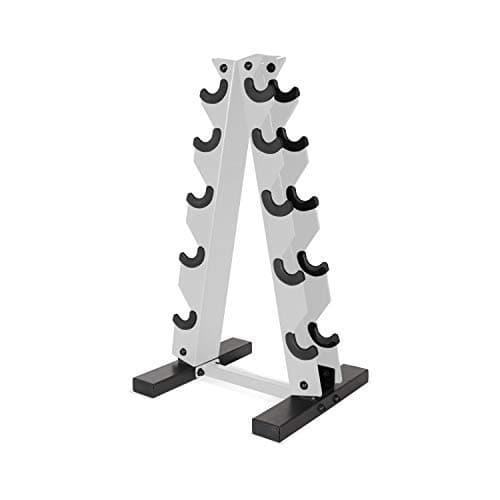
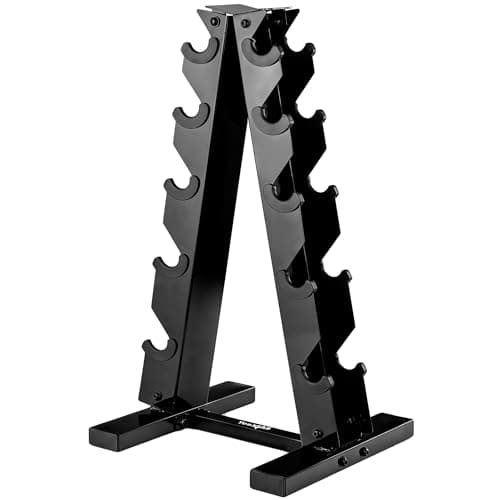
A narrow triangular frame holding two or three pairs on angled cradles. Far smaller footprint, much lower capacity. The right buy alongside an adjustable set when you have added one or two heavy fixed pairs, which is a common and sensible setup — the reasoning is in the heaviest adjustable dumbbells.
Vertical / compact stands
Small stands, often plastic, for light dumbbells. Genuinely useful for the 1–8 lb neoprene weights that otherwise roll around a room. Not for iron — and we have included one specifically to make that distinction, because the listings do not make it loudly enough.
The rack you already own
Some benches and power racks have dumbbell shelves or pegs built in. If yours does, use it first — it is free and it loads the base of the rack, which is a stability benefit. See rack attachments.
Match the rack to what you actually own
This category has one failure mode and it is a mismatch. Three checks prevent it.
1. Add up the weight, not the pairs
A rack rated for 150 lb takes roughly three mid-weight pairs, not the six pairs the photo shows. Total the dumbbells you own, add what you plan to buy, and compare that with the published figure. If there is no published figure, treat the rack as light-duty.
2. Check the cradle shape against your dumbbells
Hex dumbbells sit flat and stay put. Round rubber-coated dumbbells roll and need a deeper saddle. Adjustable dumbbells generally do not belong on a rack at all — they come with their own cradles, which are sized to the specific set.
3. Measure the width you can give it
A three-tier rack against a wall is fine. A three-tier rack that has to sit where you also walk with a loaded barbell is not. Footprint is the constraint that usually decides this purchase, and it is worth measuring before you shop rather than after.
Where to put it
Against a wall, near where you use them, on hard flooring rather than foam. Foam tiles compress under point loads and let a loaded rack rock — the same rule we give for racks and benches.
Load the heaviest pairs on the bottom tier. It lowers the center of gravity and it means the heavy lift is from a sensible height rather than from shoulder level.
What can actually go wrong
Very little, which is the appeal. A welded steel rack has no moving parts, no consumables and nothing to service — it belongs in the same durability tier as plate storage and bar storage, which is to say it is a buy-it-once object.
The two exceptions. Plastic racks crack, and when they do there is nothing to repair. And any rack loaded beyond its rating can splay at the joints — the failure is gradual and visible, so if a tier starts sagging, unload it and check the rating you were working to.