Skip to content
Plate&Rack

The frame · Power Racks & Cages

Are Functional Trainers Worth It?

Yes, if you already own a rack and your missing-exercise list is all cables. No, if you are buying one instead of a barbell. The answer turns on what you already have, not on the machine.

By Stephen V.Updated How we choose
#ad

We earn a commission when you buy through our Amazon links, at no extra cost to you. It never affects our rankings, and we say so when the cheaper product is the better buy. How this works.

A functional trainer is worth it when you already own a rack, a bar and plates, and the exercises you are missing are all cable exercises. For most people in that position the answer is not the biggest machine — it is a $100 lat attachment on the rack that is already standing there, and the ULTRA FUEGO is the pick that proves it. If an attachment will not fit your rack, or you want genuine two-path cable work, the Mikolo plate-loaded crossover is the machine to buy. The Marcy MFT-942 with its two 200 lb stacks is worth it only for the lifter who changes weight constantly and will genuinely use the speed.

What a cable machine actually adds

Write down the exercises you cannot currently do. Almost every home gym's list reads: lat pulldown, seated row, cable fly, face pull, triceps pushdown, cable lateral raise, and some rotational core work. All of those are cable exercises, and a barbell does not do any of them. That is a real gap, and it is the entire case for the machine.

What a cable machine does not add is a single compound lift. It will not squat, it will not deadlift, and it will not bench. Those are the lifts that build most of the strength and they need a rack, a bar and plates. If you do not own those yet, a functional trainer is the wrong first purchase at any price — start at what to buy, in what order.

The three ways to buy cables, ranked by what they cost you

RouteWhat you getFloor spaceWear itemsWho it suits
Lat attachment on your rackPulldown and low rowNone — uses the rackCable, pulleysAnyone whose rack takes one
Plate-loaded crossoverDual pulleys, full cable listA machine's worthCable, pulleysRack owners who want everything
Dual-stack trainerFull cable list, instant changesA machine's worthCable, pulleys, rods, pin, stackCircuit and drop-set training

The specs behind each row are quoted from the manufacturer listings in Sources. The column that decides it on this site is the wear-items column: a cable machine is the only category we rank where the product can become unusable because a part stopped being sold.

The case against, stated properly

It is a mechanism in a gym built on steel. A rack, a bar and plates have essentially nothing in them that wears. A cable machine has cables that fray, pulleys that seize, and — if it is stack-loaded — guide rods, bushings and a selector pin. We put real numbers on that in how long cable machines last.

Bands cover part of the list for almost nothing. Face pulls, pushdowns and pull-aparts are perfectly well served by a band anchored to a rack upright. If those three are your whole list, you do not need a machine.

A pull-up bar covers the pulling. If the reason you want a pulldown is that you cannot yet do pull-ups, that is a training problem with a free solution — band-assisted pull-ups on the bar you already own. If you can already do them, the pulldown adds a loading option, not a new movement.

The cheap ones are not cheap once you count plates. A plate-loaded machine needs plates. If you own a barbell set they are already there; if you do not, add a plate purchase to the price before you compare it against a stack machine.

The case for, when it holds

You train alone and want to train hard without a spotter. A cable cannot pin you. Everything on a cable machine can be taken to failure safely, which is not true of a bench press.

You want unilateral work. Two independent pulleys let each side load on its own path. A barbell cannot do that, and dumbbells only approximate it.

Constant tension through the whole range. A cable loads the top of a fly and the bottom of a curl in a way gravity-loaded free weights do not. Whether that matters to you is a training question, but it is a genuine difference, not marketing.

It is the last big purchase. A home gym with a rack, a bar, plates, a bench and cables is finished. There is no next machine. For a buyer who hates rebuying, that is worth something.

The answer, by situation

You own a rack with standard uprights: buy a lat attachment first. It is the cheapest cable work you will ever buy and it takes no floor. Fitment rules are on the attachments page.

Your rack will not take one, or you want crossover work: a plate-loaded trainer is worth it. You already own the resistance.

You train in circuits and change weight every forty seconds: a stack machine is worth it, and nothing else will do. Go in knowing the parts list.

You do not own a rack and a bar yet: no. Buy those. Come back in a year.

The short answer

Quick picks

#ProductBest forScorePrice
01
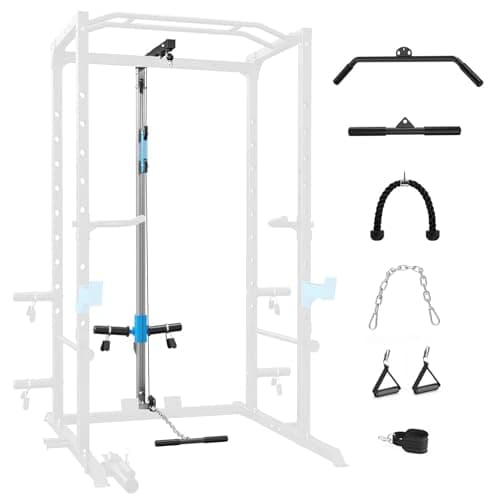
ULTRA FUEGO ULTRA FUEGO Lat Pulldown Attachment for Power Cage
ULTRA FUEGO Lat Pulldown Attachment for Power Cage

The cheapest honest way to add a pulley to a cage — provided it is the cage this was built for.

Cheapest rack pulley system
6.0
$99.99Amazon
02
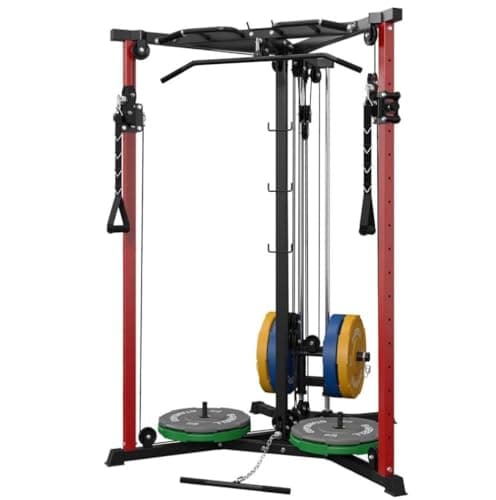
Mikolo Mikolo Cable Crossover Functional Trainer (17 positions)
Mikolo Cable Crossover Functional Trainer (17 positions)

Plate-loaded dual pulleys at a fraction of stack-machine money — and with far less inside it to break.

Best value functional trainer
8.0
$379.99Amazon
03
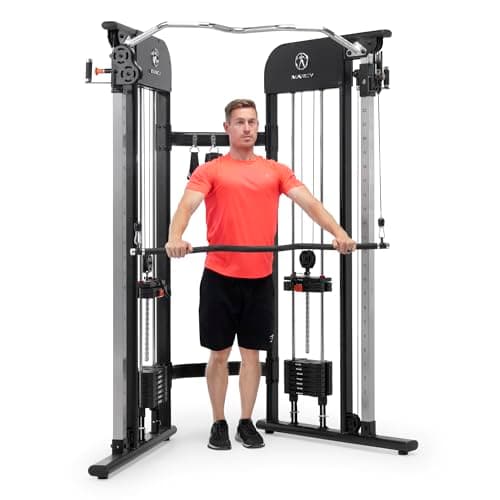
Marcy Marcy Multi-Functional Trainer MFT-942 (dual 200 lb stacks)
Marcy Multi-Functional Trainer MFT-942 (dual 200 lb stacks)

A real dual-stack trainer from a brand that has been selling parts for decades — the one here that behaves like a gym machine.

Best dual weight-stack trainer
7.4
$1,677.67Amazon

#ad · Live prices from the Amazon Product API, as of October 23, 2026. Where we have no verified live price, we show none — we would rather leave a gap than print a number that has rotted.

In detail

The picks, in full

01
ULTRA FUEGO ULTRA FUEGO Lat Pulldown Attachment for Power Cage

Cheapest rack pulley system

ULTRA FUEGO Lat Pulldown Attachment for Power Cage

Cable pulley systemFor ULTRA FUEGO power cageAttachment onlyMulti-function
6.0/10

The cheapest honest way to add a pulley to a cage — provided it is the cage this was built for.

Build & hardware
6
Fitment
4
Capacity
6
Completeness
5
Value
9

Pros

  • The lowest cost of any pulley system here by a wide margin
  • Attaches to a rack you already own, so it adds no floor space at all
  • A simple plate-loaded pulley has very little in it that can fail

Cons

  • The listing is explicit that it is designed for the maker's own power cage — treat cross-brand fitment as unproven, not likely
  • Attachment only, so budget for a lat bar and a row handle on top

Don't buy this if…

…you own another brand's rack and are hoping it fits. Measure your upright and your hole diameter first; a pulley bracket that almost fits is a pulley bracket that does not.

$99.99View on Amazon

Price as of October 23, 2026. Prices change — Amazon's is the one that counts.

#ad · we may earn a commission from this link to ULTRA FUEGO Lat Pulldown Attachment for Power Cage

02
Mikolo Mikolo Cable Crossover Functional Trainer (17 positions)

Best value functional trainer

Mikolo Cable Crossover Functional Trainer (17 positions)

17 adjustable pulley positionsHigh + low pulleyPlate-loadedLat pulldown + seated row
8.0/10

Plate-loaded dual pulleys at a fraction of stack-machine money — and with far less inside it to break.

Build & hardware
7
Cable + pulley quality
7
Range of positions
9
Serviceability
8
Value
9

Pros

  • Plate-loaded rather than stack-loaded, which removes the selector pin, the guide rods and the proprietary stack — the three parts that end a cable machine's life
  • Seventeen pulley heights cover the whole crossover and pulldown range rather than the two or three a budget tower offers
  • You load it with the Olympic plates already in the room, so nothing new is proprietary

Cons

  • Loading plates between exercises is slower than moving a selector pin, and that friction is real
  • The listing does not publish a cable rating or a steel gauge, so it is a home-duty frame rather than a commercial one

Don't buy this if…

…you want to change resistance between sets in two seconds. That convenience is exactly what a weight stack buys, and it is the reason to pay for one.

$379.99View on Amazon

$429.9912% off

Price as of October 23, 2026. Prices change — Amazon's is the one that counts.

#ad · we may earn a commission from this link to Mikolo Cable Crossover Functional Trainer (17 positions)

03
Marcy Marcy Multi-Functional Trainer MFT-942 (dual 200 lb stacks)

Best dual weight-stack trainer

Marcy Multi-Functional Trainer MFT-942 (dual 200 lb stacks)

Two 200 lb stacks2:1 cable ratioDual adjustable pulleysModel MFT-942
7.4/10

A real dual-stack trainer from a brand that has been selling parts for decades — the one here that behaves like a gym machine.

Build & hardware
8
Cable + pulley quality
8
Range of positions
9
Serviceability
7
Value
5

Pros

  • Two independent 200 lb stacks mean instant weight changes and genuine unilateral work, which is the whole point of a functional trainer
  • The 2:1 ratio is published rather than left vague, so you can actually compute what the handle weighs
  • Marcy is an established brand with a long model history, which matters most on the one product class where cables and pulleys eventually need replacing

Cons

  • By far the most expensive item we rank, and the cost per year only works if you genuinely use cables
  • A stack machine has guide rods, bushings, cables and a selector — more wear items than everything else on this site combined

Don't buy this if…

…you mostly squat, press and pull with a barbell. A rack, a bar and plates will outlive this by decades and cost a fraction of it — cables are an addition to that, not a replacement for it.

$1,677.67View on Amazon

Price as of October 23, 2026. Prices change — Amazon's is the one that counts.

#ad · we may earn a commission from this link to Marcy Multi-Functional Trainer MFT-942 (dual 200 lb stacks)

How to decide without regretting it

Write the list, then price the list

Six cable exercises is a machine. Two is a band. Three, where two of them are pulldown and row, is a lat attachment. Do this before you look at a single listing and the decision usually makes itself.

Check the rack you own before you shop

Upright size, hole diameter and hole spacing decide whether an attachment fits. If yours are standard, you can have pulldowns for a fraction of a machine's price this week.

Ask the replacement-cable question before you pay

It is the one question that separates a fifteen-year machine from a five-year one. If the brand cannot tell you what the replacement cable costs, assume you will be having one made and price that in — see replacement parts.

Run the cost-per-year number

A machine used three times a week for fifteen years is cheap. The same machine used twice and then ignored is the most expensive thing in the room. Our cost-per-year method is the sanity check we apply to every purchase on this site, and cables are the category it most often fails.

Buy the mechanism you will actually use

A stack is worth paying for only if the speed changes how you train. Otherwise plate loading is cheaper, smaller and has less to break. The full comparison is in plate-loaded vs weight-stack.
How we picked

We do not run a testing lab

We compiled manufacturer specifications, read the published warranties, checked the relevant standards and aggregated owner reviews, then scored each product against a published rubric. The scores are judgments from documented research — they are not measurements we took, because we do not run a lab and we are not going to pretend we do. Where a number came from a manufacturer or a standard, we name it and link it in Sources.

Questions

Frequently asked

Are functional trainers worth it for a home gym?

They are worth it once you already own a rack, a barbell and plates, and the exercises you are missing are cable exercises — pulldowns, rows, flies, pushdowns and unilateral work. They are not worth it as a first purchase, because they do not squat, bench or deadlift.

Is a functional trainer better than free weights?

Neither is better; they do different work. Free weights build the compound lifts and have almost nothing that wears out. Cables add constant tension, safe-to-failure sets and independent-path unilateral work. Most finished home gyms have both.

What is the cheapest way to get cables in a home gym?

A lat pulldown attachment bolted to a rack you already own, which costs a fraction of a machine and uses no extra floor space. After that, a plate-loaded crossover, because you supply the resistance from the plates already in the room.

Can a functional trainer replace a gym membership?

On its own, no — it has no barbell. A rack, a bar, plates, a bench and a cable station together cover essentially everything a commercial gym offers in the strength room, which is the full comparison we run in home gym vs gym membership.

How long will a home functional trainer last?

The frame will outlive you; the cable will not. Expect to replace a cable at some point in a decade of regular home use and to re-grease or replace pulleys after that. A plate-loaded machine has nothing else to fail; a stack machine adds rods, bushings and a pin.

Keep reading

Receipts

Sources

We do not run a testing lab, and we do not pretend to. Every spec, warranty term and standard above is the manufacturer's or a published source, cited and linked. Where we could not verify something, we say so on the page rather than quietly leaving it out. Read our full method.