Skip to content
Plate&Rack

The frame · Power Racks & Cages

The Best Functional Trainers for Small Spaces

A full crossover machine wants a room of its own. These five put a real cable system on a wall, in a corner, or inside a frame you already own — and four of them give the floor back.

By Stephen V.Updated How we choose
#ad

We earn a commission when you buy through our Amazon links, at no extra cost to you. It never affects our rankings, and we say so when the cheaper product is the better buy. How this works.

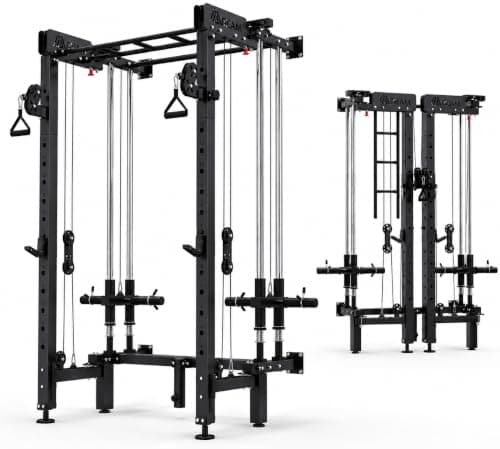
Buy the Mikolo folding wall-mounted rack with cable crossover and lat if you want the most gym per square foot: it is a squat rack and a cable station in the same wall footprint, and it still folds flat between sessions. Buy the GOIMU WM3-V4 if you want the most configurability on a wall and can accept the newest brand name here. Buy the Mdeam if dual independent pulleys matter more than the brand trail. Buy the RUNFREELY if you cannot drill into a wall and need the smallest freestanding cable rack. And buy the Mikolo lat and low-row tower if you own a rack that will not take an attachment — it is the only pick here that needs neither a wall nor a cage.

What a small space actually rules out

A proper functional trainer — two towers, two stacks, a span wide enough for a standing fly — is roughly the footprint of a small car, and it never moves again. Those machines are ranked on our functional trainers page, and if you have the room one of them is still the better buy. This page exists because most home gyms do not have the room, and the honest answer in a one-car garage, a spare bedroom or a basement corner is a different shape of product entirely.

There are three shapes that work in a tight room, and they are the three ranked below:

  • A folding wall rack with pulleys built in. The cable towers are part of the folding structure, so the whole machine swings back against the wall. You give up nothing in floor space when you are not training, and you give up the ability to walk behind the uprights when you are.
  • A compact freestanding cable rack. Smaller than a crossover cage, bolts together on the floor, drills into nothing. It stays where you build it, so the footprint is permanent — but it is the only option for a renter with a wall they cannot touch.
  • A standalone lat and low-row tower. Not a crossover at all: one cable, two exercises, a fraction of the footprint. It covers the pulling work a barbell cannot, which is most of why people want cables in the first place.

What we rank on, in this order

Footprint when folded comes first, because that is the entire reason this page exists. Then the pulley system — independent dual pulleys do things a single stack physically cannot, and they are the difference between a cable machine and a lat tower with ambitions. Then function count, then the brand trail, because a cable machine is the one product class on this site where parts availability decides the service life. Cables, pulleys and cable ends are wear items; steel is not.

The five, side by side

As publishedMikolo folding cableGOIMU WM3-V4Mdeam foldingRUNFREELYMikolo lat tower
MountingWall, folds flatWall, folds flatWall, folds flatFreestandingFreestanding
Cable systemCrossover + latDual independent pulleysDual pulley systemIntegrated pulleyLat pulldown + low row
ResistancePlate-loadedPlate-loadedPlate-loadedPlate-loadedPlate-loaded
Function modes stated55Not publishedNot published2 (pulldown, row)
Doubles as a squat rackYesYes, cage-styleYesYesNo
Steel gauge publishedNot publishedNot publishedNot publishedNot publishedNot published
Needs wall framingYesYesYesNoNo

Every cell is quoted from the manufacturer listing linked in Sources. Where a listing does not state a figure the cell says so — none of these five publishes a steel gauge, which is normal in this category and is exactly why we rank on mounting and pulley design rather than on steel.

Every one of these is plate-loaded, and in a small room that is good news

Not one machine on this page has a weight stack. That is not a compromise we are papering over — it is the only way the category works in a small footprint, because a stack needs a tower tall enough to house it and guide rods running the full height of the travel. Plate-loaded cables hang the plates you already own off a carriage, which adds no structure at all.

It also removes the three parts that end a cable machine's life: the selector pin, the guide rods and the proprietary stack. We work the trade-off through in full on plate-loaded vs weight-stack cable machines. The short version for a small room: you lose two-second weight changes, and you gain a machine that fits, costs a fraction as much, and has almost nothing proprietary inside it.

The wall is the specification nobody checks

Three of these five hang on a wall, and the wall is doing the work. A folding rack transfers the load of a loaded bar into the studs it is lagged to, which means you need framing — real dimensional lumber, or masonry — and you need to find it accurately. Drywall anchors are not an option at any price or any load.

If your wall is masonry you need sleeve or wedge anchors rated for the load rather than lag screws; the method is the same one we describe for a floor in how to anchor a squat rack. If your wall is a rented partition you may not drill, that eliminates three of the five picks and the RUNFREELY or the Mikolo tower is your answer. See building a home gym in an apartment for the rest of the renter constraints.

When the honest answer is an attachment, not a machine

If you already own a power rack with 2 × 2 or 3 × 3 uprights, the cheapest and stiffest cable station you can buy is a lat tower that bolts to it. It adds no floor space at all, because the rack is already standing there. The fitment rules — upright size, hole diameter, hole spacing — and the towers worth buying are on the lat pulldown attachments page. Read that before you buy anything here: if your rack takes an attachment, that is the answer and this page is the fallback.

A compact machine still needs a working envelope rather than just a footprint, and almost no listing in this category publishes either. The measuring method behind this page — cable travel, ceiling, frame and loading access — is on how much space a functional trainer needs.

The short answer

Quick picks

#ProductBest forScorePrice
01
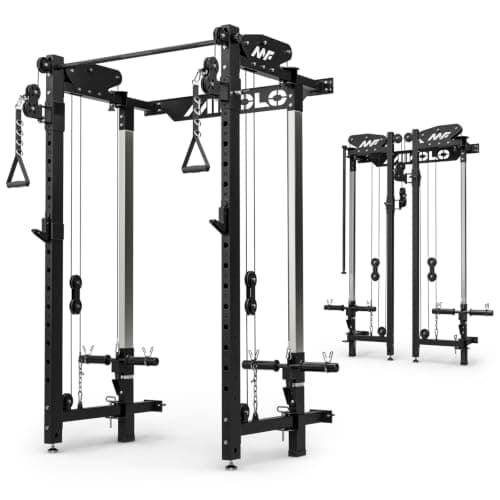
Mikolo Mikolo Folding Wall-Mounted Rack with Cable Crossover & Lat
Mikolo Folding Wall-Mounted Rack with Cable Crossover & Lat

A folding rack and a functional trainer in the same wall footprint — the most gym per square foot here.

Best folding rack with cables
8.0
$409.99Amazon
02
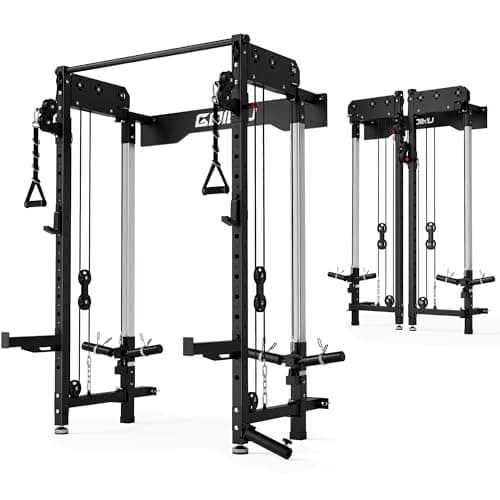
GOIMU GOIMU WM3-V4 Folding Wall-Mounted Rack
GOIMU WM3-V4 Folding Wall-Mounted Rack

A well-specified folding trainer let down only by being the newest name on this list.

Most function modes
7.8
$349.99Amazon
03
Mdeam Mdeam Folding Wall-Mounted Power Rack (Dual Pulley)
Mdeam Folding Wall-Mounted Power Rack (Dual Pulley)

Dual independent pulleys on a folding frame, at the price most brands charge for a single cable.

Best value folding rack with pulleys
7.8
$299.99Amazon
04
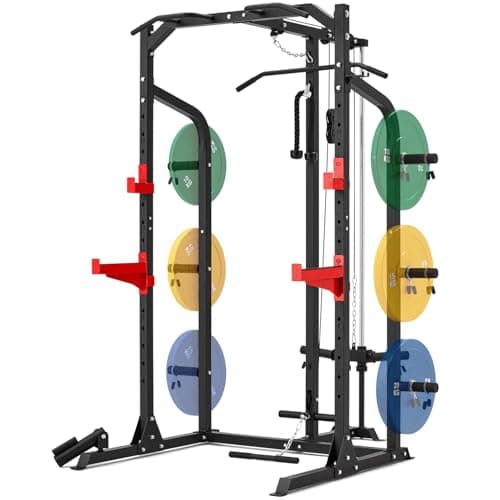
RUNFREELY RUNFREELY Power Rack with Pulley System
RUNFREELY Power Rack with Pulley System

A compact cable rack for the garage bay that has to stay a garage bay.

Smallest cable rack
7.2
$199.99Amazon
05
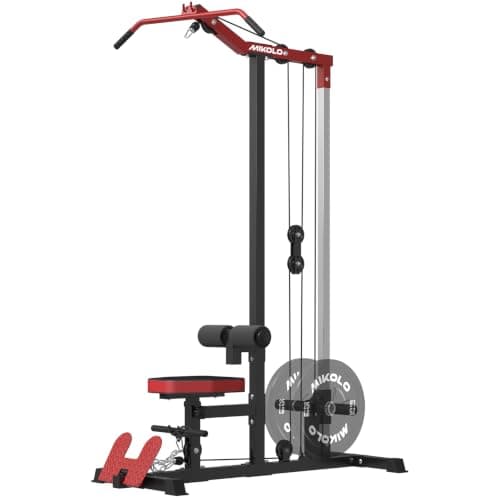
Mikolo Mikolo Lat Pulldown & Low Row Cable Machine
Mikolo Lat Pulldown & Low Row Cable Machine

A freestanding lat tower for anyone whose rack will not take an attachment — no fitment question to get wrong.

Best freestanding lat tower
7.6
$229.99Amazon

#ad · Live prices from the Amazon Product API, as of October 23, 2026. Where we have no verified live price, we show none — we would rather leave a gap than print a number that has rotted.

In detail

The picks, in full

01
Mikolo Mikolo Folding Wall-Mounted Rack with Cable Crossover & Lat

Best folding rack with cables

Mikolo Folding Wall-Mounted Rack with Cable Crossover & Lat

Cable crossoverLat pulldown5 function modesWall-mounted folding frame
8.0/10

A folding rack and a functional trainer in the same wall footprint — the most gym per square foot here.

Build & steel
7
Capacity
7
Expandability
9
Footprint
9
Value
8

Pros

  • Adds a cable crossover and lat pulldown to a folding rack, covering the two things free weights alone can't
  • Five adjustable function modes, so one wall does squats, presses, pulldowns and crossovers
  • Still folds flat — the cable towers are part of the folding structure, not a bolt-on that blocks it

Cons

  • Cables, pulleys and cable ends are wear parts; this is the least buy-it-for-life piece in the category
  • More assembly and more wall anchoring than a plain folding rack

Don't buy this if…

…you only barbell train. Every cable in this rack is a future maintenance item, and the plain folding rack is cheaper, stiffer and has almost nothing to service.

$409.99View on Amazon

$499.9918% off

Price as of October 23, 2026. Prices change — Amazon's is the one that counts.

#ad · we may earn a commission from this link to Mikolo Folding Wall-Mounted Rack with Cable Crossover & Lat

02
GOIMU GOIMU WM3-V4 Folding Wall-Mounted Rack

Most function modes

GOIMU WM3-V4 Folding Wall-Mounted Rack

Dual independent pulleys5 function modesFolding cageFunctional trainer
7.8/10

A well-specified folding trainer let down only by being the newest name on this list.

Build & steel
7
Capacity
7
Expandability
9
Footprint
9
Value
7

Pros

  • Dual independent pulley system plus five function modes — the most configurable folding rack here
  • Cage-style folding frame rather than bare uprights, so you get catch positions as well as cable work
  • Sits below the price of a comparable free-standing rack plus a separate functional trainer

Cons

  • The least-established brand in this roundup; treat spare-part supply as unproven
  • Complex assembly — pulleys, cables and a folding hinge all have to be set up correctly

Don't buy this if…

…you want the simplest thing that works. Every pulley and mode here is another part that can fail; a plain folding rack does the barbell work with a fraction of the mechanism.

$349.99View on Amazon

$439.9920% off

Price as of October 23, 2026. Prices change — Amazon's is the one that counts.

#ad · we may earn a commission from this link to GOIMU WM3-V4 Folding Wall-Mounted Rack

03
Mdeam Mdeam Folding Wall-Mounted Power Rack (Dual Pulley)

Best value folding rack with pulleys

Mdeam Folding Wall-Mounted Power Rack (Dual Pulley)

Dual pulley systemWall-mounted foldingSquat + press stationsSpace-saving frame
7.8/10

Dual independent pulleys on a folding frame, at the price most brands charge for a single cable.

Build & steel
7
Capacity
7
Expandability
8
Footprint
9
Value
8

Pros

  • Two independent pulleys let each arm work on its own path, which single-stack towers can't do
  • Priced below the cable-equipped folding racks from the better-known brands
  • Folds against the wall like the rest of the category, so the cables cost you no floor space

Cons

  • A smaller brand with a thinner parts and support trail than Mikolo or Titan — a real risk on a keeper purchase
  • The listing does not publish a steel gauge, so confirm the rated capacity before loading heavy

Don't buy this if…

…parts availability in five years is your first question. This is a young listing; if you want to still be buying J-hooks for it in 2031, buy the brand with the longer trading history.

$299.99View on Amazon

Price as of October 23, 2026. Prices change — Amazon's is the one that counts.

#ad · we may earn a commission from this link to Mdeam Folding Wall-Mounted Power Rack (Dual Pulley)

04
RUNFREELY RUNFREELY Power Rack with Pulley System

Smallest cable rack

RUNFREELY Power Rack with Pulley System

Integrated pulley systemSquat rack frameHome gym footprintBolt-together
7.2/10

A compact cable rack for the garage bay that has to stay a garage bay.

Build & steel
6
Capacity
7
Expandability
7
Footprint
8
Value
8

Pros

  • Adds pulley work to a rack in a noticeably smaller footprint than the full crossover cages
  • Bolt-together frame that a single person can build and, if needed, take apart and move
  • Priced as a rack, not as a rack plus a machine

Cons

  • Less cable range and fewer attachment points than the bigger crossover cages
  • A thin published spec sheet — no gauge figure, so judge it on the rating and the price

Don't buy this if…

…you have the ceiling and floor for a full cage. A full enclosure with safeties is a safer and stiffer platform, and a lat tower can be bolted on later.

$199.99View on Amazon

Price as of October 23, 2026. Prices change — Amazon's is the one that counts.

#ad · we may earn a commission from this link to RUNFREELY Power Rack with Pulley System

05
Mikolo Mikolo Lat Pulldown & Low Row Cable Machine

Best freestanding lat tower

Mikolo Lat Pulldown & Low Row Cable Machine

Lat pulldown + low rowLeg hold-downPlate-loadedFreestanding frame
7.6/10

A freestanding lat tower for anyone whose rack will not take an attachment — no fitment question to get wrong.

Build & hardware
7
Fitment
9
Capacity
6
Completeness
8
Value
8

Pros

  • Freestanding, so it does not care what rack you own or what hole pattern it uses
  • Covers both the pulldown and the seated row from one frame, which is most of what a cable station is for
  • The leg hold-down is the part budget towers skip, and without it heavy pulldowns lift you off the seat

Cons

  • A second frame takes floor space a rack attachment would not
  • The listing does not publish a steel gauge or a rated pull capacity, so heavy pullers should treat it as a home-use tower

Don't buy this if…

…your rack takes a lat attachment from its own maker. Bolting the tower to the rack you already anchored is stiffer, cheaper and takes no extra floor.

$229.99View on Amazon

Price as of October 23, 2026. Prices change — Amazon's is the one that counts.

#ad · we may earn a commission from this link to Mikolo Lat Pulldown & Low Row Cable Machine

How to buy a cable machine for a small room

Measure the swing, not the footprint

A folding rack's listed depth is how far it stands off the wall when open. What you actually have to clear is that depth, plus the length of your barbell arc, plus your own body behind it — call it the open depth plus four feet. Tape it out on the floor before you order.

Find the studs before you look at the price

The purchase decision on a wall rack is made by your wall, not by the listing. Locate framing, confirm it is real lumber and not a furring strip over masonry, and confirm the stud spacing matches the rack's mounting plate. If any of that fails, buy freestanding and stop reading the folding listings.

Count the pulleys, then count the heights

Two independent pulleys let each arm travel on its own path, which is what makes unilateral cable work possible. A single stack with two handles is a lat tower. After the pulley count, the number of pulley heights decides how many exercises you actually get out of the frame.

Plan for the cable, because the cable is what fails

Steel frames do not wear out. Cables fray, pulleys seize and cable ends round off. Before buying, check that the brand sells a replacement cable, or that the cable is a standard length of coated aircraft cable a rigging shop can make up. We walk the service life through in how long cable machines last.

Do not buy cables to replace a rack

Cables are an addition to barbell training, not a substitute for it. If you do not yet own a rack and a bar, buy those first — they cost less, do the compound work, and have essentially nothing in them to fail. Start at the power racks hub and come back for cables later.
How we picked

We do not run a testing lab

We compiled manufacturer specifications, read the published warranties, checked the relevant standards and aggregated owner reviews, then scored each product against a published rubric. The scores are judgments from documented research — they are not measurements we took, because we do not run a lab and we are not going to pretend we do. Where a number came from a manufacturer or a standard, we name it and link it in Sources.

Questions

Frequently asked

What is the smallest functional trainer for a home gym?

Of the machines we rank, the Mikolo lat pulldown and low-row tower has the smallest permanent footprint, because it is a single-cable tower rather than a crossover. If you want a true crossover with two pulleys, the smallest option is a wall-mounted folding rack — the Mikolo, GOIMU or Mdeam — because the footprint drops to the thickness of the folded frame between sessions.

Can you put a functional trainer in a one-car garage?

Yes, if it folds or if it is a compact rack. A full dual-stack trainer will take the bay and keep it. A wall-mounted folding rack with pulleys gives the bay back when you are done, which is the difference between a garage gym and a garage you can no longer park in.

Do wall-mounted cable racks have to be bolted into studs?

Always. The entire load path runs through the wall fasteners. Lag into real framing, or use masonry anchors rated for the load — never drywall anchors of any kind. If you cannot drill the wall, buy a freestanding option instead.

Is a lat tower enough, or do I need a crossover?

If what you want from cables is pulldowns and rows, a lat tower is enough and costs a fraction as much. A crossover earns its money when you want standing chest flies, cable work on two independent paths, and adjustable pulley heights for pressing and pulling angles a barbell cannot reach.

Are plate-loaded cable machines worse than weight stacks?

They are slower to change and they have far less to go wrong. A stack buys you a two-second weight change; plate loading buys you no selector pin, no guide rods and no proprietary stack to source in fifteen years. In a small room the choice is made for you — stacks need the tower height.

Will a folding cable rack hold a loaded barbell?

The folding racks here are sold for barbell work and include catch positions, but the rating only means anything if the wall mounting is sound. Treat the published rack rating as a ceiling on the hardware and the wall framing as the real limit, and bolt it properly.

Keep reading

Receipts

Sources

We do not run a testing lab, and we do not pretend to. Every spec, warranty term and standard above is the manufacturer's or a published source, cited and linked. Where we could not verify something, we say so on the page rather than quietly leaving it out. Read our full method.