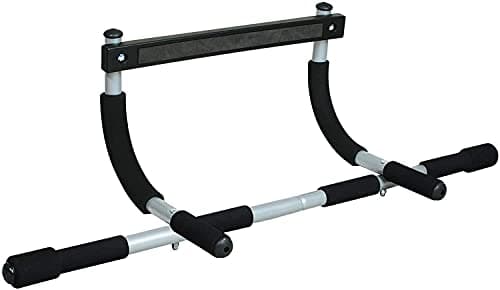
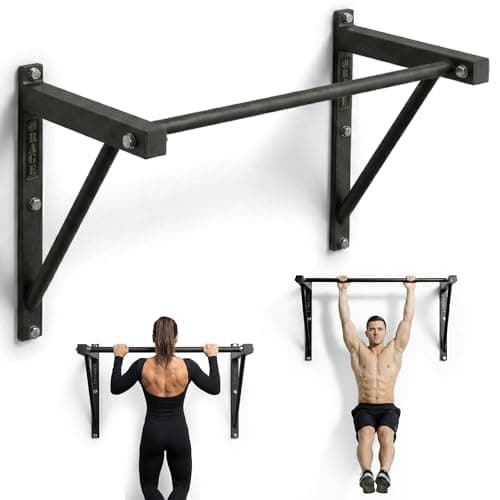
The best pull-up bar under $500 is the Rage Fitness R2 wall mount, and it costs a fraction of that ceiling — it is the one bar here that publishes a steel gauge, a 500 lb rating and a 36 inch standoff. It is for the lifter who owns the wall and wants to bolt something up once. The budget pick is the Iron Gym doorway bar, which hooks over a door frame, tightens under your own bodyweight and leaves nothing behind when you move out. The interesting part of a $500 budget, though, is the gap: a bar uses up well under a quarter of it.
So this page answers the query literally and then answers the question behind it. If your budget genuinely is $500 and pull-ups are the goal, the three middle picks — a freestanding tower, a full-size rack and a complete cage — all land inside it, and each one adds movements a bar cannot. That is not an upsell. It is the same arithmetic we run on power rack versus power tower.
Why almost nothing in this category costs $500
A pull-up bar is a length of tube, two mounting plates and some bolts. There is no mechanism, no bearing, no coating that perishes and no upholstery. The price spread across the whole category is narrow because there is very little to charge for, which is also why a pull-up bar is one of the few pieces of gym equipment that genuinely is a buy-it-once item. Our main pull-up bar ranking compares the bars against each other on mount type and clearance; this page exists because a $500 search is not really a search for a bar.
What separates the bars is where the load goes. A wall mount puts your bodyweight into studs or masonry, which is the strongest anchor most homes have. A ceiling mount puts it into joists and gives you open air behind your back. A doorway bar puts it into trim and the wall above an opening, which is only ever as good as the carpentry. And a freestanding frame puts it into the floor, which is why a tall tower with a small base wants to be against a wall.
What to look for, in the order it matters
1. The surface you actually have
This decides more than any spec. If you cannot drill — a rental, a partition wall, a finished basement with unknown framing — then the choice is a doorway bar or a freestanding frame, and no amount of published capacity changes that. If you can drill into studs or concrete, a bolted bar is stronger, quieter and cheaper than everything else here.
2. Clearance behind your back
A bar flush to a wall makes leg raises and any kind of swing impossible. The Rage states 36 inches of standoff, which is generous; the doorway bars give you the depth of the door frame and nothing more. A ceiling mount or a rack-mounted bar sidesteps the problem entirely because there is nothing behind you.
3. Whether a bar is the right purchase at all
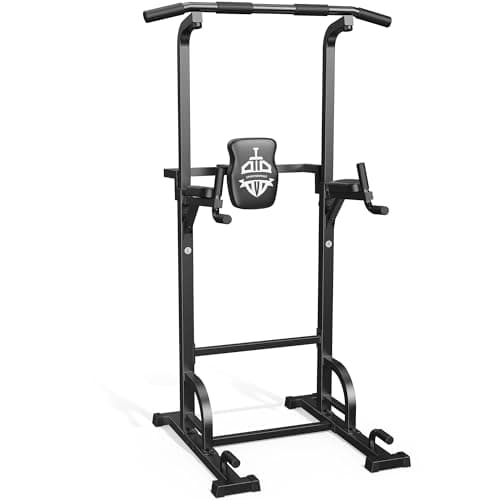
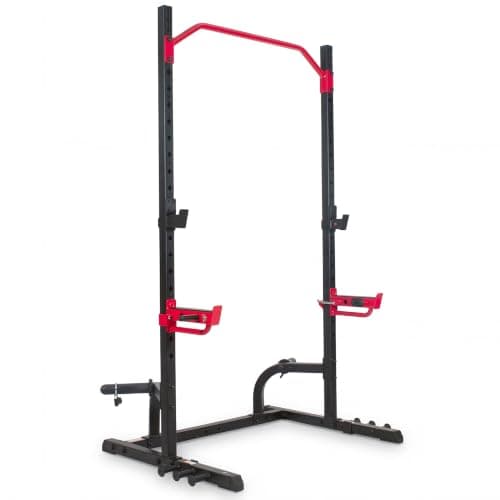
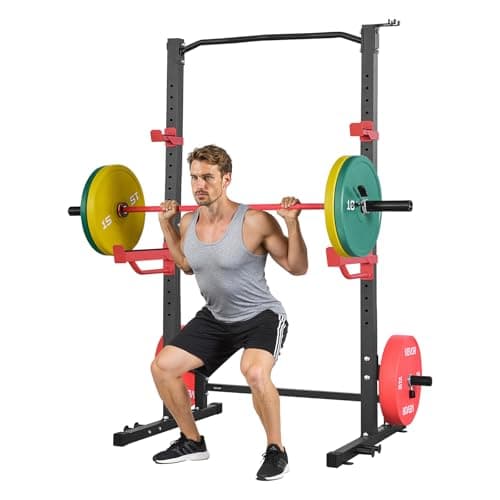
Here is the part that makes this page worth reading. Nearly every rack we rank includes a pull-up bar, and under a $500 ceiling that includes a full-size open rack and a complete enclosed cage with J-hooks and safeties in the box. If you own or intend to own a barbell, the bar is already paid for inside the rack, and buying a standalone bar first is money you spend twice. The SPORTSROYALS tower is the middle road: it covers pull-ups, dips and knee raises in a footprint smaller than any cage, with nothing that adjusts under load.
Published ratings, and what they are worth
Two of the five picks publish nothing. That is normal in this category and we are not going to invent a figure to fill the column. Where a number exists, read it as a static rating from the manufacturer rather than a tested certification: the VEVOR cage publishes a 1,000 lb total, the Rage a 500 lb, the Iron Gym a 300 lb. For pull-ups specifically, every one of those clears any human comfortably, and the rating stops being the interesting number. What matters instead is the mount, which is why the comparison table above leads with it.
One honest caveat on the cage: a 60 lb frame with a 1,000 lb rating is telling you about the steel, not about stability. Load the plate posts and keep it against a wall — the same advice we give on the budget rack page.
Who each pick is for
Rage Fitness R2 — you own the wall, you want the published numbers, and you want it to be the last pull-up bar you buy. SPORTSROYALS tower — you cannot or will not drill, and you want dips as well as pull-ups. Sunny full-size rack — the pull-up bar is one reason among several and you intend to squat and bench too. VEVOR cage — you want the enclosed cage, the safeties and the pull-up handle in one box, and you are happy for the frame to be permanent. Iron Gym doorway bar — you rent, or you want the whole thing gone in five seconds.
If the goal is specifically bodyweight work rather than barbell work, the fuller treatment is on the power tower roundup and the best power towers for calisthenics.