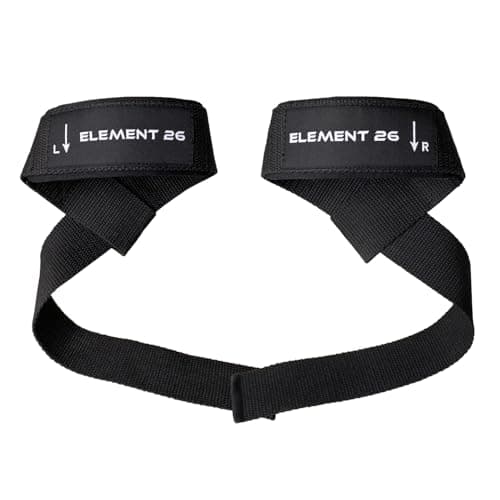
Lifting straps are the only item on this site where the buy-it-for-life version costs about as much as a takeout coffee — and where almost nobody buys it, because the category is sold on color options instead of construction. A plain cotton strap has no buckle, no pad, no plastic and no moving parts. The failure mode is fraying where the webbing wraps the bar, which takes years and announces itself long before it matters. That makes a strap one of the best value-per-decade purchases in a home gym, and it is why this page ranks on material and published length rather than on brand.
What straps do is simple and worth being precise about: they transfer the load of a pull from your fingers to your wrists, so your grip stops being the thing that ends the set. On a heavy deadlift, a row or a shrug that is the difference between training your back and training your forearms. They are not a substitute for grip work and they are useless on a press, a squat or anything you have to let go of in a hurry. Every price here is read live from the Amazon Product API and date-stamped underneath, because any page that types a number into prose is wrong a week later.
How we ranked them
Four criteria, in this order, and they are the same four we would use on any piece of textile gear that lives under load:
- Material. Cotton webbing, leather, or a neoprene-and-cotton hybrid. Cotton grips the knurl and does not creep under load the way nylon webbing does; leather does not fray at all and outlives cotton by years; neoprene is comfort, not structure.
- Published length and width. Length decides how many wraps you get on a standard 28 mm bar, and two wraps is what a maximal pull wants. Width decides whether the strap folds into a cord against your wrist. Most listings in this category publish neither, which is itself a ranking signal.
- Failure mode. What breaks, and whether you can see it coming. Plain webbing frays visibly. A stitched-on pad delaminates. A sized cuff with a stiffened tongue has a hinge point. Visible, gradual failure beats sudden failure every time.
- What the listing actually commits to. A brand that prints 21.5 in by 1.5 in has made a claim you can hold it to. A brand that prints four color choices and no dimensions has told you what it would rather discuss.
We do not run a lab and we do not pretend to. These are judgments from the published listings, the materials involved and aggregated owner reports, scored against our published rubric.
The five, side by side
| As published | Element 26 | Dark Iron | Gymreapers | Versa Gripps PRO | Harbinger |
|---|
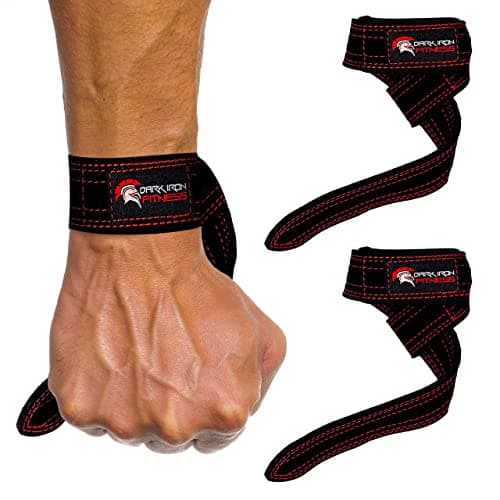
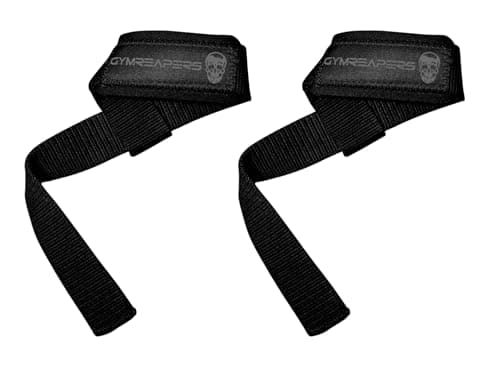
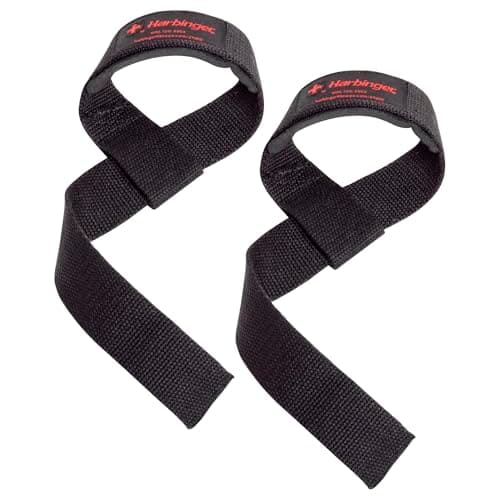
| Material | 100% cotton | Suede leather | Cotton + neoprene | Cuff with stiff tongue | Cotton + NeoTek pad |
| Published length | Not published | Not published | 18 in | Not published (sized M/L) | 21.5 in |
| Published width | Not published | Not published | Not published | Not published | 1.5 in |
| Padding | None | None | Neoprene | Built-in arch support | NeoTek |
| Provenance claim | Not published | Not published | Not published | Made in the USA, since 1998 | Not published |
| Style | Wrap (loop) | Wrap (loop) | Wrap (loop) | Cuff and tongue | Wrap (loop) |
Every cell is quoted from the manufacturer listing linked in Sources, and where a listing states nothing the cell says so rather than guessing. Note the shape of that table: two of five publish a length, one publishes a width, and not one publishes a breaking strength. For an item you hang a maximal deadlift from, that is a remarkable amount of silence — and it is why the material and the construction have to carry the decision.
The three strap styles, and who each is for
The loop (or lasso) strap
A length of webbing sewn into a loop. You put your hand through, wrap the tail around the bar once or twice, and close your hand over it. Four of the five picks here are this type, and it is the type to buy first: the cheapest, the most secure when wrapped twice, and the only one with no components. The learning curve is real but short — a session or two.
The figure-eight strap
Two sewn loops in a figure eight: one over the wrist, one under the bar. Almost impossible to drop and almost impossible to release in a hurry, which is why strongman competitors use them for maximal deadlifts and why we are not ranking one here. If you train alone and pull heavy, a strap you cannot bail out of is a bad default.
The cuff-and-tongue grip
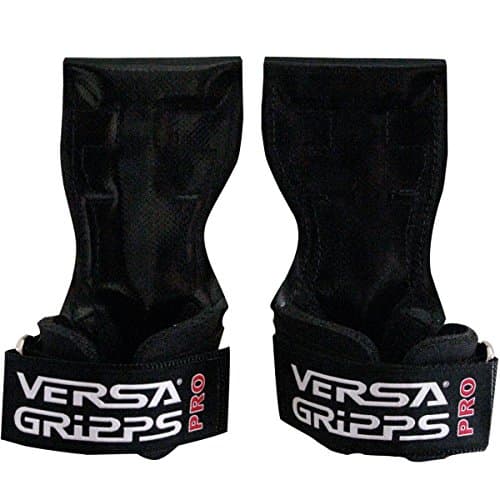
A wrist cuff with a stiffened flap you fold over the bar, which is what the Versa Gripps PRO Wrist Support Grips (Medium/Large) is. The advantage is speed: the cuff stays on between sets and you set up one-handed in a second. The trade is that a tongue cannot be wrapped twice, so at the very top end of a pull it is less mechanically secure than a double-wrapped loop strap. It is also several times the price.
What actually wears out
Three things, and only three, which is why this category rewards buying well once:
- Fraying at the wrap. The webbing runs over the knurl under full load, and knurling is a file. Cotton fuzzes and then threads let go, over years. The fix is to rotate which end takes the wrap and to retire the pair when the weave opens up — not to buy something “stronger”.
- Pad delamination. Any stitched-on neoprene pad eventually separates from the webbing. It is a comfort failure rather than a safety one, but it is the reason a padded strap has a shorter life than a plain one.
- Rot and stiffening. Cotton left damp in a bag will smell and weaken; leather left damp will stiffen and crack. In a garage gym this is the one that gets you, and it is the same maintenance story as keeping steel from rusting in a garage. Hang them up; do not bag them wet.
Straps, belts and the rest of the kit
A strap and a belt solve opposite problems and are constantly confused. A belt gives you something to brace against, so it helps a squat and a press; a strap takes your grip out of the equation, so it helps a pull and does nothing for a press. Owning one does not reduce the case for the other. Our ranked belts are on the lifting belt page, and the belt that hangs plates for weighted dips and pull-ups is a third, different item on the dip belt page. And the fourth item in this family is the one that supports the wrist joint under a press instead of the grip under a pull, which is the wrist wrap page.
The other thing worth saying out loud: straps change what the bar has to do for you. If your grip has been the limiting factor on deadlifts, strapping up means the knurl matters less and the sleeve and shaft matter more, because you will be pulling heavier sooner. That is the moment to read knurling, explained and, if you are buying the bar at the same time, the barbell roundup. The same logic applies on a cable tower, where the handle is the grip interface rather than the knurl — we rank those on the cable attachment page.
How to use a loop strap (the part nobody writes down)
Most straps are abandoned because the owner never learned the wrap, so: put your hand through the loop with the tail hanging on the palm side. Lay the tail across the bar away from you, then roll the bar toward you so the tail wraps the bar once — twice if the strap is long enough — and close your fingers over the wrap. Tighten by rolling the bar, not by pulling with your other hand. Set both hands before you set your back.
Two notes that matter for safety. First, never strap into a lift you might need to drop, which in practice means pulls only — no benching, no overhead, no squats. Second, if your wrists go numb, the strap is cinched at the joint rather than seated below it; move it and loosen a turn.
Where the money goes
We describe brackets rather than price them, because the live figures in the table do that job and stay correct. The entry bracket is a padded cotton pair from a long-established accessory brand: competent, cheap, and fine. The value bracket is a plain cotton pair with no components to fail, which is where most lifters should buy and where the pair we rank first sits. The step-up bracket is leather, which buys a material that does not fray at all. The top bracket here is the cuff-and-tongue grip, where you are paying for speed of setup and US manufacture rather than for more security under a maximal pull. Across all four, the total spread is smaller than the price of a single bumper plate — which is the whole argument for buying at the top of the useful range and never thinking about straps again. The same arithmetic applied across the gym is home gym cost per year.
Buying a pair you will still own in ten years
Buy cotton unless you have a reason not to
Cotton webbing grips the knurl, holds a wrap, and fails slowly and visibly. Nylon is stronger on paper and slicker in the hand, which is the wrong trade for a strap. Leather is the upgrade, not nylon.
Length decides your wraps, so prefer a published one
A pair that publishes 18 in or 21.5 in has told you what you are getting: roughly two wraps on a 28 mm bar with tail to close your hand over. An unpublished length is a gamble you only resolve after it arrives. Two of the five pairs here publish a length and both are ranked for it.
Decide whether you want a pad before you want a bargain
A pad makes the first month far more comfortable and adds the only component that can come apart. If you are new to straps, take the pad. If you have strapped up for years, take the plain pair and keep it longer.
Match the strap to the bar you own
A thick or very smooth bar needs either more wraps or a grippier material, which is where suede leather earns its money. A standard 28 mm knurled bar is happy with cotton. If your bar is a chrome 5 ft Olympic or anything with a light knurl, assume you want the grippier option.
Do not buy straps to fix a grip you have not trained
Straps should extend your best pulls, not replace grip work entirely. Use them on the heaviest sets and the high-rep back work, and pull at least some sets without them. This is the one place in the home gym where the cheapest tool can quietly make you weaker if you let it do all the work.
Buy two pairs if they live in two places
At these prices, a pair in the gym and a pair in the bag costs less than one trip to a commercial gym, and the pair you forgot is the pair that does not help. It is also the cheapest hedge against the one real risk here: a listing going out of stock, which happened to one of the five pairs on this page while we were checking it.