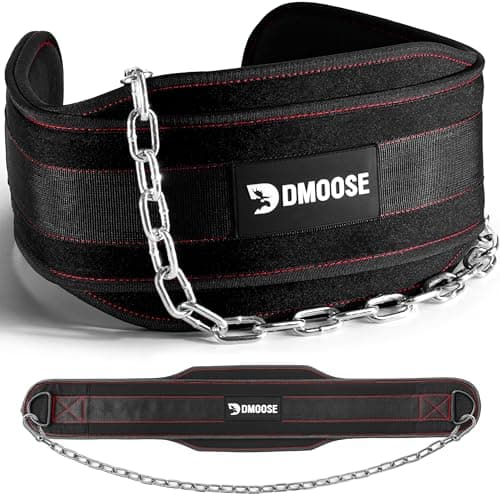
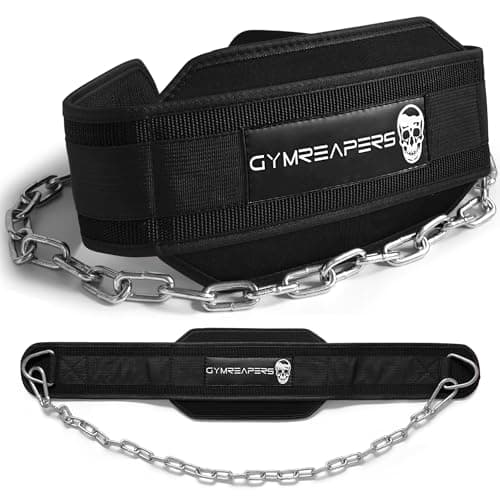
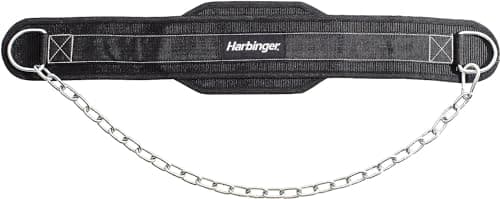
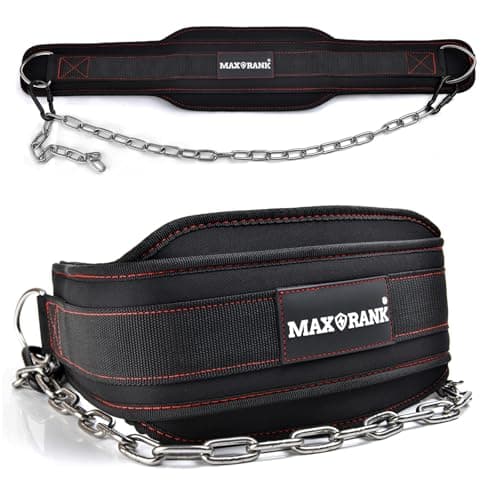
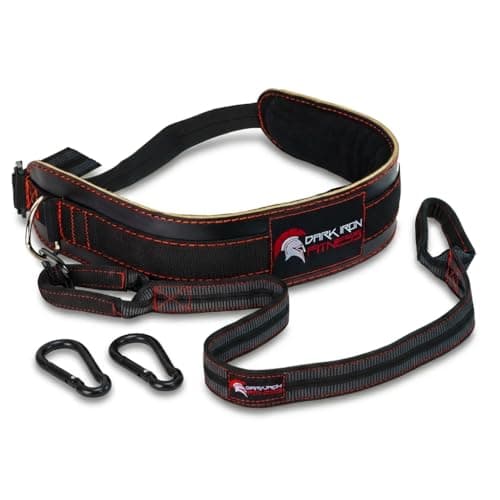
Buy the Dark Iron Fitness padded leather belt if you are adding real weight: it is the only padded leather belt here, it publishes a 270 lb rating, and a 40 inch strap instead of a chain means nothing rattles against your legs. Buy the DMoose if you want the best-specified hardware for the money — stainless steel chain and a coated D-ring, the two parts that corrode and the two parts that saw through webbing. Buy the Gymreapers as the plain, well-made middle option. Buy the Harbinger 28900 if your gym is a damp garage, because polypropylene does not care about wet air and leather does. And buy the MAXRANK if you just want the cheapest way to hang a plate off your waist — with the caveat that its 550 lb claim is the one number on this page we would not plan around.
Why a dip belt is the best value in progressive overload
Weighted dips and weighted pull-ups are two of the most effective upper-body movements there are, and the moment you can do a clean set of ten of either, bodyweight stops being a training stimulus and starts being a warm-up. The usual answers are expensive: a cable stack, a machine, more plates. A dip belt costs about what a single change plate costs and lets you load those two movements with weight you already own.
It is also almost absurdly simple. A belt goes around your hips, a chain or strap hangs from it, and plates or a kettlebell hang off that. There is no mechanism, no bearing, no pulley and nothing to adjust under load — which is exactly the kind of purchase this site likes. If you have been following the calisthenics tower page or the pull-up bars roundup, this is the accessory both of them assume you own.
What we rank on
This is a five-part product, and only three of the parts vary in any way that matters.
- What the belt itself is made of. Padded leather spreads a load across your hips; bare synthetic webbing concentrates it into a line. Above roughly 50 lb of added weight, that difference is the entire experience of using the belt. Polypropylene is the third option and it is the only one that genuinely does not care about damp.
- The chain, and whether its length is published. Chain length decides how low the plates hang, which decides whether they clear the floor at the bottom of a dip and whether they swing into your shins. Two of these five publish a measurement; the rest leave you to find out.
- The hardware — chain material and D-ring. The ring is where the belt fails: an uncoated ring under load saws into the webbing until it frays. One listing here names a coated ring and stainless chain; it is the only one that does.
- A published load rating. Three of the five publish nothing. Where a figure exists we quote it, and where the figure looks implausible for the price we say so rather than repeating it as fact.
Notice what is not on that list: brand reputation for testing, lab figures, or any claim about how the belt felt in use. We do not run a lab and these are listing specs, exactly as how we choose describes.
The five, side by side
| As published | Dark Iron Fitness | DMoose | Gymreapers | Harbinger 28900 | MAXRANK |
|---|
| Belt material | Padded leather | Heavy-duty webbing | Weightlifting webbing | Polypropylene | Webbing |
| Hanger | 40 in strap | Stainless steel chain | Heavy-duty steel chain | 30 in steel chain | 37 in chain |
| Chain or strap length published | Yes, 40 in | Not published | Not published | Yes, 30 in | Yes, 37 in |
| Chain material published | n/a, strap | Stainless steel | Steel | Steel | Not published |
| D-ring detail | Not published | Coated D-ring | Not published | Not published | Not published |
| Rated load | 270 lb | Not published | Not published | Not published | 550 lb claimed |
| Padded | Yes | No | No | No | No |
Every cell is quoted from the manufacturer listing linked in Sources, read on 2026-10-11. The pattern is worth naming: the cheapest belt publishes the biggest number. A 550 lb rating on the least expensive product in a category, from the newest brand, with nothing published about the chain material, is a marketing figure rather than a tested one — and we rank it last on the strength of that rather than ignoring the claim.
Chain or strap?
The two designs do the same job differently and the choice is genuinely personal.
A chain is fast. You thread it through the plates, hook it back to the belt, and the hang height changes by picking a different link. It is also metal swinging near your knees, it can pinch, and it rings against plates on every rep. Four of the five belts here are chain belts.
A strap — the Dark Iron here, at a published 40 inches — is quiet, cannot pinch, and cinches to an exact length rather than to the nearest link. The trade is speed: changing the hang height means re-threading rather than re-hooking, which is a real nuisance in a session with several weight changes.
If you are adding a plate and leaving it there for a training block, buy the strap. If you are working up and down the rack within a session, buy a chain.
How to work out the chain length you need
This is the one measurement worth taking before you order, and it is why we treat published chain length as a ranking spec rather than a detail. Stand at the bottom of your deepest dip position and measure from your waist to the floor. Then subtract the radius of the largest plate you expect to hang — a 45 lb plate is roughly 9 inches from the hole to the edge. What is left is the longest chain that will not put the plate on the floor at the bottom of a rep.
On a power tower or a dip attachment on a rack, dip handles sit high enough that a 37 inch chain is usually fine. On a low parallel bar, or on pull-ups from a doorway bar, the 30 inch chain is the safer choice. Tall lifters almost always want the longer chain; shorter lifters and low bars want the shorter one.
What fails on a dip belt
Three things, in order, and none of them quickly:
- The webbing at the D-ring. The ring takes the entire load through a small contact area, and an uncoated ring abrades the webbing until it frays. This is why the coated D-ring on one of these listings is a genuine specification rather than a marketing word.
- The stitching. Where the ring attachment is sewn to the belt body. Inspect it every few months; frayed stitching on a belt holding two plates above a hard floor is not a thing to monitor casually.
- Corrosion on the chain. Which is why stainless is worth naming, and why in a damp garage this belt lives indoors rather than on a hook by the door. The same logic as keeping gym equipment from rusting in a garage.
The leather or webbing body itself essentially does not wear out. Which means a dip belt, bought once and inspected occasionally, is one of the few genuinely permanent purchases in a home gym — the same category as cast iron plates and a bolted pull-up bar. The other belt in a home gym — a lifting belt — is just as permanent and does a completely different job: this one hangs weight off you, that one gives you something to brace against.
How to buy a dip belt
Decide your top weight first
If you are adding 20 to 50 lb, any belt here does the job and you should buy on price and chain length. If you expect to work past 100 lb of added weight, buy padded leather and buy the belt that publishes a rating — the comfort difference at the top end is not marginal.
Measure for the chain before you order
Waist to floor at the bottom of your dip, minus the radius of your biggest plate. That number is the longest usable chain. Two of these listings publish a length; if you buy one that does not, expect to need a shorter hang than you assumed.
Match the material to the room
Leather in a heated room, polypropylene in an unheated garage. Leather left damp stiffens and eventually cracks, and a dip belt is exactly the sort of thing that gets hung on a nail in a cold garage and forgotten.
Look for a coated ring, or plan to inspect
The D-ring against webbing is the failure point in this entire category. A coated ring delays it; a visual check every few months catches it. Either is fine — doing neither is how a belt fails mid-set.
Use a kettlebell if the plates will not cooperate
A single kettlebell on the chain hangs more compactly than two plates and does not clank. If you already own a cast iron bell, try that before buying more change plates for the purpose.
Treat a big rating on a cheap belt with suspicion
One belt here publishes 550 lb and costs less than a change plate. Published ratings in home gym equipment are manufacturer claims rather than tested figures — a point we make about benches in weight bench capacity explained — and the cheaper the product, the less there is standing behind the number.