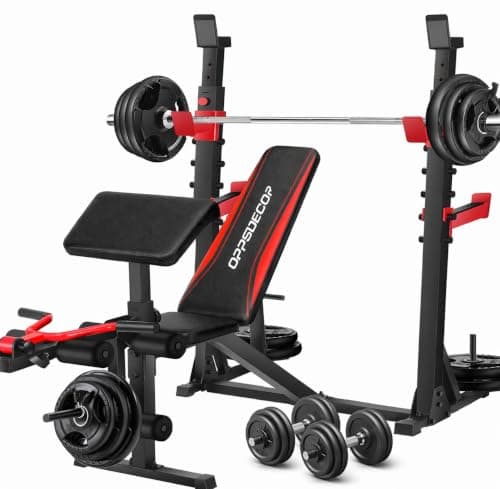
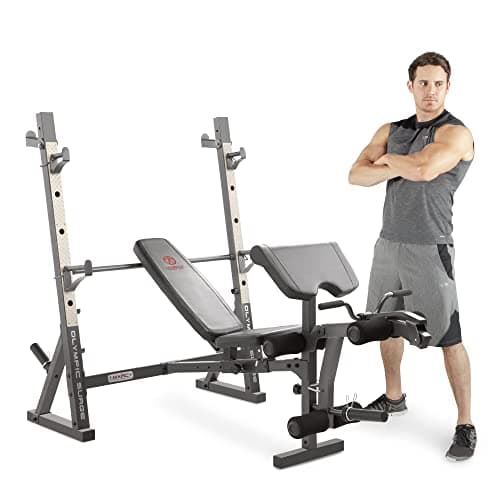
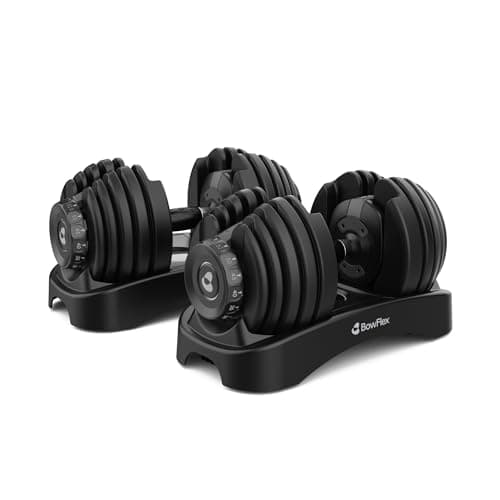
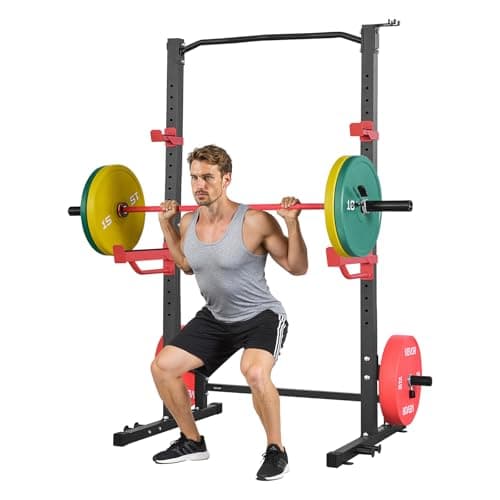
Yes — but the only versions we would recommend are a cage with safeties set below your chest, a bench-and-rack combo frame whose bar-catch rating is actually published, or dumbbells instead of a barbell. The cheapest complete answer is the VEVOR cage: a published 1,000 lb frame with J-hooks, safeties and a pull-up handle in the box, for less than most combo benches. If you want the bench and the uprights in one frame, the OPPSDECOR set is the one whose 900 lb figure the listing says was ASTM-certified rather than asserted, and the Marcy MD-857 is the one that publishes the unflattering number every combo frame shares — a 300 lb bar-catch maximum, alongside a 600 lb total including the user. And if you would rather remove the problem entirely, the BowFlex SelectTech 552 adjustable dumbbells give you pressing with nothing to get trapped under.
What actually goes wrong
A bench press is the only common barbell lift where failure puts the bar somewhere you cannot get out from under. A failed squat can be dumped forward; a failed deadlift is put back on the floor; a failed press is walked away from. A failed bench press lands a loaded bar across your chest or throat with your arms already fatigued, and the sport has a long and well-documented list of what happens next.
That is why this page ranks on one criterion: what catches the bar when you cannot. Everything else — convenience, cost, footprint — is secondary, and any workaround that has no answer at all is not on this page.
The three that work, in order
1. A cage with safeties set below your chest
This is the right answer and it is usually also the cheapest one, which surprises people. An entry-level power cage with safeties costs less than a mid-range combo bench, catches a failed rep at a height you choose, and then also lets you squat, rack a bar at any height and do pull-ups. The safeties are the whole point: set them an inch below your chest at the bottom of the press and a failed rep lands on steel.
Which safeties, and how they differ, is covered on safety bars vs safety straps. If you are shopping at this end of the market, the ranked list is the budget power rack roundup — and for a garage specifically, racks for a garage gym.
2. A combo frame, if its bar-catch rating is published
A bench with uprights built into the frame is a legitimate answer, with one condition: you have to know what the uprights are rated for, and most listings do not say. The Marcy MD-857 is the exception and the reason it is ranked here — it publishes a 300 lb bar-catch maximum, a 100 lb leg-developer maximum and a 600 lb total including the user, broken out separately.
Three hundred pounds is the honest ceiling of the whole combo category, and a listing that quotes 900 or 1,980 lb for the frame is not telling you the uprights will hold that. If you bench near or above 300 lb, no combo frame is the answer — buy a cage. The full ranking, with that ceiling stated plainly, is on the best bench press and squat rack combos.
3. Dumbbells, which remove the failure mode
The underrated answer. A dumbbell press cannot trap you: a failed rep is two weights you let go of sideways. You lose the ability to load as heavily and you gain a movement that needs no spotter, no uprights and no safeties at all — which for a lifter training alone in a garage is a real argument rather than a consolation.
One adjustable pair replaces a rack of fixed dumbbells, and the honest limits of that mechanism are set out on are adjustable dumbbells worth it. You will still want a bench, and the dumbbell-specific picks are on the best benches for dumbbells.
The four, side by side
| As published | VEVOR cage | OPPSDECOR combo set | Marcy MD-857 | BowFlex 552 |
|---|
| Catches a failed rep | Yes, safeties included | Uprights, rating not broken out | Uprights, 300 lb bar catch | No bar to be trapped under |
| Published figure | 1,000 lb rated | 900 lb, stated ASTM-certified | 300 lb bar catch, 600 lb total | 5–52.5 lb per hand |
| Bar-catch height adjustable | 11 J-hook positions | Not published | Yes, adjustable bar catch | n/a |
| Also squats | Yes | Uprights not sized for it | Uprights not sized for it | Goblet or split only |
| Bench included | No | Yes | Yes | No |
| Needs a spotter | No | Within its rating | Within 300 lb | No |
| Footprint | Full cage | Not published | 80 × 47 in assembled | Two dumbbells |
Every cell is quoted from the manufacturer listing linked in Sources, and where a listing does not state a figure the cell says so. Read the first two rows together: the only figures here that describe what holds a failed bar are the Marcy's 300 lb bar catch and the cage's included safeties. A 900 or 1,980 lb frame rating does not tell you what the uprights will catch.
The two workarounds we will not recommend
- Rolling the bar down your body. Taught as an escape technique, and it does work from a dead stop on your chest. It is not a plan. It depends on you staying conscious and composed under a bar you could not press, and it drags a loaded bar across your ribs and hips. Use it if you are already trapped; do not design a gym around it.
- Benching inside a pair of unrated uprights. Bench-mounted posts with no published rating, stacked plates, or a pair of chairs: in each case nobody has told you what the thing holds, and you find out at the worst moment. If a listing does not publish a number for the part that catches the bar, treat it as unrated rather than as adequate.
There is a third thing people do that is not a workaround but is worth saying: load less. A barbell bench press at a weight you can fail and still press off your chest is a safe lift anywhere. The risk is entirely in the top end of the range, which is why it is worth deciding where your top end is before deciding what equipment you need — what equipment you actually need works through that in order.
The floor press, properly considered
If you have a barbell and no rack at all, the floor press is the honest answer today. You lie on the floor, the bar rests on the floor between reps, and the range stops where your elbows reach the ground. There is no failure mode — the floor catches the bar — and no equipment required beyond what you own.
It is a shorter movement with less stretch on the chest, so it is not a substitute for a bench press if a bench press number is your goal. It is a genuinely good lift in its own right, and it is the right thing to do while you save for a cage rather than the thing to stop doing once you have one. The bench-side version of this decision is on do you need a weight bench.