If you own a rack with working safeties, buy whichever bar fixes the lift you currently cannot do comfortably. If you do not own a rack, the trap bar is the only one of these two that is usable at all — a safety squat bar without a rack is a loaded squat with nothing to catch it, and that is the one combination this site tells you never to run.
Both bars get bought for the same reason: a straight bar has started hurting somewhere. But they fix different lifts. A safety squat bar changes the squat — the load moves onto a padded yoke and your hands come off the bar, so shoulders and wrists stop being the limit. A trap bar changes the deadlift— you stand inside the frame with the load in line with your body and the handles at your sides. Neither one does the other’s job, and nothing about owning one reduces the case for the other.
If you have already decided which category you want, the ranked lists are the safety squat bar roundup and the trap bar roundup. If the bar you are weighing against is a plain barbell rather than another specialty bar, that is trap bar vs straight bar.
What each one covers
Lift coverage, which is the only comparison that matters when the constraint is how many bars you can store:
| Lift | Safety squat bar | Trap / hex bar |
|---|
| Back squat | Yes — this is its job | No |
| Deadlift | No | Yes — this is its job |
| Good mornings | Yes, and more comfortably than a straight bar | No |
| Split squats and lunges | Yes, hands free | Open-frame bars only |
| Loaded carries | Yes, as a yoke walk | Yes — the farmer carry |
| Rows and shrugs | No | Yes, neutral grip |
| Overhead and bench work | No | No |
| Needs a rack with safeties | Yes, always | No — loads and lifts from the floor |
That bottom row is the one most comparisons bury. A trap bar is a complete purchase on its own: a bar, some plates and a floor. A safety squat bar is half a purchase unless a rack with adjustable safeties is already in the room, because the whole point of the bar is squatting loads your shoulders could not have held, and a failed rep under a cambered bar goes forward.
What each one changes about the lift
The safety squat bar
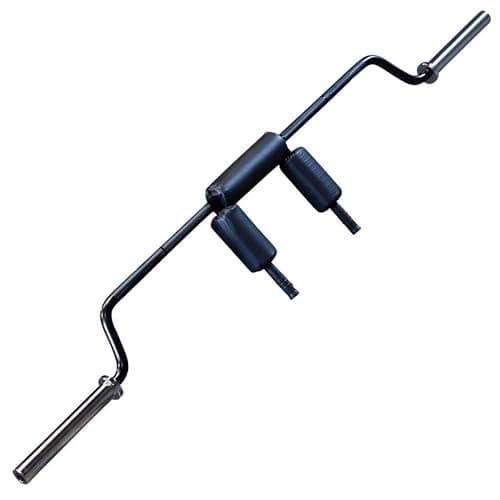
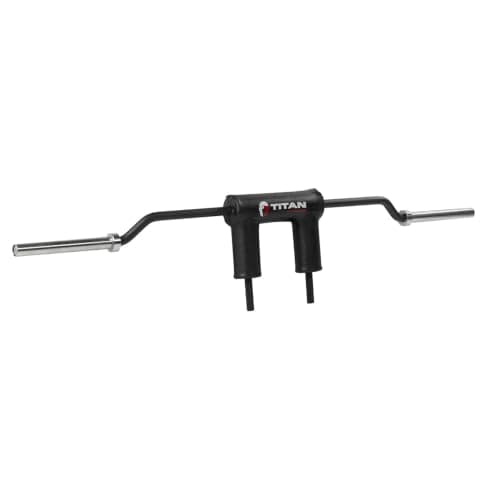
A padded yoke sits on your traps and two handles come forward to your chest. The load is cambered — hung below and in front of the bar’s axis — which pulls you forward and makes your upper back work harder to stay upright. Your hands hold the handles instead of the bar, so no shoulder external rotation is needed and the wrists are out of it entirely. That combination is why people buy them: a bad shoulder, a cranky elbow or a wrist that will not take a low-bar grip stops being the reason you cannot squat.
Camber depth is the spec that decides how strongly the bar pulls you forward, and almost nobody publishes it. Of the bars in our roundup, the Titan Series bar states a 5 in camber and the rest state nothing at all. Bar weight is the other missing figure: a safety squat bar is heavier than a 45 lb barbell, so if the listing does not publish a weight you are guessing at your working total. One listing in the category publishes 45.6 lb; most publish nothing.
The trap bar
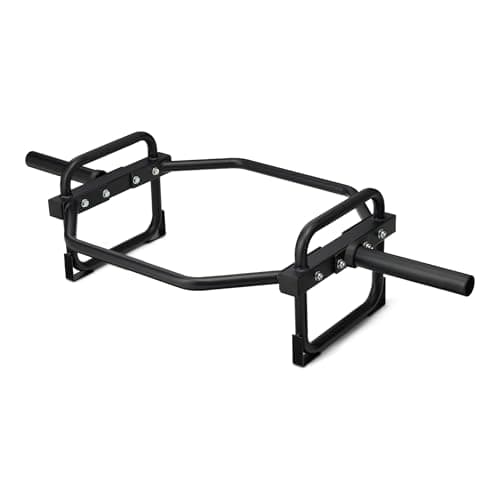
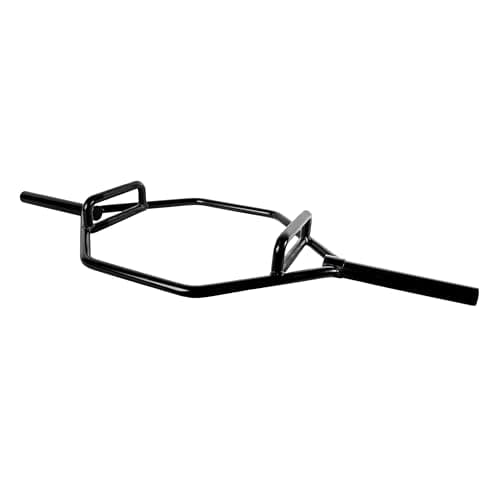
You stand inside a hexagonal or open frame and grip handles at your sides. The load sits in line with your body rather than in front of your shins, so the hips travel less and the torso stays more upright. Most people pull more weight with a trap bar than with a straight bar, the lower back is loaded less, and the whole lift is far easier to learn — which is exactly why it is usually the first specialty bar in a home gym.
The specs that matter here are published more often: capacity, loadable sleeve length and handle type. Of the bars in our roundup, the CAP combo-grip bar publishes 1,000 lb, a 26 in interior opening, 9 in loadable sleeves and 32 mm grips, and the Amazon Basics bar publishes 500 lb. Sleeve length is the one people regret ignoring: 9 to 11 inches is the difference between fitting a stack of bumpers and running out of room.
What the listings publish
| As published | CAP trap bar (combo grip) | Body-Solid SSB | Titan Series SSB | Amazon Basics trap bar |
|---|
| Capacity / rating | 1,000 lb | 1,000 lb | 1,500 lb | 500 lb |
| Bar weight | Not published | Not published | Not published | Not published |
| Camber depth | n/a | Not published | 5 in | n/a |
| Loadable sleeve length | 9 in | Not published | Not published | Not published |
| Handles / grips | 32 mm combo, two heights | Fixed handgrips, built-in padding | Fixed handgrips | Dual grip |
| Rack required | No | Yes | Yes | No |
Every cell is quoted from the manufacturer listing linked in Sources, and where a listing states nothing the cell says so rather than guessing. The row that should bother you is bar weight: not one of these four listings publishes it, and on a specialty bar that is not a rounding error. A trap bar can be anywhere from the mid-forties to the mid-sixties of pounds and a safety squat bar is usually heavier than a standard barbell. If you log your training, weigh the bar once on a bathroom scale and write it on the bar in marker. That is a two-minute job that fixes a spec nobody publishes.
Your rack decides this, not your preference
For most people reading this, the decision is made by what is already in the room.
- No rack. Trap bar. It loads on the floor, lifts from the floor and needs nothing else. A safety squat bar is not a purchase you should make first — buy the rack, then the bar. Are squat racks worth it and the power rack buying guide are the pages for that.
- Squat stands or a half rack with short safeties. Check the safety travel before you buy a cambered bar. A safety squat bar sits differently in the hooks and the bail-out height is not the same as with a straight bar. If your safeties are straps rather than steel, safety bars vs safety straps is worth five minutes.
- Full power rack with adjustable safeties. Either bar works. Now buy the one that fixes the lift you are avoiding: shoulders or wrists complaining under a squat means the safety squat bar, lower back or setup complaining under a deadlift means the trap bar.
Storage, footprint and the part you feel weekly
A safety squat bar is a straight bar with a yoke welded to it: it hangs in a vertical bar holder or sits in J-hooks like any other bar, and it takes a bar-sized slot. A trap bar is a two-foot-wide frame. It does not hang in a standard holder, it does not sit in J-hooks, and it is the single most awkward object in a small home gym — it goes against a wall, flat under a bench, or it lives in the middle of the floor annoying you. Our storage options are on the barbell storage page, and the honest note is that most of them do not take a hex bar.
The other weekly difference is loading. A trap bar lies flat on the floor, so you load it on the floor, which means lifting plates to about ankle height — pleasant. A safety squat bar loads in the rack at hook height, like a barbell. Neither is a reason to choose, but if you have a bad back, the bar that loads at knee height rather than at the floor is a real quality-of-life difference.
Which to buy first
In order of how often it applies:
- No rack, or a rack you do not trust to catch a squat. Trap bar, and it is not a close call.
- Shoulders, elbows or wrists are why your squat has stalled. Safety squat bar. This is the only bar that removes the overhead-mobility requirement from a squat, and no amount of wrist support substitutes for it — we say the same thing on the wrist wrap page.
- Deadlifts hurt your lower back or you cannot keep position off the floor. Trap bar, which shortens the moment arm and raises the handles.
- You want one bar that adds the most new work. Trap bar: deadlifts, farmer carries, neutral-grip rows, shrugs and — on an open frame — lunges.
- You are a lifter whose squat is the priority and who already owns everything else. Safety squat bar, and buy the one that publishes its camber.
Where the money goes
We describe brackets rather than print numbers, because the live prices in the cards above do that job and stay correct. Trap bars start cheaper: the entry bracket buys a published 500 lb rating and dual handles, which covers almost every first trap-bar deadlift, and the value bracket buys a four-figure capacity with long sleeves and two handle heights. Safety squat bars start higher and cluster tightly — the entry bracket is a 700 lb bar with no published camber, the value bracket is a four-figure rating with built-in padding, and the top bracket buys the published figures (camber depth and bar weight) that the rest of the category withholds.
Across both categories you are buying a bar that will outlast the room it is in. Specialty bars have no bearings, no bushings and almost nothing to service — the failure mode is a chipped coating turning into surface rust, which is a maintenance question rather than a lifespan one. Our numbers on that are in how long barbells last, and the cost over a decade is in home gym cost per year.
Buying either bar without regretting it
Check the sleeve diameter and your plates first
Both of these are 2 in Olympic bars. If your plates are 1 in standard, neither bar fits and that is the end of the conversation — see Olympic vs standard plates.
For a safety squat bar, check the rack before the bar
A cambered bar needs J-hooks deep enough to hold a wider bar and safeties set at a height that catches it. Measure your hook depth and your safety travel, then buy. A bar you cannot bail out of is not a bargain.
For a trap bar, check the opening and the sleeves
The interior opening decides whether you can stand in it comfortably — 26 in is roomy, narrower frames are tight for larger lifters. Loadable sleeve length decides whether a stack of bumpers fits. One of the bars here publishes both; most publish neither.
Weigh the bar yourself
Nobody publishes bar weight on specialty bars. Weigh it once, write the number on the bar, and your log is honest from then on. It is the single highest-value two minutes you will spend on either purchase.
Buy the finish for the room
Powder coat chips at the sleeve ends and chips are where garage rust starts; chrome handles damp better. If the bar lives in an unheated garage, read keeping gym equipment from rusting in a garage before you choose a coating.
Do not buy both at once
These bars solve two different complaints. Buy the one that fixes the lift you are currently avoiding, train it for three months, and then decide whether the second one earns its floor space. Specialty bars bought speculatively are the most common unused objects in a home gym.