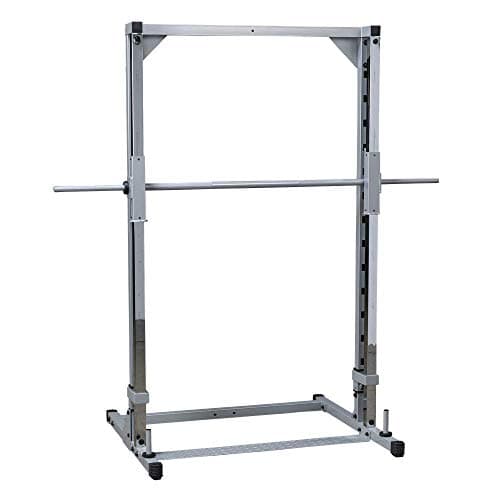
The best Smith machine under $1,000 is the Body-Solid Powerline PSM144X, because the carriage is the product and this is the only carriage in the band with a parts number behind it. It is for the lifter who wants a guided bar that still runs smooth in ten years rather than a frame that also does four other things. The budget pick is the Mikolo, the cheapest live Smith frame in the category and the only one here that publishes its cable ratio. Between those two sits the decision this page exists to make: inside $1,000 you are choosing between a carriage built to be serviced and a frame with as many stations as the price will carry.
A thousand dollars is a real line in this category. Below about $500 there is no live Smith machine worth owning - the mechanism needs more steel than that price can buy. Above about $1,300 you move into cage-style Smith gyms with benches, pec decks and dual stacks, which is a different purchase and is covered on the full Smith machine roundup. The $1,000 band is where you can still buy a machine whose only job is the guided bar.
How we ranked these
Four things decide whether a Smith machine is still worth standing under in a decade, and the number of pulleys hanging off the frame is not one of them.
1. The carriage, then the bushings, then everything else
Every Smith machine is a bar on two rails, carried by bushings or rollers. That interface is the whole mechanism: when it wears, the bar develops a notch, a rattle or a sticking point near the bottom, and the machine becomes unpleasant before it becomes unsafe. Body-Solid names its carriage and sells the parts for it. The other three listings describe a carriage without naming its bearing surface, and none of them publishes a service part. That single difference is why the ranking looks the way it does.
2. Published capacity, and the three that publish none
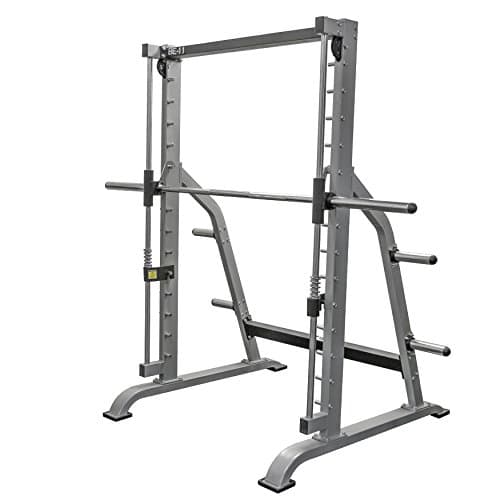
Exactly one machine in this band publishes a number: the Valor BE-11 states a 500 lb maximum weight. The other three publish no frame capacity at all. A 500 lb published ceiling on a guided bar is not a small figure - the bar is supported at both ends, so the frame sees the load differently from a free-standing rack - but it is a stated limit and the honest reading is that it is the only one you can plan around. The reason capacity claims across this whole category deserve suspicion is set out in weight bench capacity explained, and the same logic applies to a carriage.
3. Whether the safeties are adjustable
A Smith bar can be racked at height, which is the format's main safety argument. It is only an argument if the catch positions line up with your actual sticking point: a machine with adjustable safeties and a dual-lock catch lets you set the floor of the movement, and a machine with fixed hooks sets it for you. One machine here publishes adjustable safeties and a dual-lock spotter catch; the others publish hooks. If you train alone this outranks the station count, and the broader argument is in safety bars vs safety straps.
4. Whether anyone will sell you a part in year eight
Cables fray, pulleys develop flat spots, bushings wear and plastic end caps crack. On a machine from a brand with a catalog, each of those is a small order; on a marketplace label, each one ends the machine. This is the single most important question on any product with moving parts and it is almost never answered on the listing, so we answer it by brand history. The general case is in replacement parts for home gym equipment, and the warranty picture is in lifetime warranties on home gym equipment.
What $1,000 actually buys, and what it does not
It buys a named carriage with adjustable safeties from a brand with a parts process. It buys a cage frame with a Smith carriage and a cable crossover on the same uprights. It buys a published 500 lb ceiling with integrated plate storage. It does not buy all of those at once, and a listing that counts eight included attachments is telling you where its budget went.
It also does not buy a weight stack. Every machine here is plate-loaded, which is the right answer for a home gym - plates do not have a cable to fray and a stack has a service life - but it means you need plates, and the bar on a Smith machine is captive, so your existing barbell does not help. The stack-versus-plates argument is worked through in plate-loaded vs weight-stack cable machines.
And it does not buy a free barbell path. A Smith bar runs on rails, which is the point and also the limitation: the bar cannot drift, so the machine is excellent for pressing and pushing patterns under control and poor as a substitute for a squat you have to balance. If you only have room and money for one frame, read power rack vs Smith machine first - for most home gyms the rack is the better single purchase, and that page says so plainly.
Stations versus the carriage: the actual decision
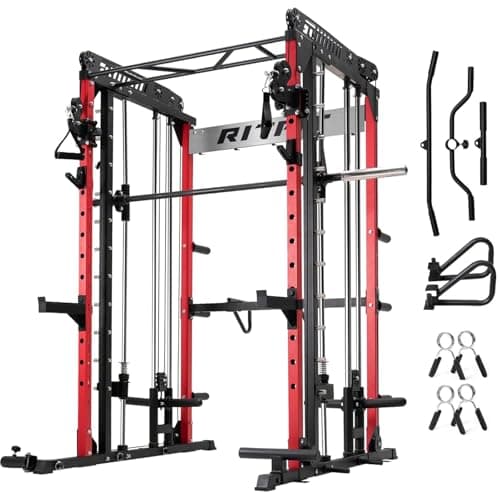
Here is the clearest way to put it. The Powerline does one thing and documents the part that wears. The RitFit M1 Pro gives you a Smith carriage, a cable crossover and a cage on one frame at the top of the band. Read naively, three systems beat one. Read properly, those are not the same measurement: the machine with one job spends the whole budget on the rails, and the machine with three spreads it across rails, pulleys, cables and brackets - every one of which is a wear item you cannot buy a replacement for.
So the question is what the machine is for. If it is the pressing station in a gym that already has a rack and a bar, buy the carriage - the Powerline. If it is the whole gym and you want pulldowns and crossovers in the same footprint, the multi-station frames genuinely do more, and the honest comparison for that whole class is functional trainer vs Smith machine.
There is a third answer worth naming. If what you actually want is cables, a Smith machine is a poor way to buy them - the carriage adds cost you do not need. A plate-loaded crossover or a cage with a pulley is cheaper and does that job better, and those are ranked on the racks with cables roundup.
Who each pick is for
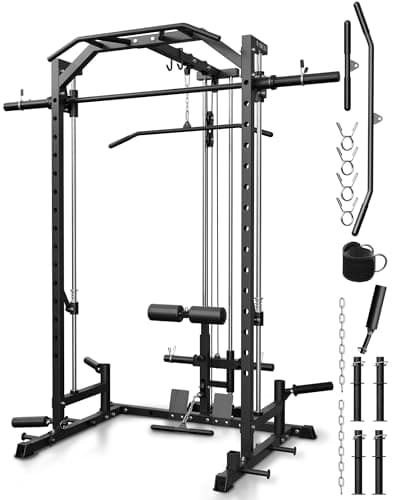
Body-Solid Powerline PSM144X - you want the guided bar and nothing else, you want adjustable safeties and a dual-lock catch, and you want the bushing to be a part you can order rather than a reason to replace the machine. RitFit M1 Pro - the machine is the gym, you want a Smith carriage and a cable crossover inside one cage, and you accept that more mechanisms means more to maintain. Valor Fitness BE-11 - you want a published capacity you can plan around, a cage frame around the bar and plate storage on the same unit. Mikolo Smith machine - the budget pick: it is the cheapest live Smith frame here, it publishes a 1:1 cable ratio (so the weight you load is the weight you feel) and it arrives with eight attachments, which is a real saving if you own none of them.
Two things change what any of these machines can do. Plates, because every pick here is plate-loaded and a Smith bar is captive - the honest shelf is the weight plates under $100 page - and a bench, because three of the four do not include one and a Smith machine without a bench does not bench press. The benches that fit inside a frame are on the best benches for a power rack.