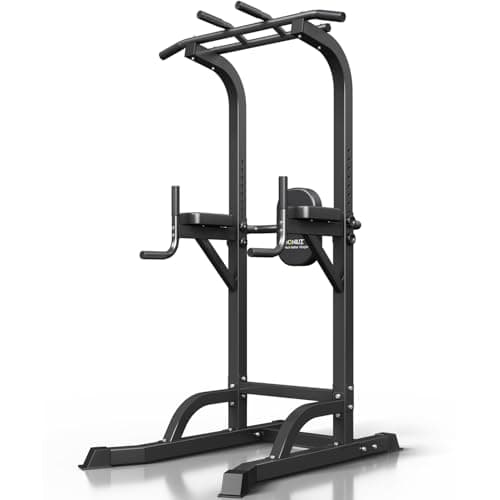
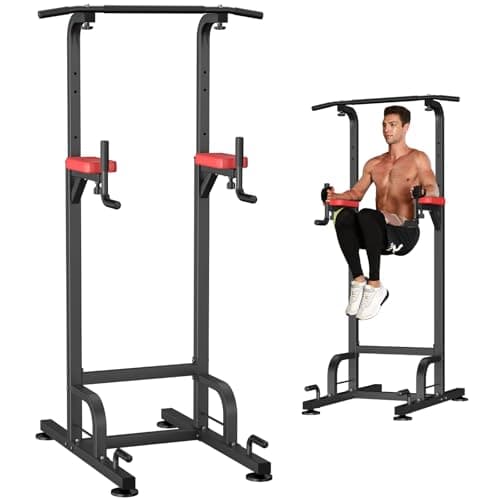
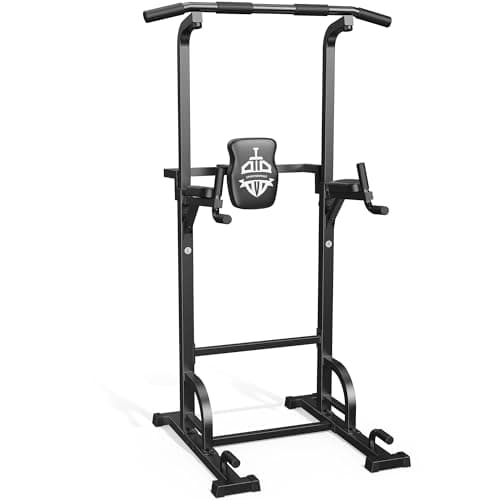
A power tower is worth buying if you want a dip station and you cannot drill into your building — and the SPORTSROYALS is the one we would buy, because it publishes the two numbers that predict whether a freestanding frame stays put: a 39.7 inch front-to-back base and a 62 lb frame, on a 450 lb rating. It is not worth buying if a power rack would fit your room, because almost every cage in a tower's price range already has a pull-up bar and will take a bolt-on dip attachment, and then also holds a loaded barbell. And it is a questionable buy if all you want is pull-ups, since a bar lagged into studs is a stronger install for less money and no floor space.
What a tower is genuinely the best answer for
There is a specific, common situation where the tower is not a compromise at all. You want pull-ups and dips. You have maybe a square yard of floor. You rent, or you have a finished wall you are not willing to put four lag bolts into, or you expect to move within a couple of years. No barbell is in your plans, or not yet.
In that situation a tower does something nothing else does: it gives you the two highest-value upper-body bodyweight movements, at the right heights, on a frame that arrives in a box and leaves with you, with no hole in anything. Weighted pull-ups and weighted dips will build more pressing and pulling strength than most machines costing five times as much, and this is the cheapest permanent way to own both.
That is the honest yes. It is a narrower yes than the category's marketing suggests, and it is a real one.
When a tower is the wrong purchase
If a rack will fit, buy the rack
This is the big one, and it is the reason the dontBuyIf line on every tower in our registry says some version of it. A cage in the same price band already includes a pull-up bar. It accepts a bolt-on dip attachment for a small fraction of a tower's cost. And then it also holds a loaded barbell, which means squats, bench and overhead press — none of which a tower will ever do. The full comparison is on power rack vs power tower, and it usually resolves in the rack's favour. Measure your room against published rack dimensions before you conclude a cage will not fit; people rule racks out on a guess surprisingly often.
If you only want pull-ups, buy a bar
A bar bolted into studs or joists is a stronger install than any freestanding frame, costs a fraction as much, takes zero floor and is invisible when you are not using it. We rank them on the pull-up bars page, and the full head-to-head is power tower vs pull-up bar. The only thing you give up is the dip station — which, if you were not going to do dips, you were not using anyway.
If you want it to replace a gym, it will not
A tower trains the upper body pulling and pressing patterns and nothing else. No squat, no deadlift, no hinge, no loaded carry. If the plan is to stop paying for a membership, read home gym vs gym membership and budget for a rack and a bar, because that is the equipment that replaces a gym.
What the category gets right
Three things, and they are worth stating plainly because they are the reasons towers keep selling:
- There is essentially nothing to break. A welded-and-bolted steel frame has no mechanism under load, no bearing, no cable to fray, no pad that compresses under weight. Compare that with a cable machine, where the pulleys and cables are the service life. A tower is a buy-it-once object in the same sense a cast iron plate is.
- It is reversible. Nothing is fastened to the building. For a renter, that is not a minor convenience — it is the difference between owning equipment and not.
- It is cheap for what it does. Check the live prices on this page. Two of the best upper-body movements in training, on a permanent steel frame, for less than most single machine stations.
What the listings do not tell you
The category is better than most at publishing a capacity — all three towers we rank state one, at 450, 660 and 400 lb — and worse than most at publishing the figures that actually predict how a tower behaves. Frame weight is the clearest example: only the SPORTSROYALS states it (62 lb), and it is a better predictor of whether a frame stays planted than any rating, because tipping rather than structural failure is what owners experience.
Two more are routinely missing. The tube wall thickness: the SPORTSROYALS and DONIUZ both publish 2 mm, and the RELIFE says only “thickened steel pipe”, which we count as a spec not published rather than as a thin wall. And the standing clearance behind the bar — none of the three publishes it, which is the one place a bolted wall bar beats them outright. We cover what to make of the capacity numbers you do get, and why a hang is not a static load, on power tower weight limits explained.
The cost-per-year argument, which is how this site thinks
A tower has no consumable parts except handle foam and, on some frames, rubber feet. Assume you keep it for the life of the room. Divide the live price above by the number of years you expect to train in that room, and the figure is small enough that the purchase decision is not really about money — it is about floor space and whether you wanted dips. That is the same arithmetic we run across the whole category on home gym cost per year, and towers come out of it well.
What that arithmetic does not forgive is buying a tower you then stop using because a rack would have fitted. The expensive mistake in this category is not the frame; it is buying the frame that does three quarters of what you wanted.
A four-question test before you buy one
Would a power rack fit this room?
Measure it properly against published rack dimensions, including the ceiling height with the pull-up bar on top. If the answer is yes, buy the rack — it does everything the tower does and then holds a barbell. If your ceiling is the problem specifically, there are racks built for low ceilings.
Am I allowed to drill, and will I?
If yes and you only want hangs, buy a bolted bar. If no, the tower is immediately more attractive, because it is the only frame in this family that needs no fastener at all.
Do I want dips?
If yes, the tower is the cheapest frame that gives you both stations without drilling. If no, you are paying for steel you will not touch.
Does the listing publish a base footprint and a frame weight?
All three towers we rank publish a capacity — 450, 660 and 400 lb — so that filter does not separate them. The footprint and the frame weight do, and only one of the three publishes both. Those are the specs that predict rocking, which is the complaint owners actually have.
And one thing to budget for
Hard, level floor under the frame. Foam tiles under a small footprint are the main cause of the rocking owners complain about, and at least one of these listings specifies flat concrete for its feet. Our flooring guide covers what belongs under a frame.