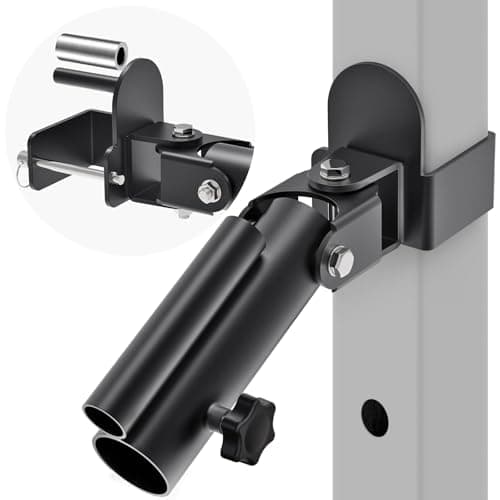
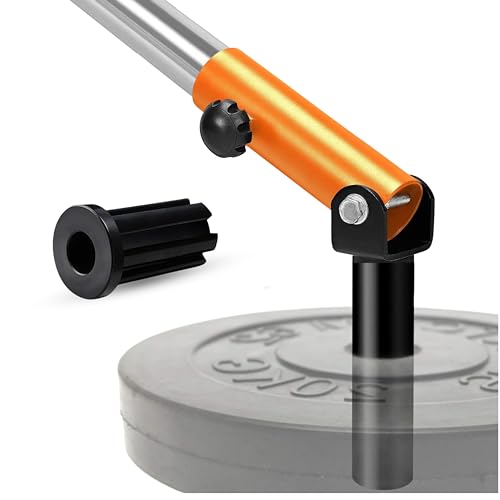
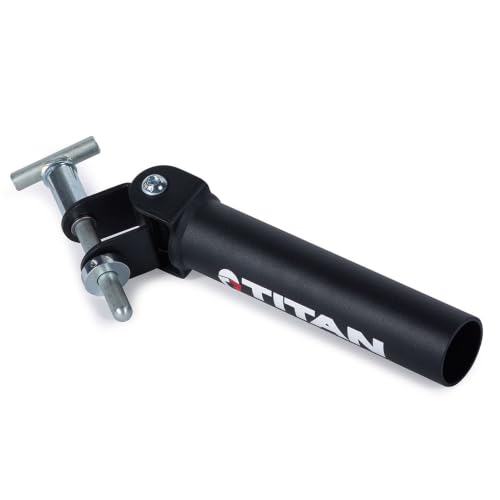
The best landmine attachment is the Titan Fitness rack-mounted unit, because mounting into the uprights is the only version of this product that cannot move while you are pulling on it — and Titan is the only brand here that will still sell you a part for it. It is for someone who already owns a Titan rack. If you own any other square-tube rack, the SYL universal unit does the same mechanical job for a fraction of the price, and the SELEWARE is the only listing in the whole category that publishes a capacity figure. The budget pick is the Yes4All floor unit, which costs less than a pair of collars and stores plates while it is not in use.
A landmine is the cheapest way to add a genuinely new category of movement to a barbell gym. One end of the bar drops into a pivot; the other end becomes a lever you can press, row, squat and rotate with. It is joint-friendly pressing for people whose shoulders have opinions, it is the only way to do a real T-bar row at home, and it costs less than a bench pad. Our wider attachment roundup — the best power rack attachments — ranks it against lat towers and dip bars for a reason: per dollar, nothing else in a rack comes close.
How we ranked these
There are only four things to judge on a product this simple, and the listings mostly talk about none of them.
1. How it mounts, which decides whether it moves
This is the whole decision. A rack-mounted pivot pins into an upright and is held by the frame. A floor unit is held down by its own mass, by the plates you stack on it, or by friction against the floor — and on a smooth sealed slab, friction is close to nothing. Under a hard row the reaction force pulls the pivot toward you, and a light floor unit will walk. That is not a theoretical risk; it is the single most common complaint in this category, and it is why both rack-mounted picks finish ahead of both floor picks here even though the floor units are cheaper. If your floor is rubber rather than sealed concrete it matters less, and the home gym flooring roundup covers what actually grips.
2. Sleeve length and bar protection
The sleeve is the tube the bar end sits in. A longer sleeve supports more of the bar and puts less bending load on the end of the shaft; a short sleeve concentrates it. Exactly one listing in this group publishes a sleeve dimension — the Yes4All, at 8 x 4 in — which is a remarkable gap in a category where the sleeve is most of the product. Every pivot will mark the bar's finish over time, which matters more on a bare-steel or chrome bar than on a cerakote or stainless one. If your bar is already fighting rust, start at how to stop barbell rust rather than here.
3. Published capacity, where it exists at all
One listing in five prints a number: SELEWARE publishes 600 lb. Nobody else publishes anything. That sounds like a reason to distrust the whole category, and to a degree it is — but it also reflects the mechanics. A landmine does not carry the bar's weight the way a J-cup does; it carries a bending moment at the pivot, which is harder to express as a single figure. We rank the published number as a point in SELEWARE's favor rather than treating the silence elsewhere as disqualifying, and we say plainly on every other pick that nothing is published.
4. Whether anyone will sell you a part
The wear item on a landmine is the bushing or sleeve at the hinge, plus the pin or pop-pin on a rack-mounted unit. Titan and REP both have real catalogs and a parts process behind them. The marketplace labels do not — when the pivot develops play, the product is finished. On a $30 part that is an acceptable risk; on a $100 one it is the main thing you are buying. The general case is in replacement parts for home gym equipment.
Rack-mounted or floor: pick this first
Everything else follows from this choice, so make it before you look at prices.
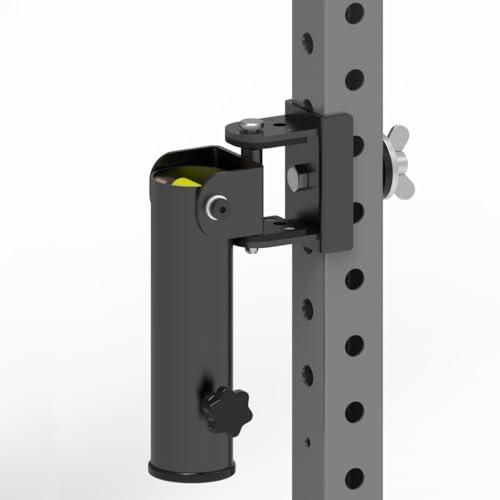
Rack-mounted is better if you own a rack with open uprights. The pivot is held by the frame, it takes no floor space, it sits at a height that makes loading the bar easier, and it cannot creep. The cost is fitment: you need to know your upright size and hole size, and some units are specified by brand rather than by dimension. Measure the tube and the hole before you order anything in this group — a 3 x 3 in upright with 5/8 in holes and a 3 x 3 in upright with 1 in holes are not interchangeable, which is the same trap described in 2 x 2 vs 3 x 3 power racks.
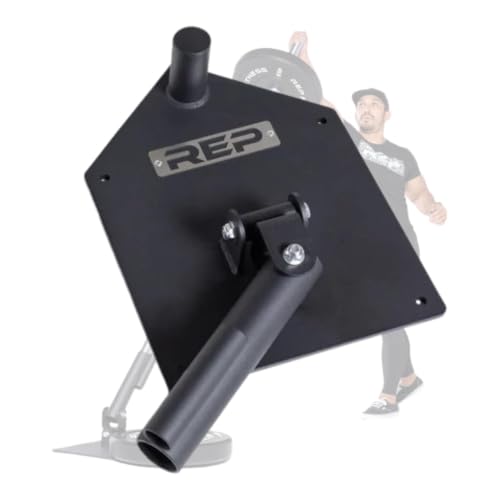
Floor-standing is better if you do not own a rack, if your rack has no spare upright real estate, or if you want the landmine usable in the middle of the room. The honest trade is mass: the REP base publishes 33 lb, which is what keeps it still, and that is 33 lb you move and store. The cheap floor units solve the same problem with your plates instead — stack a 45 on the holder and the physics stops being a problem.
What a landmine does that nothing else in the rack does
Three things, and they are the reason this is on the short list of attachments worth buying for almost every home gym.
First, pressing at an angle. A landmine press travels up and forward, which keeps the shoulder in a friendlier position than a strict overhead press. For anyone who has given up overhead work because of a shoulder, this is often the lift that comes back.
Second, the T-bar row. A barbell row is limited by what your lower back will hold in position; a T-bar row supports one end of the bar and lets you pull heavier with a more stable torso. It is the cheapest serious back-building addition to a barbell-only gym — cheaper than a lat tower, as the lat pulldown attachment roundup makes clear by comparison.
Third, rotation and anti-rotation work. A barbell is a symmetric tool and almost every barbell lift is symmetric. A landmine lets you load rotation, half-kneeling presses and single-arm work with the same plates you already own, which is otherwise dumbbell or cable territory — and dumbbells covering the same range cost many times more, as the adjustable weight roundups show.
What to watch out for
Three practical things the listings will not tell you.
Bar sleeve diameter. Some units fit 2 in Olympic sleeves only; some fit 1 in standard bars as well. If you are running a cheap standard-size bar, check this first — the difference between Olympic and standard sizing catches people out constantly, and it is explained in Olympic vs standard plates.
Clearance at the bottom of the stroke. A rack-mounted pivot sits at whatever height you pin it. Too high and a landmine squat has nowhere to go; too low and you are loading plates off the floor at an awkward angle. Start low for rows and squats, higher for pressing, and expect to move it.
The sleeve will mark your bar. Every one of these is steel on steel at the bar end. It is cosmetic, it is unavoidable, and it is a good reason not to put your best bar in a landmine every session if you own two. What a coating actually protects against is covered in barbell coatings compared.
Who each pick is for
Titan rack-mounted — you own a Titan T-2, T-3 or X-3 and you want the pivot held by the frame, with a parts channel behind it. SELEWARE 3 x 3 — you own a 3 x 3 rack and you want the one unit here that publishes a capacity figure. REP free-standing — you do not own a rack, or you do not want to pin anything, and the 33 lb base is worth the storage problem. SYL universal — you own a 2 x 2 or 3 x 3 rack of any brand and you want rack-mounted security at marketplace prices. Yes4All floor unit — you want to find out whether landmine work suits you for the price of a takeaway, and the plate holder earns its keep either way.
One more addition belongs in the same conversation. Spotter arms are the other cheap steel part that changes what an open rack can do, and they are ranked on the best spotter arms page. If you are still choosing the rack itself, start with the best squat racks under $500 or the best power racks under $1,000, depending on your ceiling.